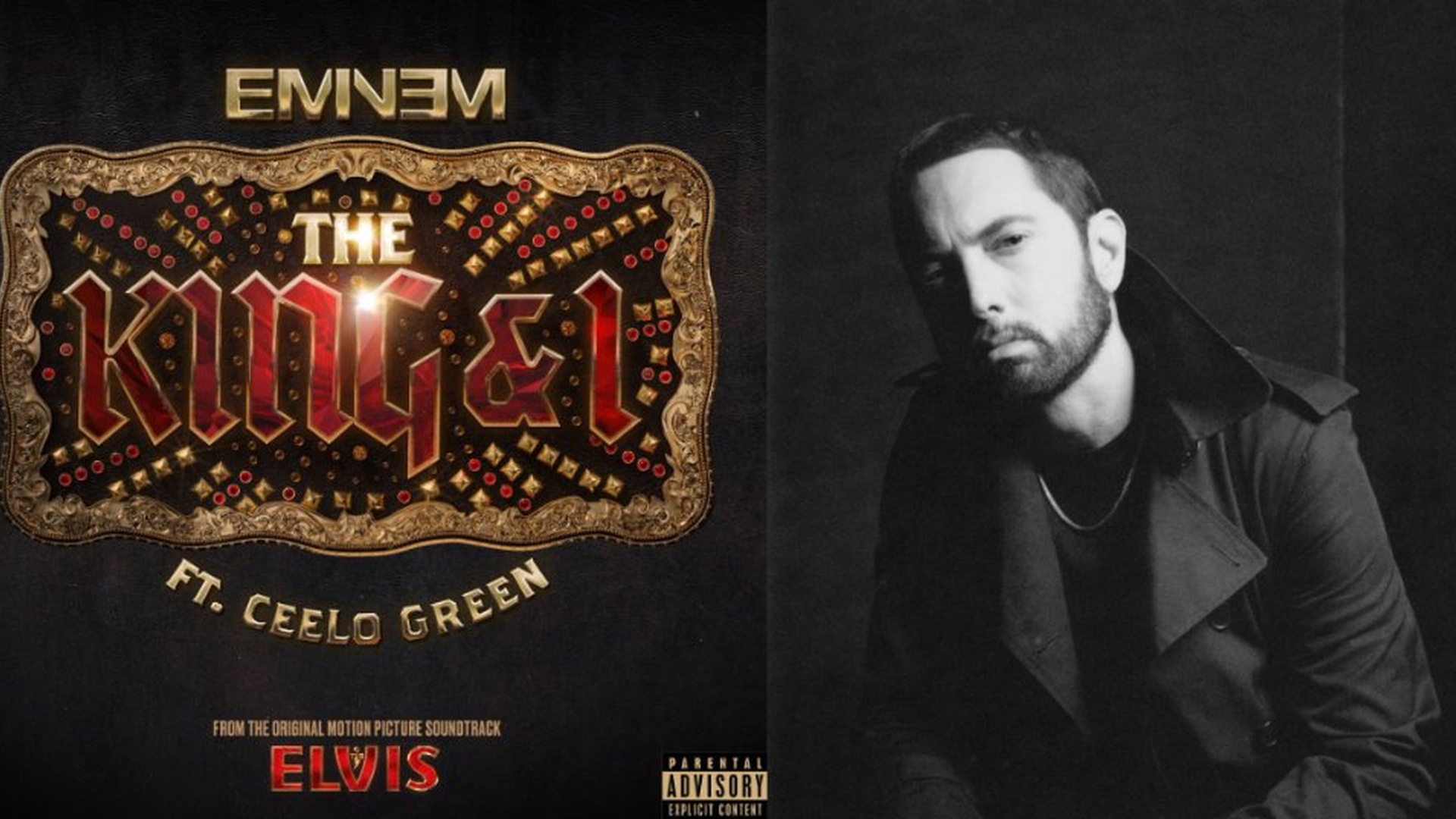
Key Takeaway: In the most significant intellectual property battle of the digital era, rights holders representing rap titan Eminem and rock icon Elvis Presley have filed a joint federal copyright infringement lawsuit against AI music generator Suno. Alleging systematic unauthorized scraping of master recordings, vocal cadence theft, and commercial exploitation under the guise of fair use, the litigation will establish definitive legal precedents for generative audio throughout the global entertainment industry.
The collision between Silicon Valley artificial intelligence startups and Hollywood’s creative copyright holders has reached its most explosive flashpoint. In filings submitted before the United States District Court, legal representatives representing the estate of Elvis Presley alongside Marshall Mathers’ publishing entities formally launched the Eminem Elvis Presley Suno AI lawsuit. Targeting generative audio market leader Suno, the complaint alleges that the platform’s commercial text-to-music models were trained on copyrighted vocal stems without licensing authorization or financial remuneration.
The lawsuit arrives at a moment of profound transformation for the music business. Generative AI tools capable of synthesizing full studio-quality songs from simple text prompts have amassed millions of active users, generating synthetic tracks that closely mimic the vocal timbres, rhyme cadences, and signature acoustic arrangements of legendary recording artists. By joining forces, two of the most lucrative and culturally significant catalogs in human history are drawing an unyielding legal boundary to protect human musical authorship.

Deconstructing the Legal Complaint: Scraping, Voice Cloning, and Fair Use
The core of the plaintiffs’ 128-page legal brief focuses on the methodology Suno utilized to train its advanced audio diffusion neural networks. According to digital forensic telemetry submitted as evidence, when users input stylized prompts—such as *”Create a fast-paced 90s Detroit rap song about personal demons”* or *”A 1950s rockabilly ballad with a trembling baritone vocal”*—the platform outputs synthesized audio featuring rhythmic phrasing, breath intervals, and vocal formant frequencies virtually indistinguishable from Eminem and Elvis Presley.
The complaint asserts that such statistical precision is physically impossible without scraping tens of thousands of master recordings owned by Universal Music Group, Sony Music, and the respective artist estates. While Suno’s executive leadership has argued that training neural networks on public audio constitutes legally protected “fair use” analogous to human inspiration, the plaintiffs vigorously contest this interpretation, characterizing it as industrial-scale commercial piracy designed to siphon market value from original creators.
Core Legal Allegations in the Federal Lawsuit
- Direct Copyright Infringement: Ingestion and digital storage of copyrighted master recordings into training datasets without statutory mechanical licenses.
- Right of Publicity Violations: Commercial synthesis of distinctive vocal identity and likeness without express written consent.
- Violation of the ELVIS Act: Invoking Tennessee’s newly enacted Ensuring Likeness Voice and Image Security (ELVIS) Act protecting vocal identity from unauthorized AI cloning.
- Statutory Damages: Demanding maximum statutory damages of $150,000 per infringed work, alongside mandatory permanent injunctions requiring Suno to destroy illicit training weights.
The Legal Frontier: The Tennessee ELVIS Act in Federal Court
A crucial dynamic that elevates this lawsuit above prior AI litigation is the formal deployment of the Ensuring Likeness Voice and Image Security (ELVIS) Act. Passed overwhelmingly by the Tennessee state legislature in 2024, the groundbreaking legislation explicitly codified an individual’s vocal voiceprint as a protected property right, placing vocal timbre on equal legal standing with physical photographic likeness and traditional trademarks.
By bringing claims under the ELVIS Act, the estate of Elvis Presley has effectively bypassed the murky statutory limitations of federal copyright law, which historically protected written sheet music and fixed audio recordings, but left voice impersonation in a legal gray zone. If federal judges affirm that AI models violate state right-of-publicity statutes regardless of whether training constitutes copyright fair use, generative audio startups will face insurmountable legal exposure nationwide.
| Legal Dimension | Plaintiff Argument (Eminem / Elvis) | Defense Argument (Suno AI) | Judicial Precedent Impact |
|---|---|---|---|
| Training Data Legality | Unauthorized copying of master recordings into neural network RAM caches. | Transformative fair use under 17 U.S.C. § 107 (analogous to human learning). | Determines whether AI training requires licensing. |
| Vocal Identity Ownership | Vocal timbre and cadence are protected property under the ELVIS Act. | Style and genre conventions cannot be copyrighted. | Establishes nationwide voice-cloning liability. |
| Commercial Market Harm | Synthetic songs directly dilute and compete with authentic catalog royalties. | AI tools expand musical democratization and creative expression. | Calculates potential multibillion-dollar damages. |
Silicon Valley vs. Nashville and Detroit: The Industry Standoff
The economic stakes of the litigation are staggering. Suno, backed by premier venture capital firms in Silicon Valley with valuations exceeding $500 million, represents the bleeding edge of consumer AI technology. Should the courts mandate that AI companies license musical training data, the cost of developing audio models would multiply exponentially, forcing tech platforms into revenue-sharing licensing models mirroring Spotify and Apple Music.
For legendary living artists like Eminem and historic legacy estates like Elvis Presley, the battle is existential. Allowing automated software to deconstruct forty years of painstakingly crafted vocal cadences into open-source mathematical vectors threatens the foundational economics of the entire recording arts industry. As the lawsuit moves into preliminary injunction hearings, the global entertainment community is watching with bated breath.

Deep Learning Architecture: Latent Space Reconstruction of Vocal Formants
To comprehend the technical foundation of the federal lawsuit brought by the Eminem and Elvis Presley estates against Suno, one must examine how generative diffusion models process audio. State-of-the-art music synthesis architectures do not simply copy and paste audio samples; rather, they encode raw acoustic waveforms into compressed multidimensional mathematical representations known as latent space.
During model training, the neural network learns probabilistic distributions representing timbre, vocal cadence, phonetic formant transitions, and rhyming meter. In Eminem’s case, his signature rhythmic syncopation, complex internal multi-syllabic rhyme structures, and distinct vocal timbre create identifiable mathematical clusters in latent space. The plaintiffs contend that Suno could not have achieved such hyper-realistic vocal emulation without ingesting copyrighted multitrack studio masters without legal authorization.
Substantial Similarity vs Transformative Fair Use in Algorithmic Audio
The impending judicial battle centers on the interpretation of “transformative use” under Section 107 of the U.S. Copyright Act. Suno’s legal counsel is expected to argue that machine learning models function analogously to human listeners who draw inspiration from historical genres to produce original compositions. They will likely assert that the resulting audio represents non-infringing synthetic output.
Conversely, copyright litigators representing the estates argue that algorithmic training on copyrighted master recordings constitutes direct commercial exploitation rather than legitimate transformative commentary. By offering paid subscription tiers that allow consumers to generate commercially viable songs emulating iconic voices, the plaintiffs allege that AI platforms are directly cannibalizing the market for original human artistic works.
The Tennessee ELVIS Act and the New Era of Digital Voice Protection
The legal landscape surrounding artificial intelligence shifted dramatically with the passage of Tennessee’s Ensuring Likeness, Voice, and Image Security (ELVIS) Act. This landmark legislation explicitly expanded personal rights of publicity to safeguard an individual’s unique voice from unauthorized commercial synthesis. As other states and international jurisdictions contemplate similar statutory protections, this federal litigation will establish binding evidentiary standards for algorithmic voice training.
Global Precedents: EU AI Act and Transatlantic Copyright Harmonization
While the lawsuit unfolds within the United States federal court system, international legal observers are monitoring its intersection with the newly enacted European Union Artificial Intelligence Act. Under the European framework, generative AI developers are subject to strict transparency mandates requiring them to publish comprehensive summaries of copyrighted content used to train foundation models.
Should American federal courts establish stringent discovery protocols compelling Suno to disclose its proprietary training datasets, the resulting evidence could trigger concurrent enforcement actions across European jurisdictions. This transatlantic alignment suggests that AI companies will face unified global pressure to establish transparent licensing agreements with legacy entertainment estates.
Frequently Asked Questions
Who filed the lawsuit against Suno AI?
Major rights holders representing hip-hop icon Eminem and the estate of rock legend Elvis Presley filed the joint federal copyright and right-of-publicity lawsuit.
What is Suno AI?
Suno is a prominent generative artificial intelligence music platform that allows users to create complete, studio-quality songs and vocal tracks from text prompts.
What is the Tennessee ELVIS Act?
The Ensuring Likeness Voice and Image Security (ELVIS) Act is landmark legislation enacted in 2024 that explicitly protects an individual’s vocal voiceprint from unauthorized commercial AI cloning.
What damages are the plaintiffs seeking?
The plaintiffs are seeking statutory copyright damages of up to $150,000 per infringed master recording, punitive damages under right-of-publicity laws, and permanent injunctions requiring Suno to retrain models without infringed data.
Related posts:
 DRX Esports Expands into K-Dramas and Game Publishing
 “Trump Ocean” Sparks Viral Google Trends Surge: Dalton Georgia Rally Remarks, Search Analytics and Cartography Breakdown
 Twitch Partner Payout Rework: Revenue Splits, Kick Rivalry & Creator Economy
 UFC 308 Betting Guide & Sportsbook Odds: Topuria vs Holloway, Prop Bets & Parlays