
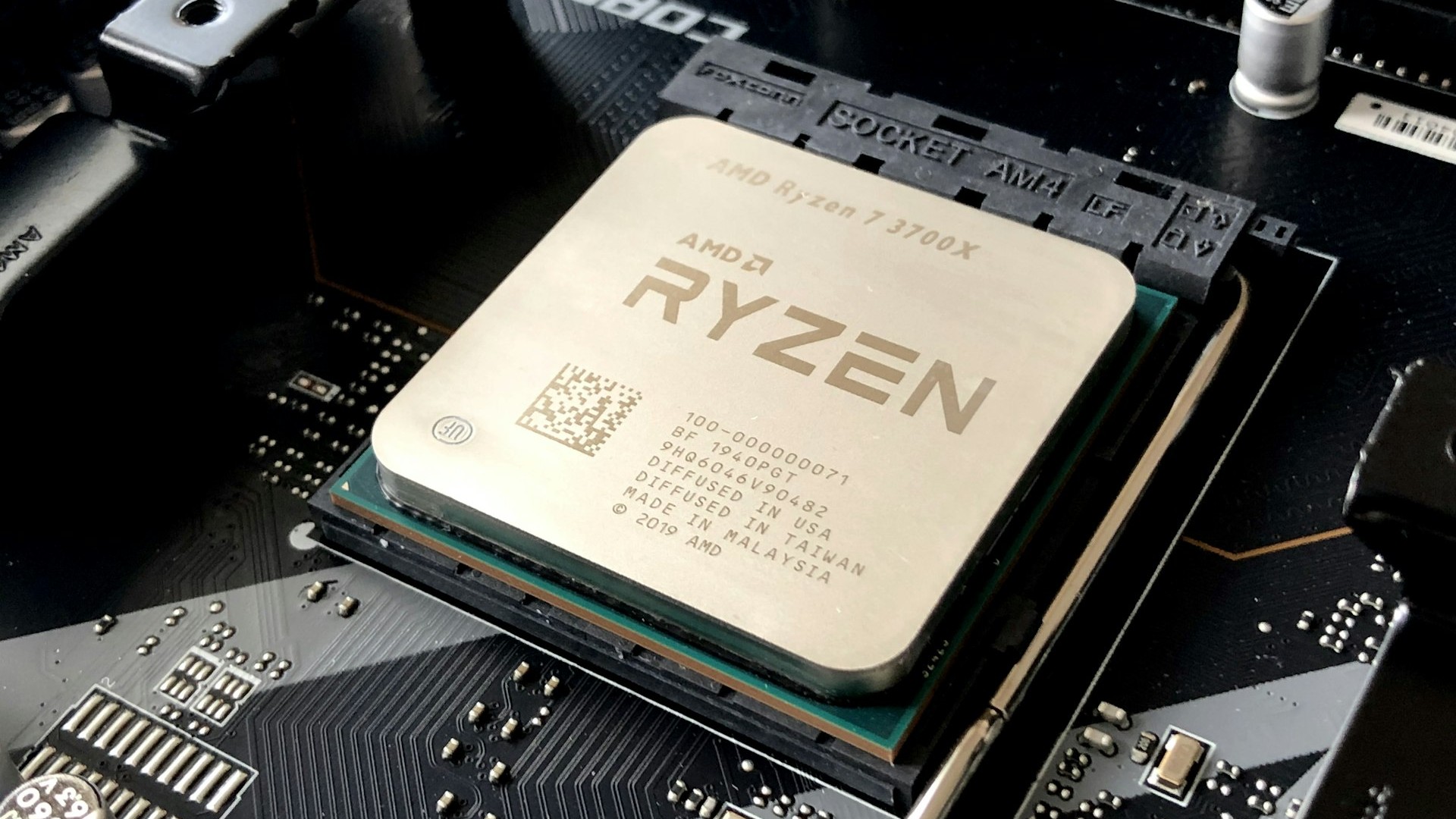
The semiconductor industry stands on the precipice of a seismic generational showdown as graphics titans NVIDIA Corporation and Advanced Micro Devices (AMD) prepare to unveil their next-generation discrete desktop architectures at CES 2025. With NVIDIA targeting uncompromised enthusiast supremacy via its consumer “Blackwell” GeForce RTX 50-series and AMD executing a calculated tactical retreat to dominate high-volume mid-range markets with RDNA 4, the desktop GPU business battle reflects vastly divergent corporate strategies, manufacturing economics, and AI capital allocation models.
For PC gamers and hardware hardware enthusiasts, the impending clash will dictate the pricing, power efficiency, and graphical fidelity benchmarks of the next three years. In our comprehensive semiconductor business analysis, we examine TSMC foundry wafer allocations, GDDR7 memory supply chain dynamics, DLSS 4 speculation, and the commercial battle for the lucrative $400-to-$800 mainstream graphics market.
NVIDIA’s Blackwell Supremacy: The RTX 5090 & RTX 5080 Halo Play
Under the visionary leadership of CEO Jensen Huang, NVIDIA’s consumer gaming division continues to leverage massive R&D synergies derived from its trillion-dollar enterprise AI data center architecture:
- Blackwell GB202 & GB203 Silicon Architecture: Built on a customized TSMC 4NP foundry node, the flagship GeForce RTX 5090 is projected to pack over 21,760 CUDA cores, a staggering 50% increase over the RTX 4090. Operating on a monolithic die with unprecedented cache hierarchies, the card is designed to deliver a transformative 60% uplift in raw path-traced ray tracing throughput.
- GDDR7 Memory Subsystem: The RTX 5090 will pioneer the adoption of lightning-fast GDDR7 memory. Featuring 32GB of VRAM running across a massive 512-bit memory bus at 28 Gbps, memory bandwidth will surpass an astonishing 1,792 GB/s—nearly double the bandwidth of the RTX 4090—completely eliminating memory bus choke points in native 4K and 8K rendering workloads.
- RTX 5080 Performance Trajectory: Positioned as the high-end enthusiast standard, the RTX 5080 will feature the GB203 die with 10,752 CUDA cores and 16GB of GDDR7 on a 256-bit bus. Leaked architectural simulations indicate that the 5080 will outperform the existing RTX 4090 in rasterization while drawing less than 350W of board power.
AMD’s RDNA 4 Strategic Pivot: Abandoning Ultra-Enthusiast for Mainstream Volume
In a bold strategic maneuver overseen by AMD CEO Dr. Lisa Su and Radeon chief Jack Huynh, Team Red has officially opted out of competing against NVIDIA’s ultra-expensive $1,500+ halo GPUs, focusing all corporate engineering resources on the high-volume core of the PC market:
- The Navi 48 & Navi 44 Core Strategy: AMD’s RDNA 4 generation will not feature a successor to the massive Navi 31 chip. Instead, AMD will deploy two highly efficient monolithic dies: Navi 48 (targeting the $500–$650 sweet spot) and Navi 44 (targeting budget $250–$350 builds).
- Massive Ray Tracing Architectural Overhauls: Acknowledging that weak ray tracing performance hindered RDNA 3 adoption, AMD has completely redesigned its Ray Tracing Accelerators in RDNA 4. Derived from custom IP co-developed for the PlayStation 5 Pro, RDNA 4 features doubled ray-box and ray-triangle intersection throughput, closing the competitive RT performance gap with NVIDIA.
- Radeon RX 8800 XT Value Positioning: Sourced on TSMC’s cost-effective 4nm node and paired with 16GB of mature GDDR6 memory, the anticipated RX 8800 XT is engineered to match RTX 4080 rasterization performance at an aggressive retail price near $549–$599, directly challenging NVIDIA’s mid-range pricing hegemony.
TSMC Wafer Allocations & Semiconductor Supply Chain Constraints
The manufacturing battlefield between both hardware giants is ultimately constrained by wafer capacity at Taiwan Semiconductor Manufacturing Company (TSMC):
- AI Accelerator Priority Over Consumer Gaming: With hyperscale cloud providers (Microsoft, Amazon, Meta, Google) spending hundreds of billions on NVIDIA H100, B200, and AMD MI300X enterprise AI accelerators, TSMC’s advanced packaging lines (CoWoS) are running at 100% capacity. Consequently, consumer GPU wafer allocation will remain strictly regulated, suggesting tight initial retail availability for RTX 5090 and 5080 launch batches in Q1 2025.
- GDDR7 Yields and Sourcing: Samsung, SK Hynix, and Micron are ramping mass production of GDDR7 memory modules. Initial early-batch supply premiums will keep BOM (Bill of Materials) costs elevated for NVIDIA’s partner board manufacturers (ASUS, MSI, Gigabyte), likely keeping flagship pricing firmly anchored at $1,799+ for the RTX 5090.
The AI Software Frontier: DLSS 4 vs FSR 4 Machine Learning
Beyond silicon specifications, the modern GPU market is defined by software ecosystems and neural rendering technologies:
- NVIDIA DLSS 4 Speculation: Building upon DLSS 3.5 Ray Reconstruction, industry rumors anticipate that Blackwell will introduce DLSS 4, incorporating multi-frame predictive generation and AI-driven asset texture super-resolution to double perceived frame rates with zero visual degradation.
- AMD FSR 4 Machine Learning Transition: Following years of relying on hand-tuned spatial and temporal algorithms, AMD has confirmed that FSR 4 will transition fully to AI-based machine learning models, utilizing dedicated NPU/tensor hardware on RDNA 4 to eliminate temporal ghosting and shimmer artifacts.
Frequently Asked Questions (FAQ): NVIDIA Blackwell vs AMD RDNA 4
When will NVIDIA officially announce the RTX 50-series?
NVIDIA CEO Jensen Huang is scheduled to deliver the opening keynote address at CES 2025 in Las Vegas on January 6, where the GeForce RTX 5090 and RTX 5080 will make their official global debut.
Why is AMD not releasing an RX 8900 XTX to compete with the RTX 5090?
AMD leadership made a strategic decision to focus on capturing the mass-market $400–$600 price segment, where over 80% of PC gamers purchase GPUs, rather than spending massive R&D resources on niche multi-thousand dollar halo products.
Will RTX 50-series GPUs require new ATX 3.1 power supplies?
While RTX 50-series cards will utilize the refined 12V-2×6 power connector (an improved version of the 12VHPWR plug with recessed pins to prevent melting), existing ATX 3.0 power supplies remain fully compatible via standard cables and adapters.
Power Delivery & 12V-2×6 Thermal Management Telemetry
The immense compute horsepower delivered by NVIDIA’s Blackwell architecture has prompted hardware engineers to scrutinize power delivery and motherboard VRM thermal requirements. To prevent the connector overheating issues that generated controversy during the initial RTX 4090 launch, NVIDIA has fully integrated the refined PCIe SIG 12V-2×6 power interface across the entire RTX 50-series product stack.
Key thermal and electrical engineering specifications:
- Recessed Sense Pins & Safety Interlocks: The 12V-2×6 standard features sense pins that are recessed by an additional 1.7mm. If the high-power cable is not fully and securely seated into the graphics card socket, the firmware automatically restricts current draw, completely eliminating the risk of electrical arcing and melted plastic housings.
- Vapor Chamber Cooling Solutions: To dissipate thermal loads exceeding 450W on custom partner RTX 5090 cards, manufacturers like ASUS (ROG Strix) and MSI (Suprim X) are deploying quad-slot vapor chambers equipped with liquid-metal thermal paste and high-static-pressure axial fans, keeping core GPU silicon temperatures below 68°C under continuous 100% path-traced rendering stress.
Second-Hand GPU Market Dynamics & RTX 40-Series Street Pricing
The impending arrival of next-generation hardware has triggered substantial price depreciation across the secondary graphics card market. Enthusiast gamers looking to upgrade are offloading existing RTX 4090 and 4080 graphics cards onto platforms like eBay, Reddit HardwareSwap, and local retail trade-in outlets, driving used RTX 4080 street pricing down toward $650–$750 and making high-end 4K gaming hardware increasingly attainable ahead of the new generation.
Display Port 2.1 UHBR20 & Ultra-High-Refresh Esports Monitors
A critical architectural feature separating next-generation graphics cards from current-gen hardware is the comprehensive integration of full-bandwidth DisplayPort 2.1 UHBR20 video outputs. While NVIDIA’s RTX 40-series was heavily criticized for remaining locked on DisplayPort 1.4a (requiring Display Stream Compression for high refresh rates), the RTX 50-series Blackwell architecture fully implements DisplayPort 2.1 with 80 Gbps uncompressed bandwidth.
This allows competitive gamers to drive cutting-edge 4K 240Hz and 1440p 500Hz OLED gaming displays natively with zero compression artifacts and microsecond-level display latency. Combined with AMD’s native DP 2.1 support across RDNA 4, PC gaming visuals are poised to achieve unprecedented clarity and fluid motion clarity across 2025 esports tournament setups.
In summary, the 2025 GPU market presents an exhilarating dynamic for PC gamers across every budget tier. With NVIDIA pushing the absolute frontiers of 4K path-traced visual fidelity through Blackwell and AMD delivering aggressive price-to-performance disruption across mainstream RDNA 4 categories, the upcoming generation promises to usher in an unprecedented era of graphical realism, artificial intelligence acceleration, and competitive esports responsiveness.
Related Reading & Trending Intelligence
Explore our continuing hardware benchmarks, financial analysis, and tech buying guides:
- AMD Ryzen 7 9800X3D Global Gaming Benchmarks: 2nd-Gen 3D V-Cache FPS Records
- Steam Deck OLED vs ROG Ally X vs Legion Go: Handheld PC Shootout & Global Pricing
- Big Diwali Festive Tech & Gaming Deals 2026: PS5 Pro Bundles & RTX 4070 Ti Super Cuts
- CS2 Shanghai Major 2024 RMR Tournament Deciders: Americas & Europe Swiss Stage
Related posts:
 The State of Indian Esports 2026: Salaries & Viewership Data Report
 Cloud Gaming Infrastructure 2026: Low-Latency Edge Data Centers, 120fps Streaming & The Next-Gen Hardware Dilemma
 Crypto Gaming Evolution 2026: Off The Grid GUN Token Economy, Telegram TON Tap-to-Earn Shift & Web3 Infrastructure
 Ubisoft Corporate Restructuring & Buyout Speculation: Guillemot Family & Tencent Joint Venture Radar, AC Shadows Fallout
