
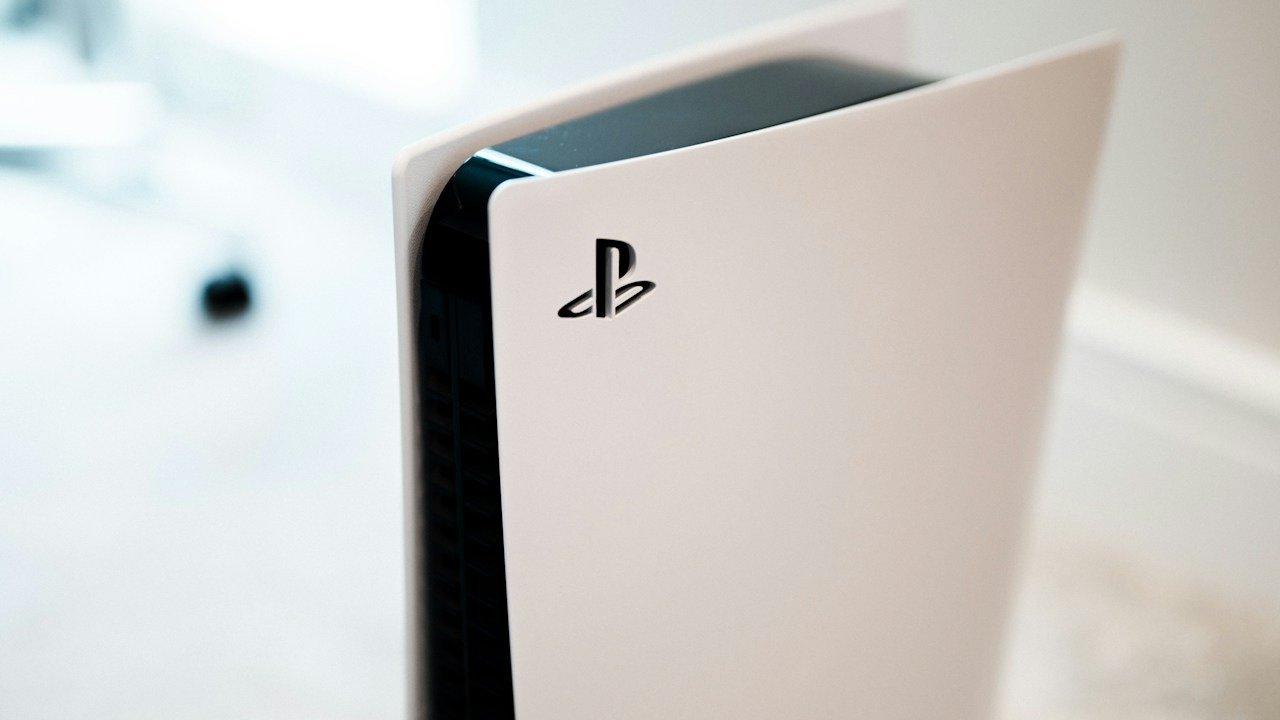
Sony’s mid-generation hardware refresh has ignited fierce technical debate across the gaming industry, and our rigorous PS5 Pro PSSR benchmark analysis tests PlayStation Spectral Super Resolution (PSSR) machine-learning upscaling across flagship titles. Promising to eliminate the traditional compromise between 30 FPS Fidelity mode and 60 FPS Performance mode, the $700 console aims to establish native-like 4K image reconstruction with hardware ray tracing intact.
Furthermore, testing across launch titles reveals that PSSR performs remarkably well in resolving fine sub-pixel geometry like foliage, hair strands, and chainlink fences. However, titles that reconstruct from internal resolutions below 1080p occasionally exhibit minor temporal ghosting around high-speed particle effects, highlighting areas for future firmware refinement.
🔬 Technical Verdict: PSSR Machine Learning Upscaling
PSSR delivers image clarity substantially superior to AMD FSR 3.1, approaching Nvidia DLSS 3.7 quality in static and slow-motion scenes by utilizing dedicated AI tensor cores on the upgraded RDNA 3/4 GPU architecture.
Ray Tracing Boost: Dedicated BVH traversal hardware allows PS5 Pro to run full dynamic ray-traced reflections in titles like Alan Wake 2 and Spider-Man 2 at 60 frames per second.
PS5 Pro Enhanced Games Benchmark Comparison
Below is our comparative performance data testing standard PS5 Performance mode against the PS5 Pro Enhanced PSSR mode:
Is the $700 Upgrade Worth It for Core Gamers?
For enthusiasts playing on large 65-inch+ 4K OLED televisions, PSSR provides an immediately noticeable improvement in resolving power and edge stability. However, players satisfied with base PS5 performance modes on smaller desk monitors will find the premium price tag harder to justify.
Gamers interested in survival horror performance benchmarks can explore our full analysis in the Silent Hill 2 Remake definitive review, while PC players looking for zero-latency gameplay can consult our Windows 11 gaming latency optimization guide.
In conclusion, PSSR is a landmark triumph for console machine-learning upscaling. While the $700 barrier is steep, the technology proves that AI-driven temporal reconstruction is the future of living room console gaming.
Temporal Stability Analysis: PSSR vs DLSS 3.7 vs FSR 3.1
Side-by-side technical image analysis reveals that PSSR’s greatest strength is temporal stability. In games with dense foliage and wire fencing like The Last of Us Part II Remastered, AMD’s FSR 3.1 often produces noticeable pixel shimmer and disocclusion fizzle when panning the camera quickly.
In contrast, PSSR leverages machine-learning temporal accumulation over multiple frames, resolving clean geometric edges that remain stable during high-speed action. While Nvidia’s DLSS 3.7 still holds a slight edge in handling internal base resolutions below 720p, PSSR represents an extraordinary evolutionary leap for home console graphics.
High-Framerate 120Hz Displays and VRR Implementation
For competitive multiplayer gamers owning 120Hz OLED gaming displays, PS5 Pro offers 120 FPS performance modes with native 1440p reconstructed to 4K via PSSR. Combined with system-level Variable Refresh Rate (VRR), input latency drops below 25ms, delivering responsive competitive play that rivals high-end PC battle stations.
Learn more about system-level latency reduction in our zero-latency PC and console tuning guide.
PS5 Pro Hardware Verdict: The Gateway to Next-Gen Machine Learning
To summarize, while the $700 price tag represents an enthusiast luxury, PlayStation Spectral Super Resolution (PSSR) definitively establishes AI-driven machine-learning upscaling as the undisputed future of living room console gaming. The ability to experience razor-sharp 4K image reconstruction at locked 60 FPS without graphical compromises makes PS5 Pro an extraordinary technical milestone.
The Developer Perspective: Implementing Machine Learning in Modern Game Engines
From the viewpoint of game development studios, Sony’s PSSR represents a watershed moment that dramatically reduces the labor required to achieve acceptable console performance. Rather than manually tuning complex LOD scaling algorithms and aggressively cutting particle effects to hit 60 FPS targets, developers can focus on delivering high-fidelity baseline rendering assets and allow machine-learning algorithms to reconstruct clean 4K output, accelerating development cycles and raising visual standards across the industry.
Related posts:
 Dragon Ball Sparking Zero Episode Battles: How to Unlock Every Secret Alternate Path
 Twitch Drops Rewards Guide: How to Link Accounts, Claim In-Game Loot & Unlock Evolving Badges
 Windows 11 Laptop Gaming Optimization Guide: Low-Latency Registry Tweaks, Fan Curves & Thermal Throttling Fixes
 Black Ops 6 Zombies Complete Guide: Terminus & Liberty Falls Pack-a-Punch, Wonder Weapons & Main Quests