
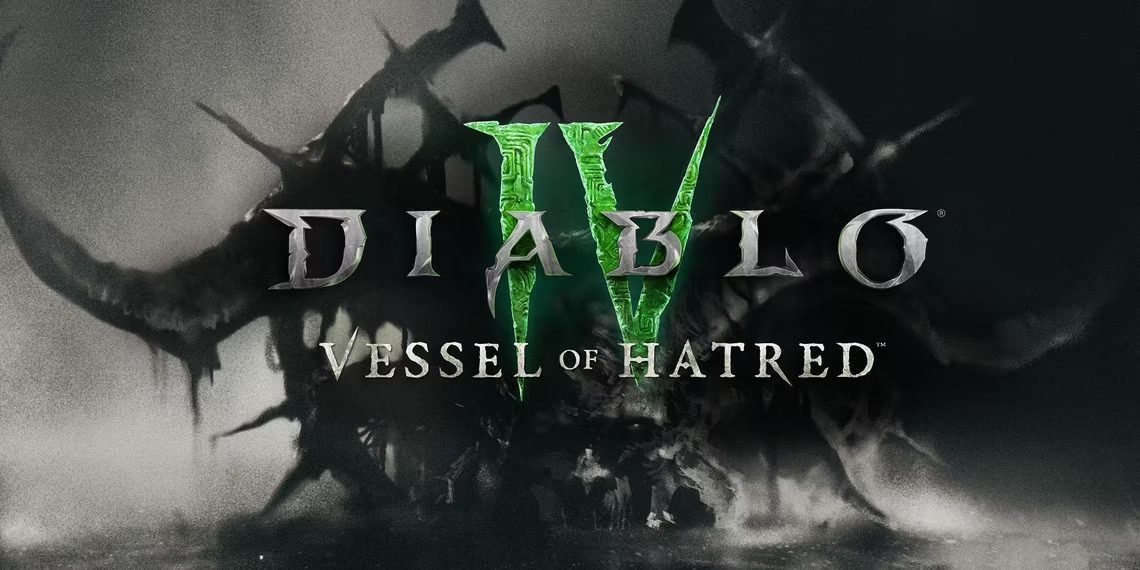
Blizzard Entertainment’s dark sanctuary expands south into the treacherous jungles of Torajan, and our definitive Diablo IV Vessel of Hatred review examines whether this flagship expansion revitalizes the action-RPG experience. Spearheaded by the wildly acrobatic Spiritborn class, revamped progression systems, and the franchise’s first-ever cooperative raid, Vessel of Hatred delivers an ambitious evolution of the core game.
Launching alongside a massive 2.0 system overhaul that squishes character levels, reintroduces iconic Runewords, and completely redesigns Paragon boards, this expansion targets both casual campaign enthusiasts and hardcore endgame grinders. Here is our in-depth evaluation of Sanctuary’s darkest chapter yet.
Launch Metacritic Score: 86/100 (Universal Critical Praise)
New Playable Class: Spiritborn (Martial arts hybrid channeling 4 spirit guardians)
New World Region: Nahantu (Ancient jungle zone featuring Kurast docks)
Endgame Highlight: The Dark Citadel (4-Player Cooperative Winged Dungeon)
- The Spiritborn Class: Four Guardian Spirit Masterclasses
- The Nahantu Campaign: Neyrelle, Mephisto and Dark Lore
- Systemic Overhauls: Mercenaries and the Return of Runewords
- Endgame Progression: Dark Citadel and Kurast Undercity
- Diablo IV Vessel of Hatred Review Scorecard & Final Verdict
- Frequently Asked Questions
The Spiritborn Class: Four Guardian Spirit Masterclasses
The undisputed crown jewel of the expansion is the Spiritborn class. Blending the hand-to-hand martial fluidity of the Monk with tribal shamanistic summons, the Spiritborn draws power from four distinct animal spirits. Players can focus purely on a single spirit or hybridize two guardians through the Spirit Hall class mechanic.
Each spirit fulfills distinct combat fantasies: the Jaguar delivers blazing attack speed and fire damage, the Gorilla generates barrier fortification and devastating physical slams, the Eagle excels in lightning strikes and hyper-mobility, and the Centipede unleashes decaying poison damage over time with lifesteal sustain. The sheer movement speed makes traditional classes feel sluggish by comparison.
| Guardian Spirit | Primary Damage Type | Combat Specialization | Key Synergies | Recommended Playstyle |
|---|---|---|---|---|
| Jaguar Spirit | Fire / Physical | Maximum Attack Speed & Ferocity | Critical hits & kill chains | High-octane glass cannon melee |
| Gorilla Spirit | Physical / Bludgeoning | Resolve Barriers & Unstoppable Armor | Damage reflection & crowd control | Tanky brawler / Hardcore mode MVP |
| Eagle Spirit | Lightning / Ranged Storms | Vulnerable Procs & Evade Mobility | Feather projectiles & movement speed | Kiting ranged skirmisher |
| Centipede Spirit | Poison / Decay | Damage-Over-Time & Life Siphon | Pestilence spreading & damage reduction | Attrition tank / AoE room clearer |
The Nahantu Campaign: Neyrelle, Mephisto and Dark Lore
Narratively, the expansion picks up immediately after the vanilla campaign’s conclusion. Neyrelle flees south clutching the soulstone containing Mephisto, the Prime Evil of Hatred. Tracking her through the dense, suffocating foliage of Nahantu exposes players to ancient Zakarum ruins, cannibal tribes, and body-horror monstrosities corrupted by Mephisto’s toxic whispers.
While the atmosphere and character acting—especially Mephisto’s manipulative vocal performance—are outstanding, the main narrative ends on a somewhat abrupt cliffhanger that clearly sets up future expansions. For players exploring other recent dark fantasy releases, compare this journey to our Metaphor: ReFantazio JRPG review and combat guide.
Systemic Overhauls: Mercenaries and the Return of Runewords
Solo wanderers receive major quality-of-life support via the Mercenaries System. Players recruit four distinct companions—such as Raheir the Shieldbearer and Subo the Bounty Hunter—who level up through Rapport, unlocking skill trees and passive buffs. You can even hire a secondary mercenary as a ‘Reinforcement’ who automatically intervenes when you cast specific abilities.
Equally transformative is the resurrection of Runewords. By socketing a Rune of Ritual (which generates Offering through actions like evading or drinking potions) alongside a Rune of Invocation (which spends Offering to trigger powerful effects), players can customize custom passive procs—such as triggering another class’s ultimate ability.
Endgame Progression: Dark Citadel and Kurast Undercity
Endgame loops receive critical depth via the Kurast Undercity—a timed, customizable dungeon run where players sacrifice Tributes to guarantee targeted loot drops—and the Dark Citadel. As Diablo’s first four-player cooperative raid, the Citadel forces players to coordinate floor puzzles, pass soul portals, and execute synchronized boss mechanics.
Track live patch notes and seasonal updates on the official Diablo IV Vessel of Hatred website on Blizzard.com.
Diablo IV Vessel of Hatred Review Scorecard & Final Verdict
In our comprehensive Diablo IV Vessel of Hatred review, this expansion succeeds where it matters most: delivering electrifying combat mechanics and fixing structural progression bottlenecks. While the campaign leaves narrative threads dangling, the Spiritborn class and systemic overhauls make Diablo IV infinitely more enjoyable to grind.
| Expansion Pillar | Rating (Out of 10) | Key Highlights | Critique & Drawbacks |
|---|---|---|---|
| Spiritborn Class Design | 9.7 / 10 | Spectacular mobility, deep Spirit Hall customization | Outclasses legacy classes in clear speed |
| Nahantu World Design | 9.0 / 10 | Atmospheric jungle biomes, haunting Zakarum ruins | Navigating narrow jungle paths can feel claustrophobic |
| Endgame & Raids | 8.6 / 10 | Dark Citadel co-op raid, targeted Kurast Undercity | Requires pre-made parties for raid progression |
| Systems 2.0 Overhaul | 9.2 / 10 | Level 60 squish, Runewords, Mercenary companions | Stat rebalancing can confuse returning players |
| Campaign & Lore | 7.8 / 10 | Chilling Mephisto dialogue, great cinematic cutscenes | Abrupt cliffhanger ending feels incomplete |
Do I need to complete the original Diablo IV campaign to play Vessel of Hatred?
No. When creating a new character, you have the option to skip the base campaign and jump directly into the Nahantu Vessel of Hatred storyline at Level 1.
Is the Dark Citadel raid soloable?
No. The Dark Citadel is specifically designed for cooperative groups of 2 to 4 players, featuring mechanics that require simultaneous interaction across separate puzzle rooms.
What is the new level cap in Diablo IV 2.0?
Character base level now caps at Level 60, followed by an account-wide Paragon progression system reaching up to Level 300.
Related posts:
 The Blood of Dawnwalker Review: A Dark Fantasy Masterpiece (Day 1 Guide)
 Metaphor: ReFantazio Complete Launch Review: Combat, Archetypes & Tips
 Dragon Ball: Sparking! ZERO Review: The 182-Character Arena Brawler Masterpiece
 Metaphor: ReFantazio Review & Archetype Combat Guide: Atlus Fantasy Masterpiece Breakdown