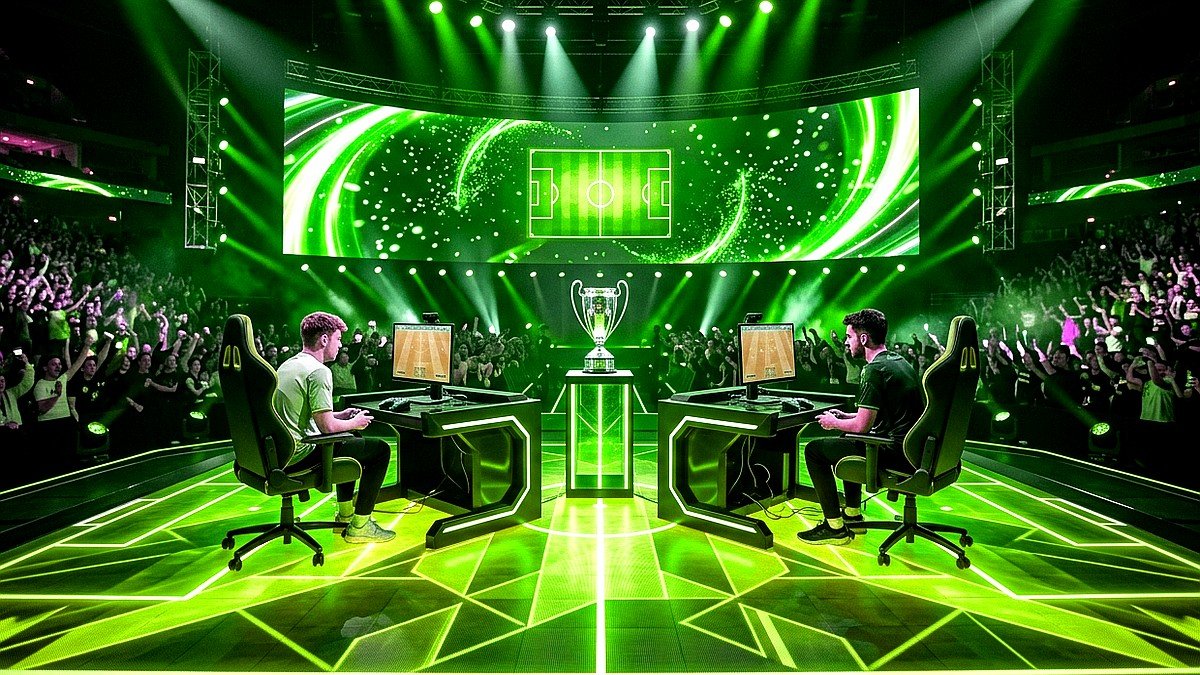
The release of the inaugural European Sponsorship Report 2026 marks a defining watershed for sports commercial directors, agency strategists, and esports franchise leaders navigating the continent’s multi-billion-euro partnership economy. Drawing from the proprietary SportBusiness Sponsorship Deals Tracker—which monitors nearly 50,000 global contracts, including 13,437 actively running agreements as of year-end—alongside benchmark data from the European Sponsorship Association (ESA) and Nielsen Sports, this comprehensive study provides the most granular, transparent evaluation of sports funding across Europe to date.
Market Concentration: Over 64% of total sponsorship cash flow is commanded by the top 20 rights holders, led by UEFA, Formula 1, and tier-1 European football institutions.
Esports Cross-Pollination: Traditional categories like IT consulting, software, prediction markets, and non-alcoholic beverages are aggressively testing competitive gaming ecosystems to hedge against aging broadcast demographics.
Regulatory Headwinds: The tightening of gambling advertising rules across the UK and Continental Europe is triggering an estimated €450M annual inventory redistribution.
- Macro Market Overview: Scale and Geographic Concentration
- SportBusiness Reader Sentiment Index: Market Confidence
- Top 10 European Sports Properties Ranked
- Top 10 Sponsorship Categories: Spend Dynamics
- Major Brand Deep Dives: Disruptors and Blue-Chips
- Strategic Implications for Esports Organizations and Sponsors
- Regulatory Shifts: Betting Bans and Emerging Tech
- Frequently Asked Questions
Macro Market Overview: Scale and Geographic Concentration
According to the European Sponsorship Report 2026, the European sports commercial ecosystem has rebounded decisively beyond pre-pandemic benchmarks, with total market expenditure climbing to a record €34.45 billion. However, the commercial distribution reflects historic levels of capital concentration. Rights holders outside the elite tier are facing compressed sales cycles, while blue-chip properties capture an expanding premium.
The data compiled by SportBusiness indicates that the top 10 commercial properties command an astonishing 42.8% of all commercial sponsorship value in Europe, with the top 20 absorbing 64.1%. Geographically, the market remains heavily anchor-weighted toward Western Europe’s economic powerhouses:
| Geographic Market | Estimated Spend (€B) | Market Share (%) | Primary Growth Sectors | Average Contract Duration |
|---|---|---|---|---|
| United Kingdom | €8.75B | 25.4% | Fintech, Software, Non-Alcoholic FMCG | 3.8 Years |
| Germany | €6.90B | 20.0% | Automotive, Industrial Tech, Renewable Energy | 4.2 Years |
| Spain | €3.85B | 11.2% | Airlines, Telecoms, Global Tourism | 3.5 Years |
| Italy | €3.40B | 9.9% | Fashion/Apparel, Banking, Digital Infrastructure | 3.1 Years |
| France | €3.25B | 9.4% | Luxury Conglomerates, IT Services, Utilities | 3.6 Years |
| Rest of Europe | €8.30B | 24.1% | Regional Betting, Retail, Consumer Electronics | 2.4 Years |
SportBusiness Reader Sentiment Index: Market Confidence
The report’s proprietary 2026 Reader Sentiment Index—surveying over 200 senior commercial executives from rights holders, global agencies, and brand marketing divisions—captures an industry navigating sharp sectoral transitions:
- Net Commercial Optimism: 68% of commercial directors expect partnership revenues to grow year-over-year, up from 59% in the 2024 benchmark survey.
- Highest Growth Categories: Artificial Intelligence and enterprise software (+34% net sentiment), sustainable energy/EV mobility (+28%), and non-alcoholic beverages (+22%).
- Sectors Facing Contraction: Traditional B2C retail banking (-14%), legacy betting and casino operators (-31% net sentiment due to regulatory pressures), and conventional consumer packaged food.
- Resource Reallocation: 72% of rights holders report investing heavily in first-party data capture, fan engagement platforms, and proprietary OTT infrastructure to validate partner ROI.
Top 10 European Sports Properties Ranked
The European Sponsorship Report 2026 provides an exhaustive ranking of Europe’s commercial juggernauts, evaluated by active gross annual sponsorship earnings, partner retention, and inventory diversification:
| Rank & Property | Annual Portfolio Value | Market Share | Key Anchor Partners | Repeat-Partner Rate |
|---|---|---|---|---|
| 1. UEFA (Club Competitions) | €680M / year | 1.97% | Heineken, PlayStation, Mastercard, Turkish Airlines | 84% |
| 2. Formula 1 (FOM) | €540M / year | 1.57% | Aramco, Heineken, DHL, Lenovo, Salesforce | 88% |
| 3. FIFA (European Attribution) | €490M / year | 1.42% | Adidas, Qatar Airways, Visa, Hyundai-Kia | 80% |
| 4. Scuderia Ferrari | €295M / year | 0.86% | HP (Title), Shell, Santander, Puma, Ray-Ban | 91% |
| 5. Real Madrid CF | €285M / year | 0.83% | Adidas, Emirates, HP (Sleeve), BMW | 86% |
| 6. FC Barcelona | €260M / year | 0.75% | Nike, Spotify (Shirt/Stadium), Ambilight TV | 73% |
| 7. Manchester City FC | €255M / year | 0.74% | Etihad Airways, Puma, OKX, Asahi Super Dry | 82% |
| 8. Mercedes-AMG F1 Team | €240M / year | 0.70% | Petronas, INEOS, Qualcomm Snapdragon, Tommy Hilfiger | 85% |
| 9. McLaren Racing (F1) | €215M / year | 0.62% | Google Chrome, OKX, DP World, Monster Energy | 89% |
| 10. Liverpool FC | €210M / year | 0.61% | Standard Chartered, Nike, Expedia, AXA | 78% |
Notably, Formula 1 racing outfits (Ferrari, Mercedes-AMG, McLaren) now command three of the top ten positions in European sport. This demonstrates how global motorsport has maximized American cultural resonance (via Drive to Survive) and technology brand integration—a vital playbook for competitive gaming leagues looking to elevate franchise valuations.
Top 10 Sponsorship Categories: Spend Dynamics
Through analysis of the SportBusiness Deals Tracker database, the report reveals the spending patterns across the ten most active commercial verticals funding European sports:
- Sporting Apparel & Kit Manufacturers: Dominating the gross spend table (over €3.1B annually), driven by titanic bidding wars between Nike, Adidas, and Puma across national federations and top-flight football clubs.
- Airlines & Gulf Carriers: Emirates, Qatar Airways, Etihad, and Turkish Airlines maintain massive primary chest and stadium naming investments exceeding €1.8B.
- Banking & Financial Services: Transforming from traditional retail branches toward institutional asset managers and cross-border payment fintechs (€1.6B total).
- Betting & Gambling Operators: Generating €1.35B, but experiencing significant shifts toward secondary sleeve, LED board, and betting data partnerships due to broadcast ad curbs.
- Beer & Beverages: AB InBev, Heineken, and Carlsberg anchoring €1.1B in annual deals, heavily prioritizing zero-alcohol brand variants (0.0%).
- IT Consultancy & Services: Giants like Cognizant, Infosys, and DXC Technology committing €980M across motorsport and football to display computational credibility.
- Petrochemicals & Sovereign Energy: Aramco, Petronas, and Shell investing €920M, combining traditional fuel branding with sustainable synthetic fuel transitions.
- Enterprise Software & Cloud: Salesforce, SAP, Oracle, and ServiceNow committing €850M in high-yield operational partnerships.
- Telecommunications: Vodafone, Deutsche Telekom, and Orange anchoring €810M across domestic league titles and team sponsorships.
- Video Games & Esports Publishers: Sony PlayStation, EA Sports, Nintendo, and mobile publishers contributing €720M in cross-promotional sporting sponsorships.
Major Brand Deep Dives: Disruptors and Blue-Chips
The report highlights several landmark corporate sponsor strategies that underscore shifting commercial objectives:
2. Polymarket (Decentralized Prediction Markets): Entering mainstream sports sponsorship as traditional sportsbooks face regulatory chokeholds. By positioning itself as an informational prediction and sentiment platform rather than a conventional casino book, Polymarket is capturing high-intent demographic attention.
3. AB InBev: Revolutionizing inventory deployment by dedicating over 60% of European sports visibility to non-alcoholic flagships like Corona Cero, insulating the brewer against strict European alcohol marketing laws.
4. Toyota & Mobility Solutions: Transitioning Olympic and multi-property agreements toward hydrogen fuel cell and municipal clean-mobility integrations.
5. SI Tickets: Disrupting secondary ticketing networks with blockchain-verified fan reward ecosystems across British and European events.
Strategic Implications for Esports Organizations and Sponsors
For esports executives, tournament organizers (such as ESL FACEIT Group and BLAST), and team organizations (such as Fnatic, G2 Esports, Team Vitality, and Team Liquid), the findings of the European Sponsorship Report 2026 provide actionable commercial roadmaps:
1. Unbundling Digital and Broadcast Assets: Traditional sports properties earn massive premiums because they package broadcast visibility, VIP physical hospitality, and first-party digital CRM data together. Esports organizations must move away from selling jersey logos as standalone billboards and instead bundle interactive livestream overlays, Discord community integrations, and co-streaming creator talent into unified tiered packages.
2. Capitalizing on the IT Consultancy & AI Surge: Enterprise IT consultancies and AI infrastructure providers (such as AWS, Cognizant, and Lenovo) spent over €1.8B in European traditional sports to showcase compute power. Esports organizations are natural sandboxes for these brands to demonstrate real-time telemetry, anti-cheat AI models, and cloud processing to a tech-native demographic.
3. Capturing Deflected Betting Sponsorship Budgets: With the Premier League’s voluntary ban on front-of-shirt gambling sponsors taking full effect, and Spain/Italy enforcing strict betting advertisement barriers, tier-1 sportsbooks are seeking high-engagement, digital-first alternatives. Regulated esports tournaments and community watch-parties represent a prime recipient for these deflected digital marketing budgets, provided compliance is rigorously maintained.
Regulatory Shifts: Betting Bans and Emerging Tech
The report concludes with an assessment of regulatory and technological forces reshaping contracts through 2027:
- The End of Gambling Front-of-Shirt Dominance: With European legislators tightening youth protection standards, rights holders are aggressively cultivating fintech, green tech, and SaaS replacements to avoid sharp revenue cliffs.
- Defense, Aerospace & Dual-Use Tech: In an unprecedented shift, defense contractors, cybersecurity consortiums, and satellite telecommunications firms are beginning to explore high-profile sponsorships to recruit engineering talent and build civic reputation.
- Web3 and Prediction Market Normalization: Following the speculative crypto bubble contraction, web3 sponsorship in 2026 is concentrated among established exchanges and regulated decentralized prediction protocols emphasizing verifiable fan utility.
What is the total value of the European sponsorship market in 2026?
According to the European Sponsorship Report 2026 by SportBusiness and benchmarked by the European Sponsorship Association (ESA) / Nielsen Sports, the European sports sponsorship market reached an all-time record valuation of €34.45 billion ($37.6 billion).
Which sports properties generate the highest sponsorship revenue in Europe?
UEFA leads the European market with €680M in annual club competition sponsorship value, followed closely by Formula 1 (€540M), FIFA European attribution (€490M), Scuderia Ferrari (€295M), Real Madrid (€285M), FC Barcelona (€260M), and Manchester City (€255M).
What lessons does this report offer for esports team owners and tournament organizers?
Esports properties can replicate the multi-tier retention models of Formula 1 teams by packaging real-time data integrations, co-streamer digital reach, and enterprise tech demonstrations, while capturing millions in marketing spend deflected by traditional sports betting bans.
Why are betting companies moving away from front-of-shirt sponsorships?
Regulatory tightening across the UK (voluntary front-of-shirt Premier League ban), Spain (Royal Decree restrictions), and several Western European jurisdictions has forced betting operators to pivot toward sleeve branding, LED perimeter rotation, and digital betting data integrations.