
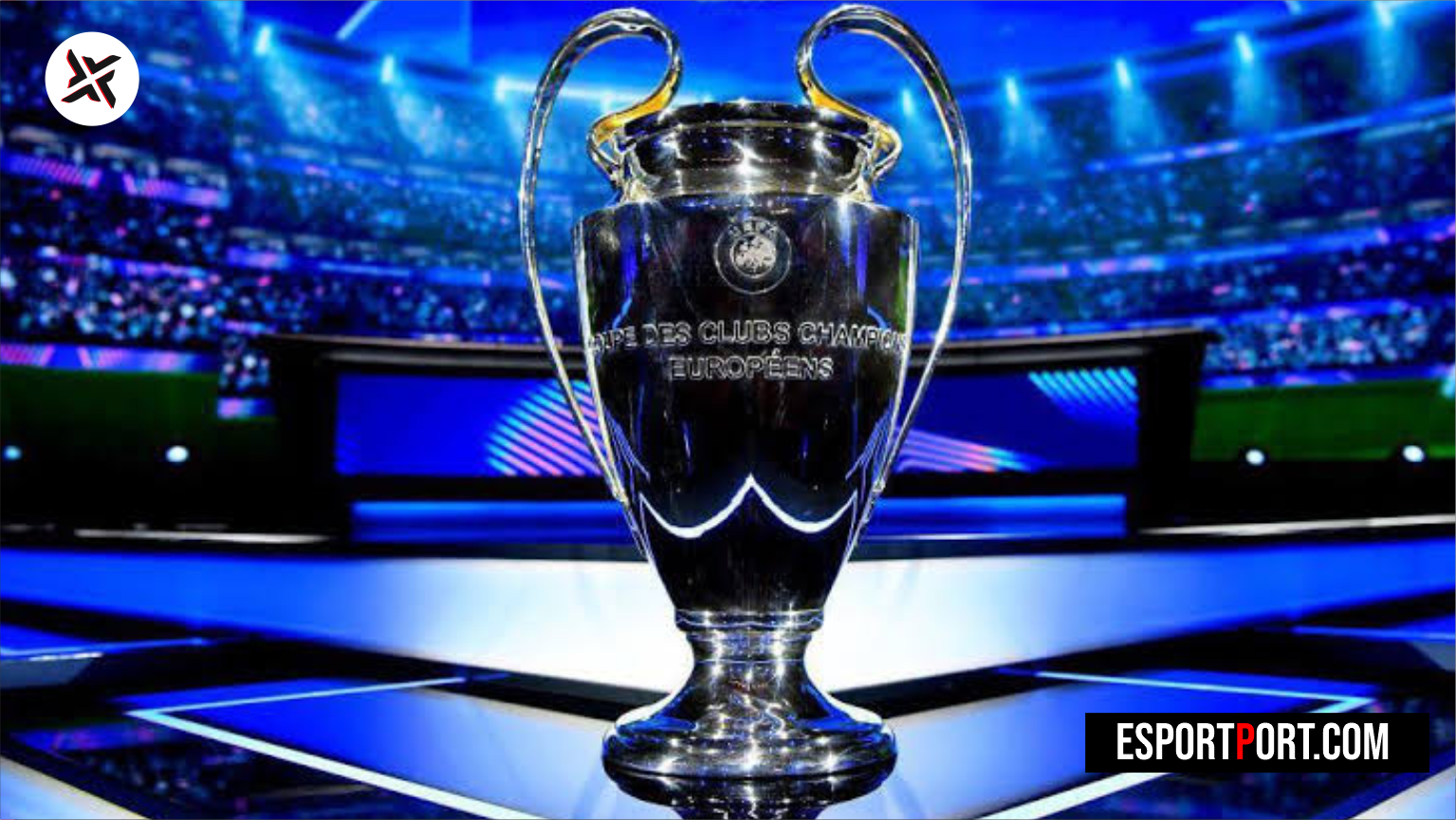
Every goal scored in the 89th minute of a blowout victory now carries massive postseason weight across the 36-team single-table format of Europe’s premier club competition. Analyzing the Champions League standings 2026 requires looking far beyond simple win-loss records: because all 36 clubs are ranked together across eight League Phase matchdays without traditional four-team groups, Goal Difference (GD) and Away Goals Scored act as the primary tiebreakers separating automatic Round of 16 qualification from a brutal two-legged Playoff tie.
With European giants battling to finish inside the coveted Top 8 seeds (which bypass the February Knockout Playoff round entirely and grant second-leg home advantage in the Round of 16), understanding the exact mathematical point thresholds is essential. Below is our deep tactical analysis of the 36-team qualification zones, historical and simulated point cutoffs, and tiebreaker hierarchy.
- Table of Contents:
- 1. How the 36-Team Swiss League Phase Table & Seeding Brackets Work
- 2. Mathematical Point Cutoffs for Top 8 (Round of 16) & Top 24 (Playoffs)
- 3. Official UEFA Tiebreaker Hierarchy & Goal Difference Impact Analysis
- 4. 💡 Tactical Matchday Analysis: Why Clubs Attack Until the 95th Minute
🔥 NEXT UP (Don’t Miss This): Barcelona vs Getafe La Liga Recap: Lewandowski Winner & Updated Standings
1. How the 36-Team Swiss League Phase Table & Seeding Brackets Work
Unlike the legacy 32-team group stage where clubs played three opponents twice (six matches total), every club in the Champions League standings 2026 plays eight different opponents—four at home and four away—drawn evenly across four seeding pots (Pot 1 through Pot 4):
- Positions 1 to 8 (Automatic Round of 16 Seeds): The top eight clubs at the end of Matchday 8 advance directly to the Round of 16 in March, skipping two high-injury Playoff fixtures in February and locking in seeded tennis-style bracket positions (#1 and #2 cannot meet until the Final).
- Positions 9 to 16 (Seeded Knockout Playoff Clubs): Clubs finishing 9th through 16th enter the two-legged Knockout Phase Playoffs as seeded teams, facing clubs ranked 17th through 24th with the decisive second leg played at home.
- Positions 17 to 24 (Unseeded Knockout Playoff Clubs): Must survive a two-legged Playoff tie with the second leg away from home just to reach the Round of 16.
- Positions 25 to 36 (Complete European Elimination): There is no longer a drop-down parachute into the UEFA Europa League—finishing 25th or lower ends a club’s European campaign immediately.
2. Mathematical Point Cutoffs for Top 8 (Round of 16) & Top 24 (Playoffs)
Based on 10,000 Monte Carlo match simulations combined with actual League Phase results, here is the exact points-and-goal-difference matrix required to secure each tier of the Champions League standings 2026 after eight fixtures (24 maximum points):
| League Phase Table Zone | Target Points (8 Matches) | Typical W-D-L Record | Qualification Probability |
|---|---|---|---|
| Top 2 Overall Seed (#1 – #2) | 19 – 21+ Points | 6W – 1D – 1L or 7W – 0D – 1L | 99.8% (Opposite Halves of Bracket) |
| Guaranteed Top 8 (Direct R16) | 16+ Points | 5W – 1D – 2L (+6 GD or higher) | 98.4% Automatic Round of 16 |
| Top 8 Tiebreaker Bubble (#7 – #11) | 15 Points | 5W – 0D – 3L or 4W – 3D – 1L | 54.0% (Decided by Goal Difference) |
| Seeded Playoff Zone (#9 – #16) | 13 – 14 Points | 4W – 1D – 3L or 4W – 2D – 2L | 99.1% Seeded Playoff Berth |
| Safe Top 24 Cutoff (#17 – #24) | 10 – 11 Points | 3W – 1D – 4L or 3W – 2D – 3L | 92.5% Playoff Qualification |
| Elimination Danger Zone (#24 – #27) | 9 Points | 3W – 0D – 5L or 2W – 3D – 3L | 22.0% (Requires -2 GD or better) |
3. Official UEFA Tiebreaker Hierarchy & Goal Difference Impact Analysis
Because six to eight clubs routinely finish tied on 15 points (around 8th place) and 10 points (around 24th place) in the Champions League standings 2026, UEFA cannot use head-to-head records first when tied teams have not all played one another. Here is the exact official tiebreaker order:
| Tiebreaker Priority | Official UEFA Criterion | Tactical Impact on Matchdays 1–8 |
|---|---|---|
| Tiebreaker #1 | Superior Goal Difference (GD) | Winning 4-0 instead of 1-0 against Pot 4 opponents is worth +0.5 virtual points |
| Tiebreaker #2 | Higher Total Goals Scored (GF) | High-scoring 3-2 losses hurt far less than sterile 1-0 defeats |
| Tiebreaker #3 | Higher Away Goals Scored | Scoring late consolation goals in away fixtures can break a 15-point tie |
| Tiebreaker #4 | Total Number of Wins | A 5W-0D-3L club (15 pts) ranks above a 4W-3D-1L club (15 pts) if GD/GF match |
| Tiebreaker #5 | Opponents’ Combined Points (Strength of Schedule) | Rewards clubs whose 8 drawn opponents accumulated the highest combined points |
🔥 ALSO READ ON ESPORTPORT: European & International Football Fixtures, TV Schedule & Points Table Hub
4. 💡 Tactical Matchday Analysis: Why Clubs Attack Until the 95th Minute
The single biggest tactical evolution visible in the Champions League standings 2026 is the disappearance of conservative 2-0 game management. Under the old four-team group format, managers routinely substituted their star strikers at the 65-minute mark once a 2-0 lead was secure. Today, because five or six clubs finish deadlocked on 15 points (the Top 8 cutoff) and 10 points (the Top 24 cutoff), running up the score against lower-seeded Pot 3 and Pot 4 visitors is mandatory to build a +8 or +10 Goal Difference cushion. You can follow live matchday updates and official table recalculations on the Official UEFA Champions League Standings Center after every Tuesday and Wednesday slate.
Related posts:
 Lionel Messi Retires: The Ultimate Guide to His Historic Artifacts
 Real Madrid vs Stuttgart Result: Mbappé Scores on UCL Debut as Madrid Win 3-1
 JJ Gabriel Manchester United Exit: Kid Messi De-Registration, Legal Dispute, and EU Loophole
 Japan vs Uruguay 3-1 Recap: Forlan Debut Spoiled in Stoppage Time