South Korean esports scene
Without a doubt, South Korea is the undisputed mecca of competitive gaming. Because the country pioneered professional gaming infrastructure decades ago, their players consistently dominate the global stage. Recently, we have noticed a massive surge in global traffic looking to understand this powerhouse region. If you want to dive deep into the South Korean esports scene, we are breaking down the most popular games, the wealthiest organizations, and the ruthless strategies that make them unstoppable.
The Most Popular Games in South Korea
First of all, to understand the culture, you must look at the local PC Bangs (LAN gaming centers). These social hubs are the beating heart of Korean gaming, and their most-played titles dictate the professional ecosystem.
- League of Legends (LoL): Undeniably, League of Legends is practically a national sport. The LCK (League of Legends Champions Korea) draws millions of domestic viewers weekly.
- Valorant: While tactical shooters were historically dominated by Sudden Attack, Riot’s Valorant has recently exploded in popularity. Korean teams are now consistently reaching the grand finals of international VCT events.
- PUBG (PC & Mobile): Because Krafton is a South Korean publisher, the battle royale genre remains incredibly popular both casually and professionally.
- StarCraft (Brood War & SC2): Furthermore, the game that started it all still holds immense cultural respect and dedicated viewer bases.
The Richest Teams & Massive Fan Following
Because the South Korean esports scene is fully integrated with mainstream corporate sponsors like telecom giants and banks, the organizations are incredibly wealthy.
T1 Esports (The Undisputed Kings)
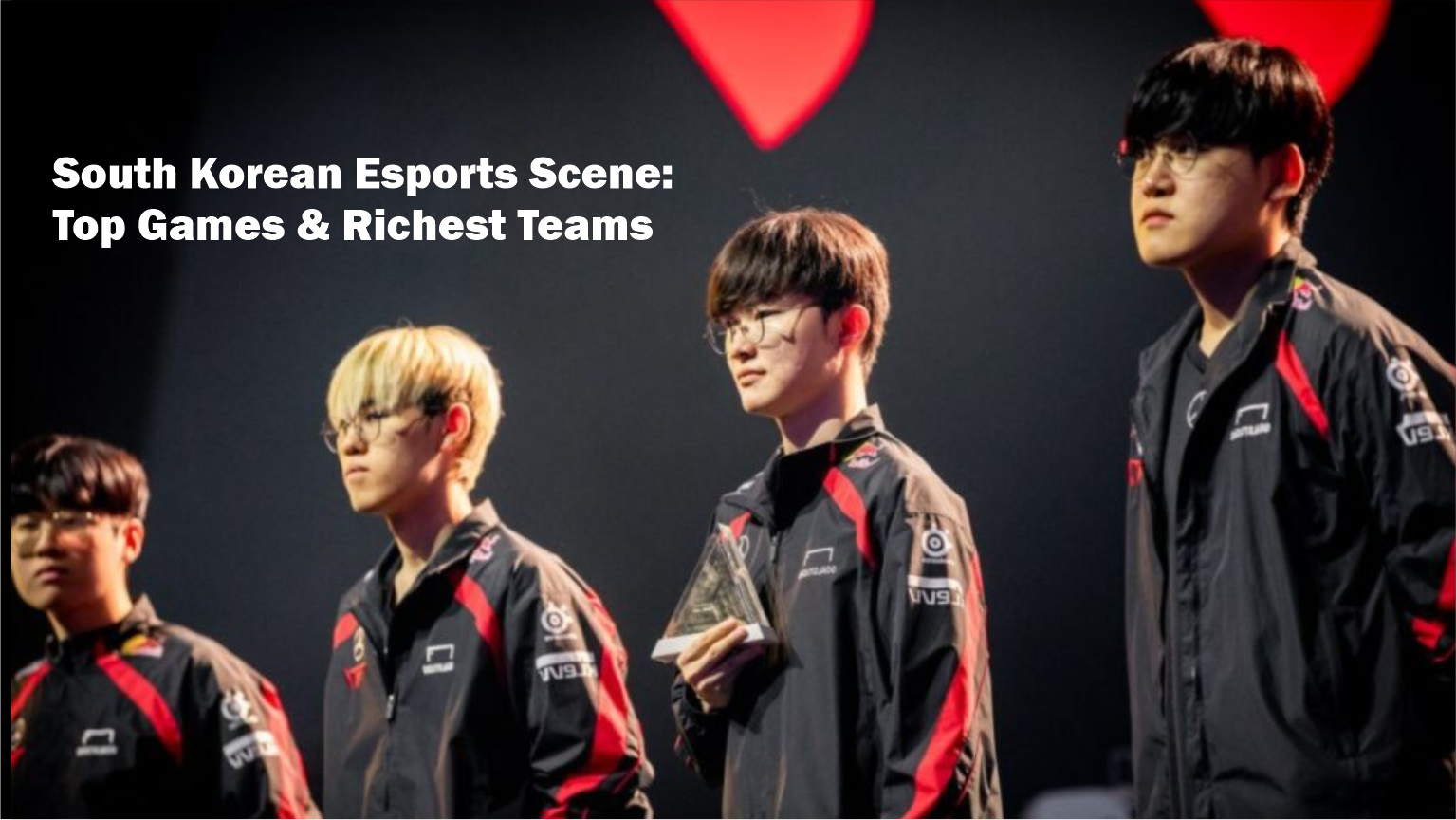
Most notably, T1 is the richest and most famous esports organization on the planet. Built around the legendary player Lee “Faker” Sang-hyeok, T1’s fan following is comparable to global K-Pop groups. Consequently, they secure massive sponsorships from brands like SK Telecom, Mercedes-Benz, and Red Bull. If you want to see how T1 performs in global brackets, check out our Esports Tournaments hub.
Gen.G Esports
Following closely behind is Gen.G, a massive organization that constantly challenges T1 for domestic dominance. Interestingly, they have expanded massively, building state-of-the-art training facilities in Seoul to cultivate the next generation of global superstars.
The Korean Strategy: Why Are They So Good?
Ultimately, the rest of the world constantly asks why Korean teams are so utterly dominant. The answer lies in their ruthless discipline and strategic depth.
Grueling Training Regimens
First, being a professional gamer in Korea is a grueling career. Teams often practice for 12 to 14 hours a day. Because the domestic talent pool is so deep, players know that if they underperform, there is a hungry rookie ready to take their spot immediately.
Respect for the Coaching Staff
Furthermore, the coaching hierarchy is strictly respected. In Western teams, star players often dictate the strategy. Conversely, in the South Korean esports scene, the Head Coach is the absolute authority. This leads to incredibly cohesive team fighting, flawless macro movements, and disciplined drafting phases. To learn more about how these games are developed, you can read insights from the Korea e-Sports Association (KeSPA).
In conclusion, the passion and infrastructure in South Korea remain unmatched. As long as the PC Bang culture thrives and young players dream of becoming the next “Faker,” this region will continue to win world championships.
Who is your favorite South Korean esports player? Let us know your thoughts in the comments below!