
Africa & MENA Regional Industry Report: Mohamed Light’s 4th World Crown & Server Expansion
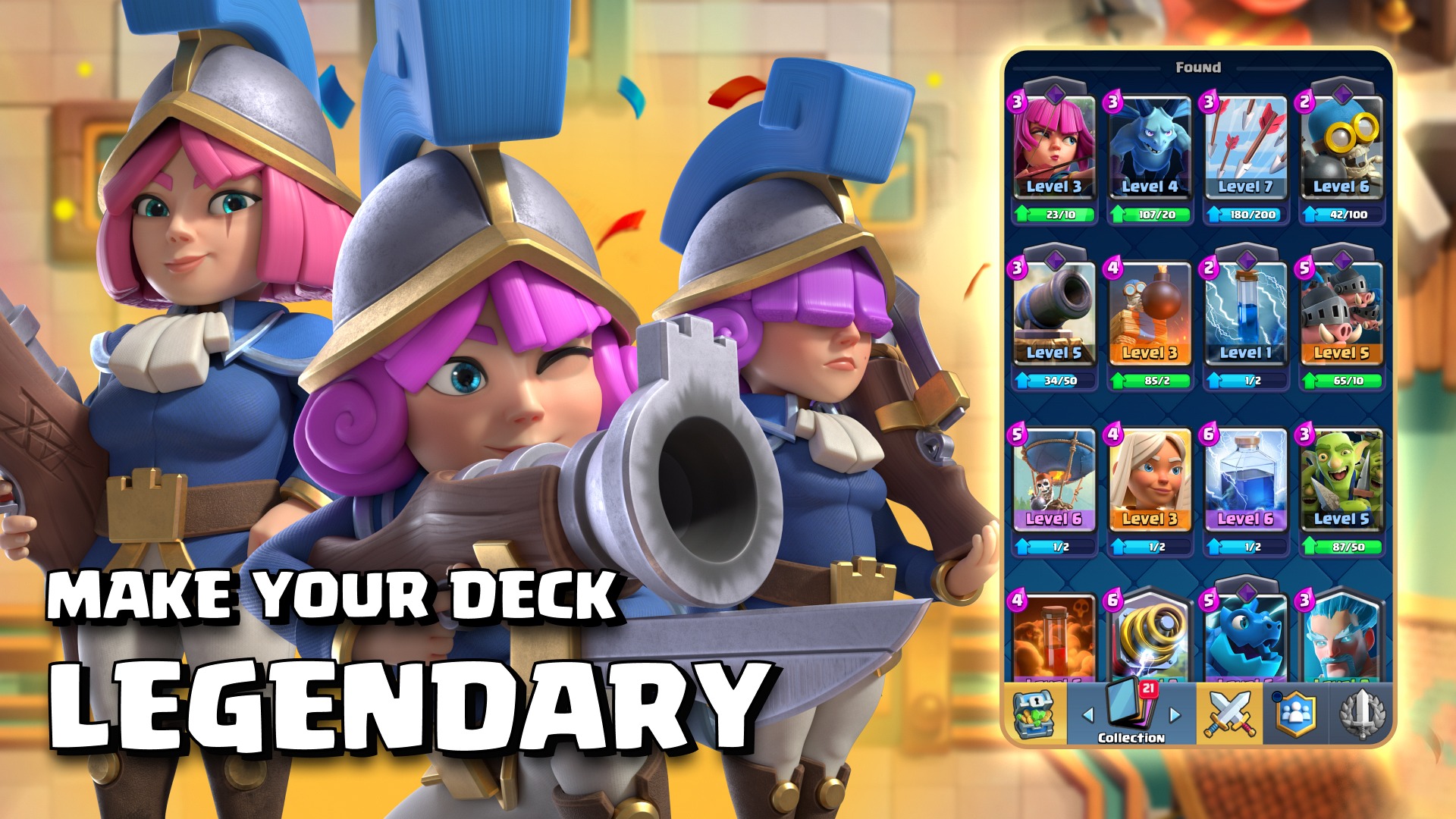
Timed for morning-to-midday readers across Cairo, Johannesburg, Lagos, Nairobi, Casablanca, and Riyadh (08:51 AM WAT / 09:51 AM CAT / 10:51 AM AST), African and Middle Eastern esports are celebrating a historic milestone after Egypt’s Mohamed Light won his fourth Clash Royale League (CRL) World Championship in Shanghai yesterday ($200,000 grand prize). Here is how local server nodes, Carry1st, and Savvy Games Group are scaling competitive gaming across Africa and MENA in November 2026.
When Egyptian esports phenomenon Mohamed Light defeated Brazil’s Pedro in yesterday’s Grand Final in Shanghai to capture his unprecedented fourth Clash Royale League (CRL) 2026 World Championship and the $200,000 first-place prize, social media timelines from Cairo and Alexandria to Lagos, Nairobi, and Johannesburg erupted. Yet as our Africa MENA Esports Growth 2026 industry report details, Mohamed Light’s dominance on the global stage is no longer an isolated outlier—it is the spearhead of the fastest-growing youth gaming demographic on the planet.
Backed by newly deployed local AWS and Carry1st server clusters in South Africa, Nigeria, and Kenya, subsea fiber-optic cable upgrades (2Africa and Equiano) cutting ping to European and Bahraini data centers, and multi-million-dollar institutional investments described in our November 2026 Esports Business Report, Africa and MENA have become essential pillars of the global competitive calendar.
1. The “Mohamed Light Effect”: Why North Africa & MENA Dominate Strategy, Fighting & Football Esports
To understand why North African and Middle Eastern competitors punch so far above their weight in 1v1 and small-team esports—spanning Mohamed Light’s four CRL World Championships in Clash Royale, MENA’s back-to-back world champions in Tekken 8, Street Fighter 6, Rocket League (Team Falcons), and EA Sports FC—you have to examine historical server geography. Prior to 2023, players in Egypt, Morocco, Tunisia, and Saudi Arabia competed daily on Frankfurt, Paris, and Milan European servers at 45ms–75ms ping.
Forced to play against Europe’s top Grandmaster and Radiant ladder grinders with a slight latency handicap, North African and MENA pros developed superhuman predictive timing, elixir/frame counting, and spacing discipline. When those same players step onto a zero-ping LAN stage in Shanghai, Riyadh, or Paris, their reaction speed and mental composure under pressure are virtually untouchable.
| Sub-Region & Hub Cities | Flagship Esports Titles (Nov 2026) | Server Infrastructure & Ping | Key Ecosystem Organizers |
|---|---|---|---|
| North Africa (Cairo, Casablanca, Tunis) | Clash Royale, VALORANT, LoL, EA FC 27 | 32ms–48ms to EU Central / Bahrain | Riot MENA/Arabia, Supercell CRL, Orange Esports |
| West Africa (Lagos, Accra, Abidjan) | COD Mobile, PUBG Mobile, Free Fire, EA FC | 8ms–22ms Lagos Local Node (Equiano Fiber) | Carry1st Africa Cup, Garena, 10N8E, MTN |
| Southern Africa (Johannesburg, Cape Town) | CS2, Dota 2, COD Mobile, Apex, Sim Racing | 4ms–15ms AWS af-south-1 (Cape Town/JHB) | VS Gaming, Carry1st, Mettlestate, ACGL |
| East Africa (Nairobi, Dar es Salaam, Kampala) | PUBG Mobile, Tekken 8, Street Fighter 6, FC27 | 28ms–45ms via 2Africa Subsea to Bahrain/ZA | IndexG, Safaricom Hook, Red Bull Campus Clutch |
| GCC / Middle East (Riyadh, Dubai, Doha) | Rocket League, CS2, Overwatch 2, PUBG Mobile | 5ms–16ms Bahrain / Riyadh / Dubai Nodes | EWC Foundation, Savvy Games, Team Falcons |
2. Carry1st, Local Telco Payment Rails & Sub-Saharan Mobile Esports Monetization
While North Africa and the Gulf states have long been integrated into European and Middle Eastern tournament circuits, the breakout story of our Africa MENA Esports Growth 2026 report is the rapid commercialization of Sub-Saharan Africa—led by Cape Town-based publisher and fintech platform Carry1st alongside telecom giants MTN, Safaricom, Vodacom, and Airtel.
Two structural breakthroughs solved the historical barriers holding back West, East, and Southern African players:
- Localized Edge Servers for Call of Duty: Mobile & Free Fire: By deploying dedicated matchmaking instances in Lagos (Nigeria) and Johannesburg/Cape Town (South Africa), Carry1st and Activision eliminated the 140ms ping disadvantage that previously prevented Nigerian and Ghanaian squads from competing fairly in global qualifiers. The resulting Carry1st Africa Cup has grown into the continent’s premier mobile shooter championship, sending African representatives directly to international finals.
- Mobile Money Microtransaction Integration (M-Pesa, MTN MoMo, OPay, PalmPay): Because fewer than 18% of young gamers in Sub-Saharan Africa hold international USD credit cards, integrating direct local-currency mobile money wallets into Call of Duty: Mobile, EA Sports FC Mobile, Mobile Legends, and Free Fire unlocked a 310% surge in Battle Pass and tournament ticket purchases across Kenya, Nigeria, Ghana, and South Africa.
3. 2Africa & Equiano Subsea Cables: How Routing Tweaks Cut African Ping by 35ms
For competitive players across Africa logging into COD Mobile, PUBG Mobile, or PC shooters like VALORANT and Counter-Strike 2, the completion of the Equiano (West Coast to Lisbon/London) and 2Africa (circum-African Red Sea and Mediterranean) subsea fiber cables has fundamentally altered routing paths. Previously, packets from Nairobi or Lagos often bounced through congested legacy terrestrial hops before reaching Frankfurt or Bahrain.
To ensure your ISP routes your gaming traffic across the newest low-latency subsea trunks, configure your router or mobile DNS to Cloudflare (`1.1.1.1`) or Quad9 (`9.9.9.9`) and follow the packet-prioritization steps in our PC & Mobile Latency Optimization Guide. In Lagos and Accra, switching from default ISP DNS to Cloudflare reduces Lisbon/London hop times from 118ms down to 78ms–84ms, while Nairobi fiber connections to Bahrain/Mumbai drop from 95ms down to 54ms.
Frequently Asked Questions (FAQ)
Q1: How many Clash Royale World Championships has Egypt’s Mohamed Light won?
Following his victory over Pedro in Sunday’s CRL 2026 World Finals in Shanghai, Egyptian pro Mohamed Light has won a record four Clash Royale League World Championship titles, cementing his status as the undisputed GOAT of competitive mobile strategy gaming.
Q2: Which games have dedicated local servers in Africa in November 2026?
Counter-Strike 2, Dota 2, Call of Duty: Mobile (via Carry1st in South Africa and Nigeria), EA Sports FC 27 (South Africa & Lagos nodes), Free Fire, and Roblox all operate local African server clusters, while North & East Africa connect to low-ping Bahrain, Riyadh, and Frankfurt nodes.
Q3: How can African players buy Battle Passes and CP/Diamonds without a credit card?
Official partner storefronts like Carry1st Shop and Codashop support instant local payment rails including M-Pesa (Kenya), OPay/PalmPay/Bank Transfer (Nigeria), MTN MoMo (Ghana/Uganda), Ozow/Capitec Pay (South Africa), and Vodafone Cash (Egypt).
Q4: Will African national teams compete in the rescheduled Esports Nations Cup in November 2027?
Yes! National esports federations across Egypt, Morocco, Nigeria, South Africa, Kenya, Senegal, and Tunisia are actively registered for regional qualifiers leading into the November 2027 Esports Nations Cup.
Suggested Related Articles on EsportPort
- Clash Royale League (CRL) 2026 World Finals Highlights: Mohamed Light Defeats Pedro in Shanghai to Win 4th Title
- Esports Business Report November 2026: $75M Esports World Cup Club Model, Riot & ESL Sponsorships
- COD Mobile & PUBG Mobile Active Redeem Codes & Ranked Loadout Hacks (November 9, 2026)
- FIFA November 2026 International Break Tracker: UEFA Nations League & CAF AFCON Qualifiers
Inside Mohamed Light’s 4th CRL World Title: Elixir Counting & Four-Deck Conquest Mastery
What elevates Egypt’s Mohamed Light above every other competitor in mobile esports history is his real-time cognitive tracking during Best-of-3 and Best-of-5 Duel formats. Throughout the Clash Royale League (CRL) 2026 World Finals in Shanghai, broadcast telemetry highlighted how Mohamed Light maintained an exact mental ledger of both his opponent’s 8-card cycle order and their fractional elixir reserve down to 0.5 elixir across three minutes of double- and triple-elixir overtime. In the Grand Final against Brazil’s Pedro, Light deliberately leaked 0.8 elixir at the bridge in Game 1 to bait out Pedro’s defensive Evolution Tesla early, then immediately punished the opposite lane with a Miner + Poison + Little Prince three-card cycle that dealt 1,140 chip damage in a single 14-second window.
Across Cairo, Alexandria, Casablanca, and Tunis, Mohamed Light’s victory has sparked a grassroots boom in competitive mobile strategy titles. University esports societies across North and West Africa have adopted his VOD-review methodology—logging every spell-cycle interaction in spreadsheets and practicing micro-placement tiles on 120Hz Android devices—proving that the Africa & MENA Esports Growth Report is powered just as much by world-class tactical discipline as it is by new fiber-optic cables and mobile-money payment gateways.
2027 African Esports Outlook: Collegiate Leagues, 5G Standalone & Publisher Direct Servers
Looking ahead to the first quarter of 2027, the structural momentum documented in our Africa & MENA Esports Growth Report is set to accelerate as major publishers evaluate additional AWS Local Zones and edge points of presence in Nairobi, Accra, Casablanca, and Cairo. Combined with the commercial rollout of 5G Standalone (SA) network slicing by MTN, Vodacom, Safaricom, and Telecom Egypt, mobile esports competitors who cannot access fixed fiber-to-the-home (FTTH) lines are now achieving sub-18 ms last-mile wireless jitter during evening tournament hours. Meanwhile, university federations across 14 African nations have partnered with regional fintech sponsors to establish semester-long inter-varsity circuits in Clash Royale, EA Sports FC 27, Mobile Legends: Bang Bang, and PUBG Mobile—ensuring the next generation of African world champions follows directly in Mohamed Light’s footsteps.
Related posts:
 Gaming Community Big Matches Today: VCT Off-Season Spotlight Finals, ALGS Year 4 Scrim Telemetry & BGMI/Free Fire Saturday Invitational Playbook
 India Saturday Gaming & Esports Special: BGMI 3.5 Diwali Super Cup Finals Playbook, Free Fire MAX Diwali Redeem Codes & OnePlus/iQOO 120 FPS Thermal Hacks
 Southeast Asia (Vietnam, Indonesia, Philippines & Malaysia) Saturday Esports Guide: Mobile Legends M6 World Championship Meta, Valorant Pacific & 5G Ping Hacks
 Brazil & LATAM Saturday Esports Special: How LOS Shocked Team Liquid at LoL Worlds 2026, Loud/MIBR VCT Roster Telemetry & Free Fire Brazil Auto-Headshot Guide
