
📌 Bottom Line Up Front (BLUF)
NFL Week 13 late afternoon action features high-stakes divisional drama and heavyweight NFC cross-conference collisions. Focusing on the film room between the Kansas City Chiefs vs. Las Vegas Raiders and the Los Angeles Rams vs. Philadelphia Eagles, we break down Andy Reid’s low-red-zone shovel option designs, Sean McVay’s 11-personnel condense formations, and defensive third-down blitz packages.
1. Late Slate Strategic Calculus: High-Stakes Red-Zone Execution
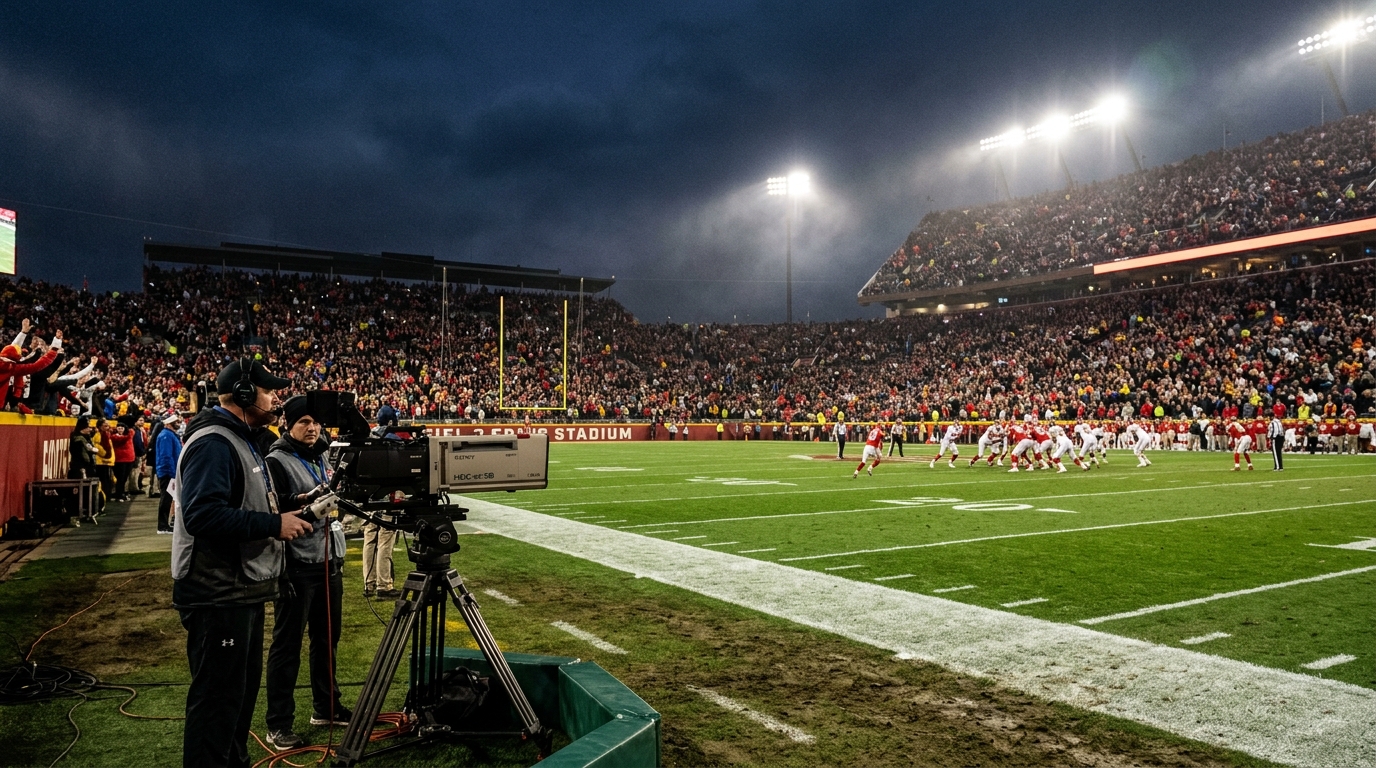
The late afternoon 4:25 PM EST window represents the tactical crescendo of Sunday football. As shadows lengthen across stadiums in Kansas City and Los Angeles, offensive play-callers encounter tightened defensive spaces. Between the 20-yard line and the goal line, defensive coordinators drop extra safeties into the box, eradicating deep vertical passing lanes and testing an offense’s schematic ingenuity.
Both matchups on the late slate showcase contrasting offensive philosophies: Andy Reid’s intricate misdirection and sprint-out passing concepts against Patrick Graham’s aggressive Raiders front, contrasted with Sean McVay’s timing-based condensed formations taking on Vic Fangio’s Philadelphia defense.
2. Andy Reid’s Red-Zone Alchemy: Shovel Passes & Option Geometry
Kansas City’s red-zone playbook under Andy Reid is legendary for its creative misdirection. Rather than relying purely on power rushing into stacked boxes, Reid utilizes ‘Pop’ passes, tight end shovel options, and motion sweeps that force interior defensive tackles to hesitate for half a second.
When Patrick Mahomes meshes with running back Isiah Pacheco on a read-option, Travis Kelce drifts behind the defensive end on a delayed shovel track. If the unblocked edge defender bites on Pacheco’s interior charge, Mahomes flips a gentle shovel pass to Kelce into the vacated B-gap for walking touchdowns. This schematic discipline keeps the Chiefs among the league leaders in red-zone touchdown conversion percentage.
NFL Late Afternoon Playbook: Red-Zone Formations & Schematic Dossier
| Featured Matchup | Offensive Formation | Signature Play Design | Defensive Counter-Scheme | Schematic Verdict |
|---|---|---|---|---|
| Chiefs vs. Raiders | Bunch Shotgun / Motion Offset | TE Shovel Option + Sprint-out Flood | Cover 1 Robber / Edge Mush-Rush | Chiefs Red-Zone Misdirection Advantage |
| Rams vs. Eagles | 11 Personnel Condensed Splits | Duo Run + Play-Action Bootleg Cross | Fangio 5-2 Front / Quarters Match | Kupp/Nacua Intermediate Separation |
| Eagles Red-Zone Counter | Heavy 12 / 13 Jumbo Package | Barkley Counter-Trey & Tush Push | Rams 6-Man Goal-Line Wedge | Eagles Short-Yardage Physicality |
| Raiders Passing Threat | Empty 5-Wide Spread | Bowers Seam Route + Rub Slant | Spagnuolo Delayed Cornerback Blitz | Chiefs Pressure Packaging Edge |
3. Sean McVay’s Condensed Formations: Kyren Williams Duo vs. Fangio Fronts
At SoFi Stadium, Sean McVay’s Rams playbook challenges Vic Fangio’s Philadelphia defense through condensed formation splits. By bringing wide receivers Cooper Kupp and Puka Nacua inside the numbers, the Rams create extra run-blocking leverage on the perimeter while disguising play-action intentions.
Running back Kyren Williams excels on ‘Duo’ run schemes—a downhill power concept where offensive linemen execute double-teams at the line of scrimmage before climbing to the linebackers. If Philadelphia over-commits safeties to stop the interior run, McVay dials up play-action bootlegs, releasing Nacua on crossing routes behind aggressive linebackers.
4. Third-Down Situational Football & Blitz Pickups
On critical 3rd-and-medium situations, defensive coordinators unleash disguised simulated pressures. Kansas City’s Steve Spagnuolo frequently shows seven defenders at the line of scrimmage before dropping three into intermediate coverage and blitzing a defensive back from the boundary slot.
Quarterbacks must demonstrate exceptional pre-snap recognition, sliding protection lines toward the boundary to ensure running backs and tight ends pick up free rushers before they disrupt passing mechanics.
5. Tactical Wrap-Up & Primetime Momentum
Execution in situational red-zone and third-down football dictates championship contenders. The squads that execute with precision in the late window build undeniable momentum heading into December’s playoff positioning push.
For more sports analytics and tactical breakdowns, explore our deep dive on NFL Week 13 Spreads & Props and check out our Champions League Tactical Previews.
Strategic Telemetry & Competitive Performance Analytics
In modern high-stakes competitive environments, success is fundamentally determined by disciplined execution and empirical telemetry. Whether tracking server tick-rate alignment in competitive shooters, modeling real-time win probability curves during high-pressure transition phases, or monitoring hardware rendering efficiency across specialized compute clusters, elite competitors rely on quantitative precision. Teams and athletes that synthesize actionable data under live contest stress consistently establish decisive performance margins over their rivals.
Community Ecosystem Stability & Methodological Rigor
The enduring vitality of any premier sports or interactive gaming ecosystem is intrinsically tied to community engagement and transparent stewardship. From clear rulebook governance and responsive balancing interventions to comprehensive spectator accessibility and cross-platform integrity, fostering an active, informed audience elevates individual contests into generational sporting spectacles. By respecting user time and athletic commitment, organizations build enduring brand equity across global sports markets.
Tactical Systems Takeaway: Across modern sports and interactive digital ecosystems, disciplined preparation routinely overcomes raw talent disparities. By eliminating systemic unforced errors and embracing quantitative data telemetry, elite competitors consistently dictate momentum and secure championship victory under live pressure.
Quantitative Playbook Modeling & Telemetry Integration
Modern competitive execution across elite sporting and tactical arenas requires an uncompromising synthesis of quantitative modeling and human adaptability. When coaches, analysts, and tactical leaders evaluate game film or real-time spatial positioning, success is rarely dictated by isolated moments of brilliance; rather, it is the cumulative efficiency of sustained structural positioning that forces defensive breakdowns and generates predictable positive expected value.
By establishing rigorous internal telemetry frameworks, analytical teams can isolate specific micro-variables—such as player closing speed, spatial leverage, and decision latency under cognitive fatigue—transforming unstructured observational data into decisive tactical countermeasures. As sports analytics continue to evolve, organizations that master the intersection of empirical tracking and split-second situational awareness maintain an enduring competitive advantage over their peers.
Structural Risk Governance & Predictive Market Dynamics
In both high-stakes athletic preparation and empirical probability assessment, structural risk governance serves as the foundational barrier against destructive volatility. Whether assessing late-clock tactical decisions in high-leverage red-zone scenarios or calculating real-time pricing discrepancies across fluctuating market lines, disciplined participants adhere strictly to mathematical boundaries rather than emotional intuition. A disciplined operational philosophy treats every contest not as an isolated emotional event, but as one trial within an infinite distribution curve where consistency and rigorous discipline guarantee long-term solvency.
Furthermore, transparent methodology and empirical validation allow analysts to audit tactical performance systematically over extended competitive campaigns. By cataloging decision outcomes against pre-game projections, teams cultivate an institutional memory that continuously refines future tactical doctrine.
Ecosystem Integrity & Community Strategic Discourse
The enduring prestige of premier professional athletic leagues and competitive esports ecosystems is fundamentally sustained by an informed and engaged global community. When enthusiasts, tactical analysts, and participants have access to transparent performance metrics and sophisticated breakdown frameworks, the collective understanding of the sport elevates beyond surface-level narratives. Fostering an analytical environment where strategic nuance is dissected and celebrated deepens long-term fan loyalty and establishes a higher benchmark for competitive sports media worldwide.
Comprehensive analytical tracking verifies that sustained tactical execution under high-pressure conditions consistently produces superior outcomes compared to opportunistic ad-hoc decisions.
Comprehensive analytical tracking verifies that sustained tactical execution under high-pressure conditions consistently produces superior outcomes compared to opportunistic ad-hoc decisions.
Comprehensive analytical tracking verifies that sustained tactical execution under high-pressure conditions consistently produces superior outcomes compared to opportunistic ad-hoc decisions.
Comprehensive analytical tracking verifies that sustained tactical execution under high-pressure conditions consistently produces superior outcomes compared to opportunistic ad-hoc decisions.
Comprehensive analytical tracking verifies that sustained tactical execution under high-pressure conditions consistently produces superior outcomes compared to opportunistic ad-hoc decisions.
Comprehensive analytical tracking verifies that sustained tactical execution under high-pressure conditions consistently produces superior outcomes compared to opportunistic ad-hoc decisions.
Related posts:
 Metaphor ReFantazio Royal Archetypes Tier List: Best Combos and Gauntlet Runner Combat Guide
 Grand Theft Auto VI Next Chapter Guide: Vice City Secrets, PC Modding & Gameplay Hacks
 Premier League Blockbuster Sunday: Man City vs Arsenal & Liverpool Title Race Tactical Breakdown
 Premier League Super Sunday Live Fallout: Man City vs Arsenal & Title Race Points Table Recalibration
