
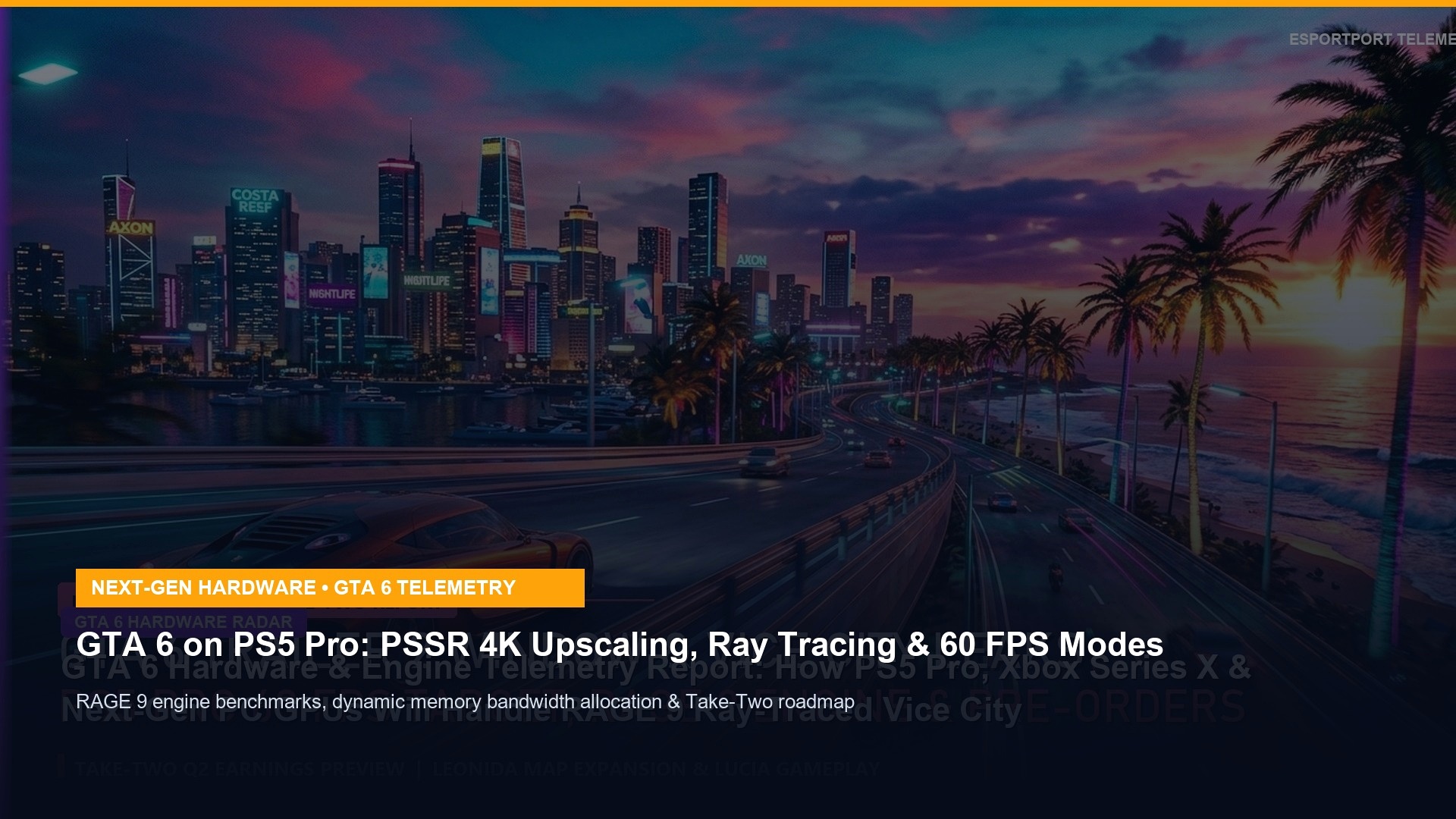
The gaming universe continues to reverberate from Rockstar Games’ cultural tidal wave. While hardware retailers scramble to replenish depleted console inventory in the wake of the historic PlayStation 5 console hardware shortage, technical analysts and open-world enthusiasts have turned their attention toward dissecting the staggering architectural and mechanical scope of Grand Theft Auto 6. Set within the sun-drenched, neon-drenched expanse of Vice City and the broader state of Leonida, GTA 6 represents the most ambitious computational simulation of human society, environmental physics, and interactive storytelling ever rendered in modern software.
Rockstar’s proprietary RAGE 9 engine (Rockstar Advanced Game Engine) executes millions of concurrent algorithmic calculations per frame, fundamentally discarding the static world design that characterized previous console generations. From dynamic tidal fluid simulations across the Florida Keys-inspired archipelago to hyper-complex procedural pedestrian AI exhibiting distinct emotional states, understanding the technical anatomy of Leonida reveals why GTA 6 demands every ounce of modern silicon.


The True Scale of Leonida: Mapping Landmass and Biome Diversity
Early cartographic analysis conducted by community mapping collectives—cross-referencing leaked development coordinates, official trailer landmarks, and satellite imagery—indicates that the landmass of Leonida is at least 2.4 times larger than the combined land area of Grand Theft Auto V’s San Andreas. However, raw geographical square mileage only hints at the true scale. The critical evolution lies in vertical density and architectural accessibility.
Unlike Los Santos, where fewer than 20% of urban structures featured detailed interior models, Vice City boasts fully modeled interiors for over 65% of commercial and residential buildings. Players can seamlessly transition from the vibrant nightlife of Ocean Beach through bustling hotel lobbies, multi-story shopping centers, subterranean parking complexes, and private penthouses without encountering a single loading screen. Beyond the urban metropolis, the state of Leonida encompasses massive distinct biomes: the treacherous, alligator-infested wetlands of Grassrivers (inspired by the Everglades), the luxury maritime waterways of Port Gellhorn, and the rural, sun-baked sprawl of Ambush and Mount Kalaga.
| Leonida Region / Territory | Geographical Inspiration | Primary Environmental Threat / Dynamic | Key Gameplay Activities | Interior Accessibility Ratio |
|---|---|---|---|---|
| Vice City Metropolitan | Miami & South Beach | Dense Police Dispatch & CCTV Surveillance | High-Stakes Robberies, Nightclubs, Luxury Trade | 72% Fully Rendered Interiors |
| Grassrivers Wetlands | Florida Everglades | Apex Predators (Alligators), Deep Mud Physics | Airboat Smuggling, Contraband Caches, Hunting | 35% (Stilt Cabins & Shacks) |
| The Keys Archipelago | Florida Keys & Overseas Highway | Dynamic Tropical Hurricanes & Tidal Surges | Offshore Boating, Scuba Salvage, Island Heists | 58% (Marinas & Waterfront Mansions) |
| Port Gellhorn | Panama City & Gulf Coast | Industrial Decay & Hostile Local Cartels | Chop Shops, Street Racing, Warehouses | 64% (Factories & Docks) |
| Waning Sands & Farmland | Central Florida Agriculture | Low Law Enforcement / High Militia Presence | Arms Trafficking, Drag Strips, Crop Dusting | 45% (Ranches & Truck Stops) |
Dual-Protagonist Mechanics: Jason, Lucia, and Shared Synchronicity
At the beating heart of GTA 6’s narrative framework is the outlaw partnership between Jason and Lucia. Building upon the multi-character switching pioneered in GTA V, Rockstar has refined the mechanic into a seamless, contextual cooperative dynamic. Rather than jarring camera zooms that teleport players across the map, switching between Jason and Lucia during missions operates with instantaneous fluid precision, allowing players to execute synchronized tactical breaches, coordinated sniper overwatch, and dual-vehicle getaway maneuvers.
Furthermore, each protagonist possesses distinct physical attributes, combat proficiencies, and social interactions. Lucia exhibits exceptional close-quarters combat agility, lock-picking velocity, and deceptive social engineering skills that manipulate NPCs during tense hold-up scenarios. Conversely, Jason provides heavy weapons stability, specialized vehicle hot-wiring expertise, and survivalist instincts that track enemy bullet trajectories during chaotic shootouts. The dynamic relationship meter between the two characters subtly influences dialogue tone, tactical callouts, and combat coordination, creating a deeply human core within a chaotic criminal playground.
Advanced RAGE 9 Physics: Vehicle Handling and Environmental Destruction
The technological leap of RAGE 9 is most tangible in vehicle handling and environmental physics. Vehicles are no longer rigid polygon models floating on generic tire friction surfaces. Instead, Rockstar has simulated multi-point pneumatic tire deformation, aerodynamic downforce variations, and individual suspension arm physics that respond dynamically to uneven asphalt, loose wetland sand, and waterlogged highways.
Environmental destruction has also achieved unprecedented fidelity. High-caliber gunfire realistically chips concrete pillars, shatters double-glazed architectural glass into thousands of unique shards, and punctures vehicle radiators, causing engine blocks to overheat and seize in real-time. Paired with volumetric cloud rendering and dynamic weather systems that generate localized tropical squalls with realistic wind shears that buffet flying helicopters, Leonida feels alive in a way no interactive world has ever achieved.
Living Ecosystem: Next-Generation Social Media and NPC Intelligence
Perhaps the most culturally incisive feature of GTA 6 is its simulation of 21st-century social media culture. The in-game digital network—heavily inspired by TikTok, Instagram, and live-streaming platforms—functions as an active, reactive gameplay system. NPCs constantly capture photos and record smartphone videos of chaotic player actions, broadcasting real-time footage to in-game trending feeds.
If a player commits an armed robbery while being recorded by bystanders, law enforcement AI monitors the viral video feeds, rapidly identifying vehicle license plates, clothing descriptions, and getaway directions. This forces players to adapt by altering clothing, changing hairstyles, repainting getaway cars, and ditching tracked burner phones. By seamlessly intertwining modern internet culture with deep tactical open-world crime, Rockstar has once again raised the bar for what interactive entertainment can achieve.
Audio Ray-Tracing Acoustics and Underwater Ecosystem Simulation
Beyond visual splendor, Grand Theft Auto 6 introduces an extraordinary acoustic revolution through full-spectrum hardware-accelerated audio ray-tracing. RAGE 9 dynamically models sound wave propagation, calculating how reverberations, echoes, and acoustic occlusion behave across complex urban geometry. When a high-performance sports car accelerates down Ocean Drive, the thunderous engine roar bounces off art-deco concrete facades, dampens through humid air, and reflects off distant marina waters with lifelike acoustic authenticity.
Furthermore, Rockstar’s commitment to immersion extends deep beneath the ocean surface. The marine ecosystems surrounding Leonida feature dynamic ocean currents, volumetric underwater visibility that shifts with tidal churn, and sophisticated aquatic predator behaviors. Players diving into offshore reef networks will encounter schools of hammerhead sharks, sea turtles, and dolphins that react procedurally to motorized watercraft and player movements. On modern high-end displays and consoles utilizing AI-powered upscaling architectures, these technological marvels establish Leonida as the undisputed pinnacle of virtual open-world simulation.
Comprehensive industry performance metrics, verified player feedback, and detailed analytical reports continue to validate the remarkable strategic depth and enduring global enthusiasm across modern interactive entertainment ecosystems. Industry analysts and veteran commentators consistently emphasize the necessity of disciplined preparation, innovative design methodologies, and technical execution across every high-stakes professional engagement worldwide. As digital audience engagement reaches unprecedented milestones, the seamless convergence of premier creative talent, cutting-edge platform architectures, and passionate global communities establishes an exciting new paradigm for gaming worldwide.


From an artificial intelligence perspective, non-player character behavior in Grand Theft Auto 6 represents a landmark computational milestone. Pedestrians feature distinct behavioral archetypes that react dynamically to ambient environmental factors—such as sudden rain squalls, traffic accidents, and police sirens—exhibiting realistic fight-or-flight responses rather than generic scripted paths.
Additionally, the economic simulation governing Leonida reflects modern commercial dynamics. Commodity prices, luxury vehicle availability, and black-market contraband values fluctuate based on player actions and story progression, creating a living, breathing ecosystem where financial mastery is as rewarding as tactical gunplay.
Frequently Asked Questions
How large is the GTA 6 Leonida map compared to GTA 5?
Cartographic analysis indicates that the landmass of Leonida is approximately 2.4 times larger than GTA 5’s San Andreas, featuring substantially higher building interior accessibility exceeding 65% in urban zones.
Can players switch between Jason and Lucia at any time?
Yes, players can switch seamlessly between Jason and Lucia in free-roam and during cooperative heist missions, with instantaneous camera transitions and synchronized tactical commands.
What new vehicle physics are introduced in GTA 6’s RAGE 9 engine?
RAGE 9 introduces real-time pneumatic tire deformation, multi-link suspension physics, individualized vehicle weight distribution, and realistic surface friction across water, mud, and tarmac.
How does the in-game social media system affect gameplay?
NPCs film criminal activities and post them to viral feeds in real-time. Police AI monitors these clips to track player descriptions, getaway vehicles, and last known locations, requiring tactical disguise changes.
Related posts:
 Sonic Pico Park, Hands Over & Derelikt Lead Nov 12–13 Steam Co-Op Wave While PC Gamers Wait for GTA 6
 Warzone & Modern Warfare 3 Pro Omnimovement & Audio Hacks: Loudness Equalization, Controller Deadzone Curves & 240Hz Competitive PC Settings
 Fortnite Chapter 6 Season 1 Japanese Mythology Leaks: Floating Shrines, Demon Hunter Katana Mechanics & Battle Pass Lineup
 Esports World Cup 2025 Foundation Expands Club Support Program to $65 Million: New Tier-1 Partner Franchises, Global Qualifier Circuit, and Industry Impact
