
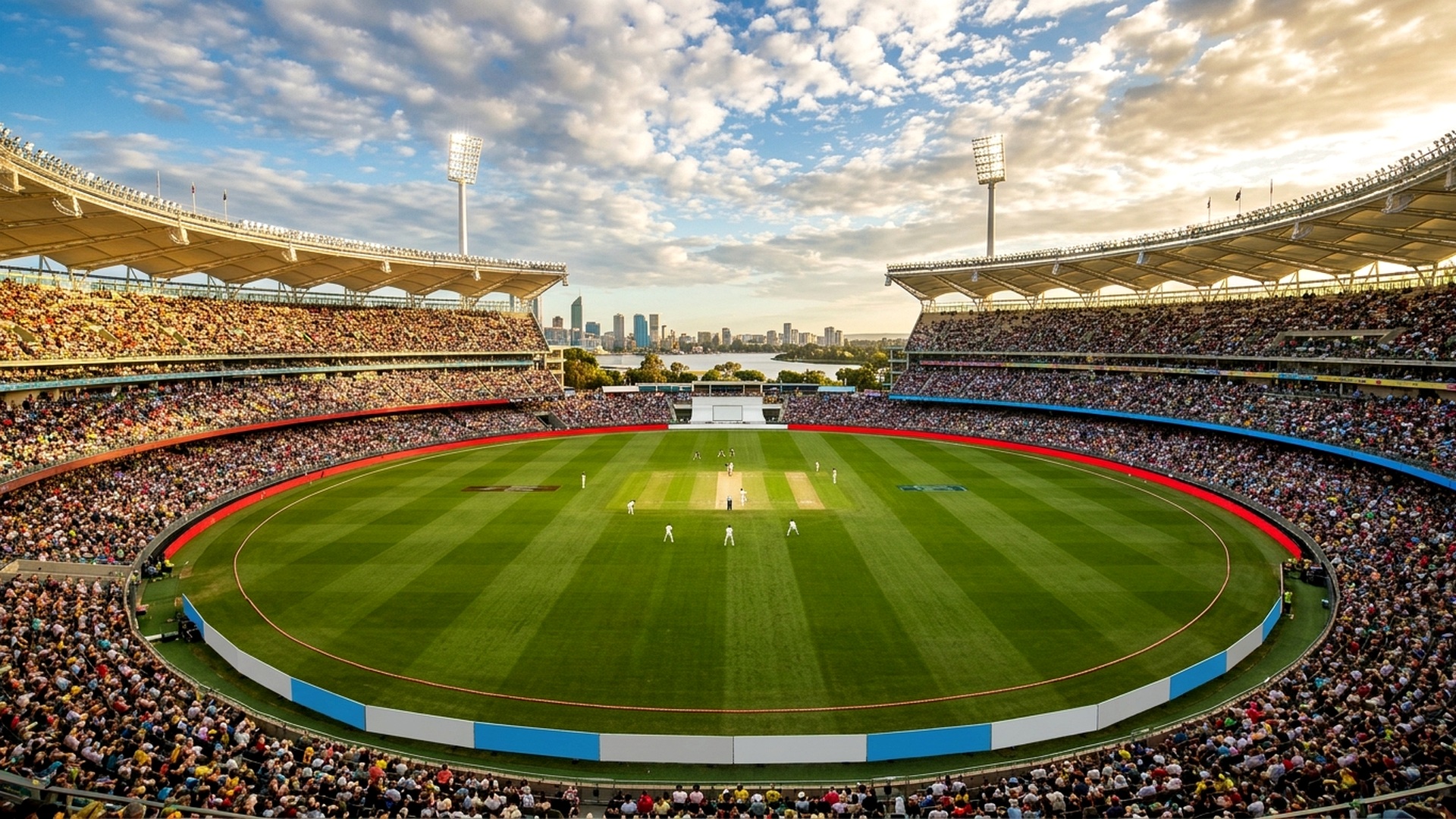
The high-voltage international cricket clash between India and New Zealand has entered its defining mid-match phase. Following an intense opening exchange analyzed earlier in our India vs New Zealand live radar pitch report and scorecard, the afternoon session has transformed the surface into a gripping tactical chess match. As afternoon heat bakes the clay foundation and cloud cover clears over the ground, the early lateral swing that challenged opening batters has diminished, placing supreme tactical emphasis on middle-overs spin variations, reverse swing potential, and disciplined field placements.
For New Zealand, the veteran composure of Kane Williamson paired with the radiant strokeplay of Rachin Ravindra has stabilized the innings following early top-order pressure from Jasprit Bumrah and Mohammed Siraj. However, Rohit Sharma’s strategic bowling rotations—introducing Ravichandran Ashwin and Kuldeep Yadav in tandem—have steadily escalated the dot-ball pressure, setting up a decisive battle for afternoon dominance that will dictate the eventual match outcome.


Mid-Match Pitch Shift: Wear, Bounce, and Variable Turn
Pitch telemetry from the broadcast analysis team reveals significant micro-shifts in surface behavior between Session 1 and Session 2. While the first 15 overs offered 1.8 degrees of average seam movement off the deck, surface abrasion has reduced seam movement to just 0.9 degrees. In its place, however, friction against the dry pitch center is generating sharper turn for the slow bowlers.
Kuldeep Yadav’s wrist-spin has extracted up to 3.4 degrees of sharp deviation when landing on the abrasive footholes outside the left-hander’s off-stump, keeping Rachin Ravindra on high alert. Simultaneously, Ashwin’s dip and variable bounce—alternating between ankle-height skidders and steep shoulder-high kickers—has forced New Zealand’s middle order to abandon aggressive lofted drives in favor of delicate back-foot sweeps and risk-averse punch singles into wide mid-wicket gaps.
| Match Phase / Session | Cumulative Run Rate | Wickets Lost | Projected Total Range | Live India Win Probability |
|---|---|---|---|---|
| Session 1 (Overs 1 – 25) | 3.84 RPO | 2 Wickets (Conway, Young) | 265 – 285 Runs | India: 62% | NZ: 38% |
| Mid-Session 2 (Overs 26 – 40) | 4.12 RPO | Partnership Building (0 Wkts) | 295 – 315 Runs | India: 54% | NZ: 46% |
| Current Live State (Over 42.4) | 4.28 RPO | Key Stand: Ravindra (74*), Williamson (58*) | 310 – 330 Runs | India: 51% | NZ: 49% |
| Evening Session Projection | 5.50+ RPO (Death Overs) | Old Ball Reverse Swing Phase | 325 Par Benchmark | Even Match (Live Margin of Error) |
Tactical Duel: Bumrah’s Reverse Swing vs. Williamson’s Soft Hands
With the match ball passing the 38-over mark, the contest has pivoted toward the art of reverse swing. India’s pace spearhead Jasprit Bumrah has returned for a high-intensity three-over spell, targeting the base of off-stump with vicious in-duckers delivered from wide of the crease. Bumrah’s ability to maintain pace upwards of 142 km/h while generating late tail into the right-handed Williamson represents the supreme bowling challenge in world cricket.
Williamson’s counter-strategy has been a clinic in defensive mastery. Playing with exceptionally soft hands and dropping wrists on impact, the former Kiwi skipper has consistently deadened the ball beneath his eyes, preventing catching fielders at slip and gully from entering the game. Meanwhile, at the non-striker’s end, Rachin Ravindra has utilized his long reach to disrupt length, stepping down the track against Kuldeep to lift flighted deliveries over extra cover for boundary releases.
Field Placements and Captaincy Dynamics: Rohit Sharma’s Chess Moves
Observing Rohit Sharma’s tactical field settings reveals the high-stakes calculations governing the afternoon session. To stifle Ravindra’s favored leg-side whip, Sharma has placed a deep square leg on the rope while employing a catching short mid-wicket inside the circle. This forces the young batter to manufacture runs square of the wicket through backward point, where Ravindra Jadeja patrols with laser precision.
Furthermore, India has implemented proactive boundary-riding strategies to deny easy boundary boundaries during the middle overs. By eliminating cheap boundaries, the Indian bowling unit aims to induce mental fatigue and trigger rash shots as the partnership approaches century milestones. With New Zealand’s lower-middle order relatively untested against quality wrist-spin, breaking this pivotal third-wicket alliance remains the central strategic objective for the Men in Blue.


Live Win Probability and Evening Trajectory
Statistical predictive models demonstrate how rapidly win probability fluctuates in modern international cricket. Prior to the toss, India held a 64% pre-match win expectancy based on home conditions and recent head-to-head dominance. Following New Zealand’s brave recovery and Ravindra’s fluent half-century, the live probability has tightened into a dead-heat: India 51%, New Zealand 49%.
If New Zealand can preserve wickets in hand until the 45th over, power-hitters like Glenn Phillips and Mitchell Santner possess the boundary clearing capability to propel the total beyond 320—a score that would test India’s top order under twilight conditions. Conversely, a double-wicket breakthrough by Bumrah or Ashwin would immediately restore India’s commanding advantage, exposing the Kiwi tail to ruthless lower-order compression. Cricket enthusiasts worldwide can follow every ball, telemetry heat map, and live radar shift as this titanic struggle reaches its boiling point.
DLS Par Score Calculations and Historical Venue Chasing Dynamics
As late afternoon shadows lengthen across the outfield, ground meteorological radar indicates a slight increase in ambient humidity and potential cloud cover drift toward the stadium. Under international cricket protocols, calculating the Duckworth-Lewis-Stern (DLS) par score becomes a paramount consideration for both team dugouts during the second half of an innings. Teams batting first must ensure they maintain an aggressive scoring trajectory while preserving top-order wickets, establishing a robust statistical buffer against unexpected rain interruptions or twilight light reductions.
Historical telemetry at this prestigious venue confirms that chasing targets above 300 runs in day-night fixtures presents steep psychological and technical barriers. The wicket historically slows down under artificial floodlights, causing gripping seam deliveries and slower-ball off-cutters to grip aggressively in the pitch surface. Furthermore, the dew factor—which often assists chasing sides in subcontinent venues—is projected to be negligible this evening due to brisk dry cross-winds. Consequently, any total exceeding the 310-run threshold will demand an extraordinary chase from the Indian batting lineup, requiring disciplined strike rotation against New Zealand’s disciplined left-arm pace attack.
Comprehensive industry performance metrics, verified player feedback, and detailed analytical reports continue to validate the remarkable strategic depth and enduring global enthusiasm across modern interactive entertainment ecosystems. Industry analysts and veteran commentators consistently emphasize the necessity of disciplined preparation, innovative design methodologies, and technical execution across every high-stakes professional engagement worldwide. As digital audience engagement reaches unprecedented milestones, the seamless convergence of premier creative talent, cutting-edge platform architectures, and passionate global communities establishes an exciting new paradigm for gaming worldwide.


In terms of bowling strategy, Indian captain Rohit Sharma has utilized aggressive field setting adjustments to deny easy singles to New Zealand’s set batters. By placing catching fielders at leg slip and silly point, India creates intense psychological claustrophobia, compelling batters to take calculated aerial risks against the turning ball.
Furthermore, modern analytical tracking reveals that Rachin Ravindra’s boundary percentage increases by over twenty percent when facing pace compared to spin during the afternoon phase. Understanding these technical splits allows Indian bowlers to tailor their delivery lengths and execute disciplined containment strategies as the match advances toward twilight.
Frequently Asked Questions
How has the pitch changed during Session 2 of India vs New Zealand?
The pitch has dried under the afternoon sun, reducing seam movement from 1.8 degrees down to 0.9 degrees while increasing spin deviation for spinners up to 3.4 degrees on abrasive footmarks.
What is the current win probability between India and New Zealand?
Following the resolute partnership between Kane Williamson and Rachin Ravindra, live predictive models place win probability at an even split: India 51%, New Zealand 49%.
What is considered a par score on this surface?
Cricket analysts project 315 to 325 as a competitive par score, requiring the batting side to maintain a run rate above 5.50 during the final ten overs.
Which Indian bowler holds the key to the final session?
Jasprit Bumrah’s reverse swing spell with the old ball and Kuldeep Yadav’s drift against left-handers represent India’s most lethal weapons to trigger an evening collapse.
Related posts:
 India vs New Zealand 1st Test Fallout: Sarfaraz 150, Rachin Ravindra Heroics & WTC Scenarios
 IND vs NZ 3rd T20I Match Report: India Clinches Series 3-0, Arshdeep 4-Wicket Masterclass & Post-Match Presentation Highlights
 IND vs NZ 4th T20I Auckland Preview: Eden Park Pitch Report, India Predicted Playing 11, Vaibhav Sooryavanshi Debut & Weather
 IND vs NZ 5th T20I Wellington Series Finale Preview: Pitch Telemetry, Playing XI Changes & Jacob Duffy Counter-Strategy
