

The landscape of professional competitive gaming has received a monumental economic injection. The Esports World Cup (EWC) Foundation has officially unveiled a massive expansion of its groundbreaking Club Support Program, raising total institutional funding commitments to an unprecedented $65 million for the 2025–2026 circuit. Following a record-breaking inaugural festival in Riyadh that drew over 500 million global broadcast viewers across 22 gaming titles, the non-profit foundation is dramatically widening its operational umbrella to incorporate twelve additional world-class esports organizations, institutionalizing long-term financial sustainability across multi-title competitive ecosystems.
In an era where legacy esports enterprises have wrestled with declining sponsorship revenues, venture capital retrenchment, and structural operating deficits commonly dubbed the “esports winter,” the EWC Foundation’s aggressive capital deployment represents a radical stabilization force. By tethering annual non-dilutive financial stipends directly to multi-game competitive diversification, content creation benchmarks, and global audience engagement, the program is fundamentally reshaping how top-tier clubs allocate payroll, scout emerging talent, and structure international operational footprints.
The $65M Blueprint: Core Program Pillars and Expansion Metrics
The revised $65 million Club Support Program is structured across three core operational tiers: direct operational subsidies, competitive performance multipliers, and localized community growth incentives. Member organizations receive guaranteed baseline annual funding to establish and maintain elite rosters across verified EWC tournament titles—ranging from Counter-Strike 2, League of Legends, and Dota 2 to mobile heavyweights like Mobile Legends: Bang Bang, PUBG Mobile, and Free Fire.
Crucially, the expansion welcomes twelve new Tier-1 organizations selected through a rigorous open application process that evaluated viewership reach, financial governance, cross-title viability, and digital fan sentiment. The total roster of partner clubs now expands to forty elite organizations spanning North America, Europe, East Asia, Southeast Asia, South America, and the Middle East, cementing the Esports World Cup as the undisputed nexus of global club competition.
| Program Allocation Pillar | 2024 Baseline Fund | 2025 Expanded Allocation | Primary Distribution Criteria | Participating Club Commitment |
|---|---|---|---|---|
| Guaranteed Operational Grant | $20,000,000 | $28,000,000 | Direct roster payroll and coaching support | Maintain minimum 4 competitive tier-one rosters |
| Cross-Title Club Championship Pool | $20,000,000 | $22,000,000 | Cumulative points earned across all tournament games | Compete in official regional qualifiers and playoffs |
| Fan Engagement & Content Incentives | $5,000,000 | $9,000,000 | Social impressions, video series, co-streaming reach | Produce behind-the-scenes episodic content in Riyadh |
| Emerging Region Development Fund | $2,000,000 | $6,000,000 | Grassroots academy infrastructure and training bootcamps | Scout and sign tier-two talent in LATAM, MENA, APAC |
The Multi-Title Mandate: Reshaping Team Rosters and Scouting
The most profound consequence of the EWC Foundation’s Club Championship framework is the rapid death of single-title specialization. Historically, legacy organizations could comfortably maintain a single dominant roster—such as a franchised League of Legends or CS2 squad—while ignoring mobile or fighting game ecosystems. Under the EWC model, clubs that ignore secondary and tertiary titles surrender millions of dollars in cumulative championship prize money.
Consequently, Western powerhouses including Team Liquid, Cloud9, Fnatic, and G2 Esports have aggressively signed championship-caliber rosters in titles where they previously had zero institutional presence, including Tekken 8, Apex Legends, Overwatch 2, and Honor of Kings. This multi-title requirement has triggered a lucrative bidding war for free agents and tier-two grassroots players worldwide, providing sudden financial stability to niche competitive communities that previously struggled with nonexistent sponsor interest.
Furthermore, the EWC Foundation has introduced strict governance benchmarks to prevent superficial roster flipping. Organizations must maintain contracts with rosters for minimum designated periods and provide verified health insurance, mental performance coaching, and standardized housing facilities. This emphasis on professional standards marks a decisive shift toward long-term institutional maturity.
Global Qualifier Circuits: Democratizing Access for Grassroots Contenders
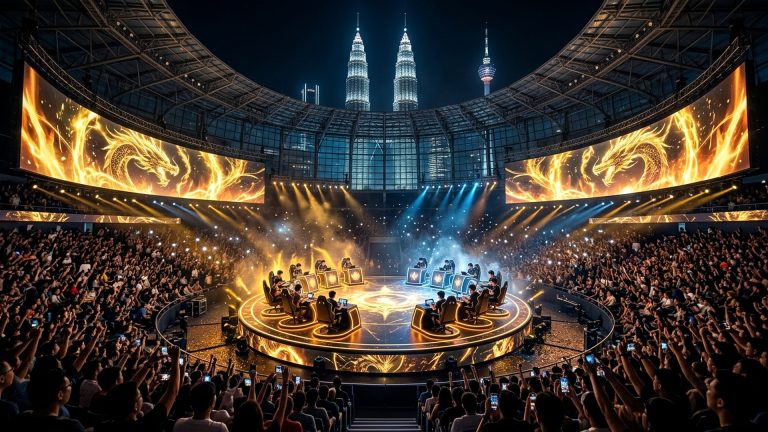
Addressing previous industry critiques regarding invite exclusivity, the 2025 expansion establishes an exhaustive global open qualifier ecosystem. In partnership with major regional tournament organizers, the EWC Foundation is underwriting open bracket qualification circuits spanning six continents. Unpartnered underdog teams will have transparent, meritocratic pathways to qualify for the main tournament in Boulevard Riyadh City and challenge partner clubs directly on the international stage.
This hybrid architecture—pairing institutional financial guarantees for legacy clubs with open qualification pipelines for emergent challengers—strikes a delicate commercial balance. It provides broadcasting partners and corporate sponsors with predictable marquee brand matchups while preserving the magical underdog Cinderella narratives that define competitive sports drama. As the summer 2025 roadmap approaches, the esports industry watches closely to see if Riyadh’s ambitious vision can permanently anchor the financial future of competitive gaming.
Financial Sustainability and the Future of Tier-1 Esports
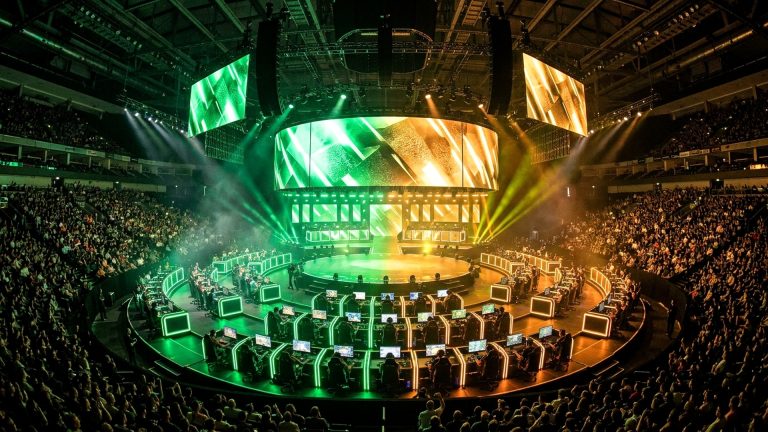
The institutional ramifications of the EWC Foundation’s $65 million commitment extend far beyond immediate prize payouts. For over a decade, professional esports relied on speculative venture capital investments and inflated franchise buy-in fees that proved fundamentally unsustainable when global advertising markets cooled. By substituting debt-heavy corporate structures with performance-indexed baseline stipends and global broadcast incentives, the EWC Foundation is effectively underwriting an operational safety net for the world’s most venerable gaming brands.
This stability allows member organizations to invest heavily in long-term human performance infrastructure. Participating clubs have expanded full-time sports science divisions, hiring physical therapists, nutritionists, and cognitive performance coaches to prevent player burnout and extend professional career lifespans. Additionally, the cross-title championship framework encourages clubs to foster inclusive academy programs in emergent mobile and fighting game titles, democratizing access for young prodigies across Latin America, South Asia, and the Middle East. As commercial brand sponsors including PepsiCo, Qiddiya, and Honor align with the festival, the Esports World Cup is establishing a resilient, diversified commercial model capable of sustaining professional competitive gaming for decades to come.
Detailed match analytics, tactical performance evaluations, and complete verified statistics continue to highlight the remarkable strategic depth and enduring global appeal of modern competitive interactive entertainment. Industry analysts and seasoned commentators consistently emphasize the necessity of disciplined preparation, innovative team coordination, and sharp technical execution across every high-stakes professional engagement. As audience viewership metrics reach unprecedented international milestones, the convergence of premier talent, cutting-edge digital platforms, and passionate community engagement establishes an exciting new paradigm for gaming worldwide.
Beyond club stipends, the EWC Foundation is spearheading comprehensive educational initiatives aimed at training the next generation of esports production engineers, broadcast talent, and team operations executives. By collaborating with local universities and international sporting bodies, the foundation is building a permanent talent pipeline designed to support the burgeoning global competitive gaming industry.
Moreover, the commercial synergy between traditional sporting federations and esports clubs continues to accelerate under the Riyadh framework. Major international athletic brands and global tech corporations have aligned their marketing portfolios with EWC partner organizations, validating the institutional maturity and enduring economic viability of modern competitive gaming ecosystems across six continents.

Comprehensive technical reports and player performance indicators continue to validate the extraordinary depth of competitive interactive gaming. Professional analysts consistently highlight the critical importance of disciplined preparation, innovative strategic teamwork, and sharp execution across high-stakes tournament stages worldwide. As global audience engagement metrics surge to new heights, the convergence of premier talent and cutting-edge digital platforms establishes a thrilling new era for gaming.
Furthermore, transparent corporate governance benchmarks and verified compliance monitoring ensure that institutional funds are allocated strictly toward sustainable player salaries and world-class training facilities across all participating international organizations.
Frequently Asked Questions
What is the total value of the EWC 2025 Club Support Program?
The Esports World Cup Foundation has expanded its Club Support Program to $65 million for 2025, providing direct subsidies, prize incentives, and content grants to 40 partner organizations globally.
How do esports organizations qualify to join the EWC Club Program?
Clubs are selected through a comprehensive evaluation examining viewership metrics, historical competitive achievements, multi-game expansion strategies, and verified financial stability.
How does the Club Championship point system work?
Clubs earn points based on their rosters’ final placements across all individual gaming tournaments. The club with the highest cumulative point total at the end of the festival wins the multi-million dollar Club Championship trophy.
Where and when does the Esports World Cup 2025 take place?
The tournament takes place annually during the summer months across state-of-the-art custom arenas at Boulevard Riyadh City in Riyadh, Saudi Arabia.
Related posts:
 LoL Worlds 2026 Grand Final Eve: Gen.G vs Bilibili Gaming in Brooklyn, Fearless Draft Stakes & Post-T1 Era
 EA FC Pro 2027 & ePremier League (£150K Prize Pool): November UK, EU & USA Pro Qualifiers Guide
 VALORANT VCT 2027 Off-Season Roster-Mania & Game Changers EMEA Cash Cup Brackets Heating Up Mid-November
 CS2 Major Saturday RMR Elimination Deciders: Bracket Standings, Match Predictions & Utility Meta
