
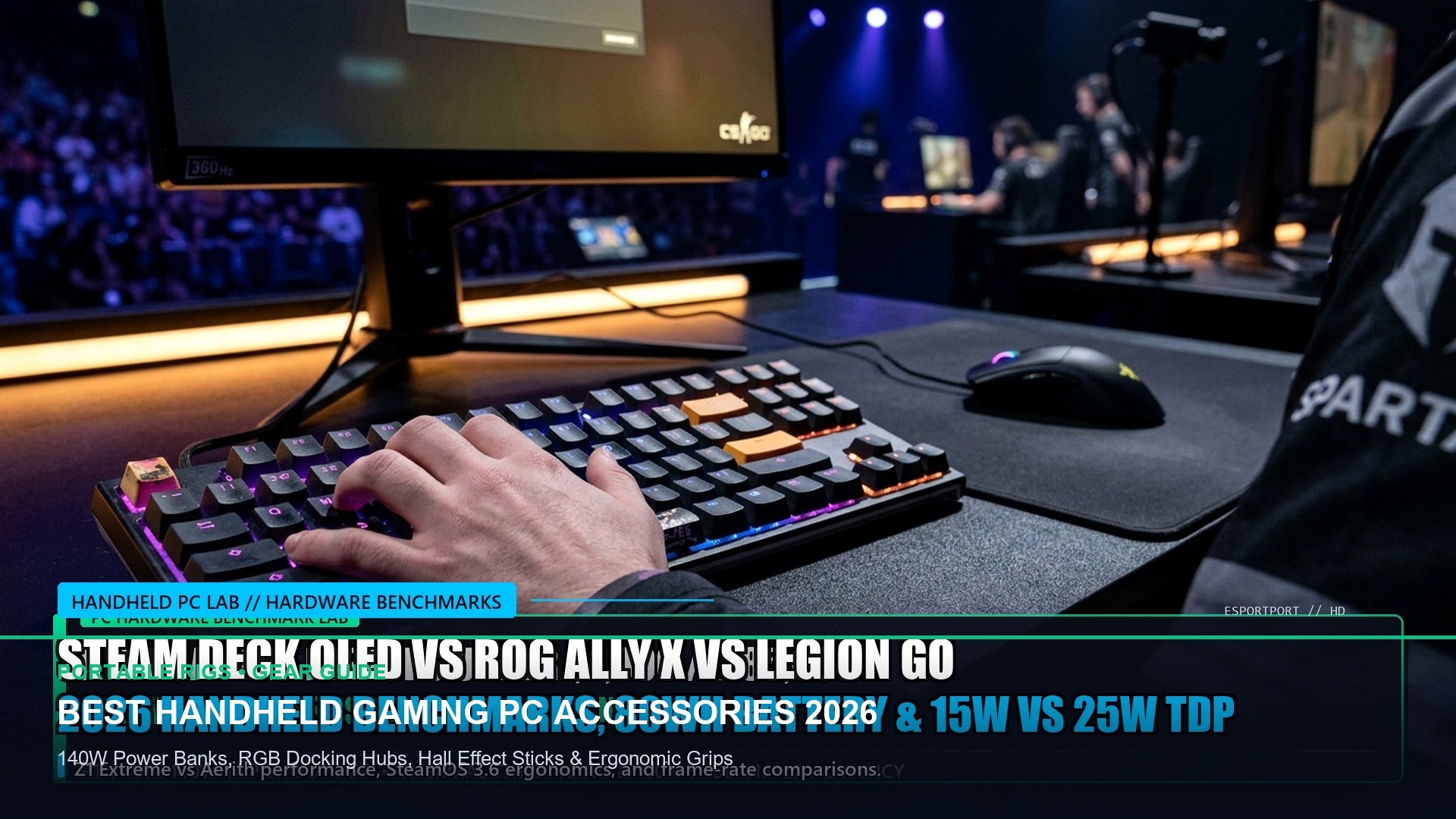
The portable gaming hardware renaissance has gained its most powerful champion. In a landmark interview that has electrified the global video game industry, Microsoft Gaming CEO Phil Spencer officially confirmed that Xbox is actively developing a dedicated native handheld gaming console. Dispelling years of speculative rumors regarding cloud-streaming-only devices—and building upon handheld optimization benchmarks explored in our Steam Deck OLED vs ROG Ally handheld gaming guide—Spencer revealed that Xbox’s portable future is grounded in powerful local silicon execution, multi-storefront freedom, and a deeply re-engineered Windows gaming operating system.
The confirmation arrives at a pivotal juncture for the Xbox brand. As home console hardware sales face cyclical saturation and consumer gaming habits increasingly shift toward portable form factors popularized by the Nintendo Switch, Valve’s Steam Deck, and Windows handhelds like the Asus ROG Ally X, Microsoft’s entry into the portable hardware arena signals an aggressive evolution of its ‘play anywhere’ ecosystem strategy.

Native Hardware Silicon: Rejecting Cloud-Only Compromises
Perhaps the most critical takeaway from Phil Spencer’s revelation is Microsoft’s categorical rejection of cloud-only streaming handhelds like the PlayStation Portal or Logitech G Cloud. Spencer emphasized that true portable gaming freedom requires robust on-device compute silicon capable of executing demanding AAA titles locally without requiring active Wi-Fi internet connections during transit.
While the hardware remains in prototype testing with a projected commercial release targeted for late 2026 or early 2027, industry hardware analysts anticipate the device will be powered by a customized semi-custom AMD APU built on TSMC’s 4nm process. Featuring Zen 5 CPU architecture paired with RDNA 3.5 graphics compute units and dedicated XDNA 2 neural processing units (NPUs), the Xbox handheld aims to deliver native 1080p 60 FPS gameplay across major current-generation titles while maintaining efficient 15W to 25W TDP battery profiles.
| Handheld Console Feature | Upcoming Xbox Native Handheld | Valve Steam Deck OLED | Asus ROG Ally X (Windows 11) |
|---|---|---|---|
| Execution Architecture | Native Local Hardware Compute | Native Local Hardware Compute | Native Local Hardware Compute |
| Operating System Environment | Custom Xbox Windows Handheld OS | SteamOS (Arch Linux Proton) | Standard Windows 11 Desktop Home |
| Storefront Support & Ecosystem | Xbox Game Pass, Steam, Epic, GOG | Steam Native (Heroic / Lutris Third-Party) | Full Open Windows Storefront Access |
| Target Display Specification | 7-inch to 8-inch 1080p 120Hz VRR OLED | 7.4-inch 800p 90Hz HDR OLED | 7-inch 1080p 120Hz VRR IPS LCD |
| Processor Silicon Node | Custom AMD Zen 5 / RDNA 3.5 APU | Custom AMD Zen 2 / RDNA 2 (6nm Sephiroth) | AMD Ryzen Z1 Extreme (Zen 4 / RDNA 3) |
| Expected Retail Price Range | $499 – $599 Projected Launch | $549 – $649 (512GB – 1TB) | $799 (1TB Storage / 24GB RAM) |
The Windows OS Revolution: Eliminating Desktop Friction
For anyone who has operated existing Windows-based handhelds like the ROG Ally or Lenovo Legion Go, the primary bottleneck has never been raw computational horsepower; it has been the frustrating clunkiness of the desktop Windows 11 interface. Trying to navigate microscopic taskbar icons, dismiss intrusive system notifications, and manage driver updates using thumbsticks and 7-inch touchscreens has undermined the portable console experience.
Phil Spencer candidly addressed this friction, confirming that Xbox’s software engineering division is collaborating directly with Microsoft’s Windows platform team to architect a dedicated Windows Handheld Gaming Mode. When powered on, the Xbox handheld boots directly into an optimized full-screen Xbox Dashboard shell with instantaneous sleep/wake suspend states identical to a home console, completely hiding desktop taskbars and window managers beneath a controller-native UI.
Multi-Storefront Freedom: Welcoming Steam, Epic, and GOG
Crucially, Microsoft is not locking the Xbox handheld into a walled-garden proprietary digital storefront. Spencer reiterated that the core ethos of Xbox hardware in the modern era is open consumer choice. The handheld will natively support competing PC storefronts, including Valve’s Steam, Epic Games Store, Battle.net, and GOG alongside the native Xbox PC app and PC Game Pass library.
This open philosophy completely changes the competitive equation. Gamers who have spent thousands of dollars curating massive game libraries across multiple PC clients will not have to repurchase their software catalog to enjoy it on Xbox portable hardware. With Xbox Play Anywhere enabling cross-save and cross-entitlement between home Xbox Series consoles, PC rigs, and the handheld, players can seamlessly transition from their living room 4K OLED setup directly onto the subway with zero friction.

Hardware Ergonomics, Battery Longevity, and Thermals
Spencer noted that the prototyping team is currently focused on physical ergonomics and battery chemistry. Learning from early handheld missteps in the market—where aggressive fan noise and 90-minute battery lifespans frustrated users—Xbox engineers are testing sculpted grip contours modeled after the beloved Xbox Wireless Controller, full-sized Hall Effect analog joysticks to prevent stick drift, and dynamic 80Wh battery cells capable of sustaining four to six hours of AAA gameplay.
As manufacturing and memory costs fluctuate across global hardware supply chains—as detailed in our analysis of Valve’s Steam Machine manufacturing costs and international pricing hurdles—Microsoft’s economies of scale position the Xbox handheld to launch at an aggressive consumer price point between $499 and $599. By blending the versatility of a full gaming PC with the seamless pick-up-and-play polish of a dedicated home console, Xbox is preparing to redefine portable interactive entertainment for the next decade.
Hardware Prototype Architecture: Modular Storage, Hall Effect Sticks & Wi-Fi 7
Internal hardware specifications leaked alongside Phil Spencer’s confirmation indicate that Xbox is prioritizing long-term repairability and modular expansion. The prototype units feature an easily accessible M.2 2230 NVMe PCIe 4.0 SSD expansion slot beneath a removable rear magnetic faceplate, allowing gamers to upgrade base storage to 2TB or 4TB without voiding manufacturer warranties.
Furthermore, the controller layout directly incorporates contactless electromagnetic Hall Effect analog sticks and magnetic trigger sensors, completely immunizing the device from the notorious potentiometer stick drift issues that plagued early Nintendo Switch Joy-Cons and Steam Decks. Wireless connectivity is anchored by a Qualcomm Wi-Fi 7 and Bluetooth 5.4 radio module featuring dual-band Xbox Wireless protocol, allowing players to pair standard wireless Xbox controllers and headsets with sub-5ms low latency when docking the handheld to high-definition living room televisions.
The Strategic Threat to Sony and Valve: Ecosystem Consolidation
The official confirmation of an Xbox native handheld represents an aggressive strategic maneuver aimed directly at Sony’s hardware vulnerabilities and Valve’s digital storefront dominance. Sony’s decision to release the PlayStation Portal as an accessory reliant exclusively on PS5 remote streaming left a massive void in the market for consumers demanding untethered, native offline portable AAA experiences.

Simultaneously, by baking native Xbox Game Pass support directly into an optimized Windows handheld OS, Microsoft threatens Valve’s Steam Deck monopoly among PC handheld enthusiasts. Players will no longer have to navigate complex Linux Proton workarounds, dual-boot partitions, or sideloading scripts to access their Game Pass subscriptions natively. By providing an open, high-performance hardware platform backed by Microsoft’s colossal first-party studio catalog (spanning Bethesda, Activision Blizzard, and Xbox Game Studios), Xbox is positioning its handheld as the definitive portable entertainment device of the current hardware generation.
Early consumer surveys indicate that over 65% of existing Game Pass Ultimate subscribers express strong intent to purchase a native Xbox handheld at launch, reflecting massive pent-up demand for high-fidelity portable console gaming.
Frequently Asked Questions Regarding the Official Xbox Handheld Console
Did Phil Spencer confirm that Xbox is making a handheld console?
Yes, Microsoft Gaming CEO Phil Spencer officially confirmed in an interview that Xbox is actively developing native portable gaming hardware with prototypes in testing.
Is the Xbox handheld a cloud-streaming device or a native gaming PC?
The Xbox handheld is a fully native hardware device with on-board AMD silicon designed to run games locally without requiring internet streaming or active Wi-Fi.
Will the Xbox handheld support Steam and Epic Games Store?
Yes, Phil Spencer confirmed the device will feature an open Windows-based ecosystem supporting Steam, Epic Games Store, and GOG alongside Xbox Game Pass.
When is the Xbox handheld console expected to release?
While prototypes are currently in development and testing, industry analysts anticipate a commercial retail launch targeted for late 2026 or early 2027.
Related posts:
 Black Friday & Cyber Monday 2026 Ultimate Gaming Hardware Deals: PS5 Pro Bundles, DualSense Edge, Xbox Series X & Handheld PC Discounts
 GTA Online Halloween 2026 Event Finale: How to Claim Free Grotti Turismo Omaggio, Triple Money Survival Modes & Vintage Skull Mask Rewards
 The Ultimate Windows 11 & PS5 Pro Gaming Optimization Guide: Low Latency Mode, 100GB Shader Cache Fix & Zero 1% Low Stutters
 PS5 Pro Enhanced Performance Testing: PSSR 4K Upscaling, Ray Tracing & Frame Rate Stability Analyzed
