
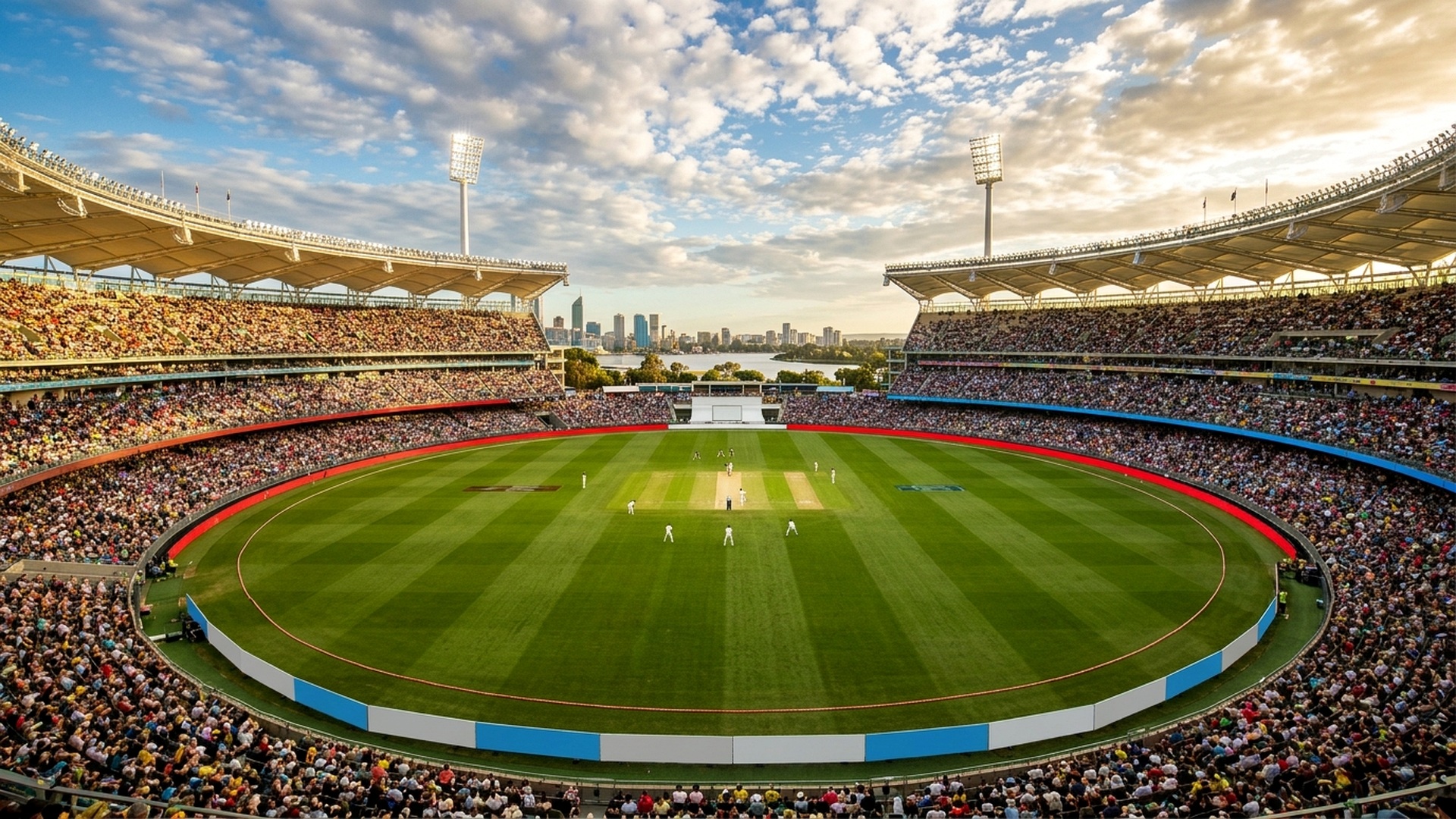
Australian cricket fandom has reached a fever pitch as the nation prepares to host the most anticipated Test series of the modern century: the five-match Border-Gavaskar Trophy between reigning World Test Champions Australia and powerhouse India. Starting at the cauldron of Optus Stadium in Perth, Western Australia, this colossal confrontation pits the world’s top two cricket teams against each other across two grueling months of red-ball warfare. With Australia having surrendered the last four consecutive Border-Gavaskar Trophy series—including historic back-to-back defeats on home soil in 2018-19 and 2020-21—Pat Cummins’ men are fueled by an intense desire for sporting retribution.
The build-up in Perth has been accompanied by high-octane white-ball drama on the eastern coast. Australia’s thrilling six-wicket victory over England in the 1st T20I at the Melbourne Cricket Ground—sparked by Josh Inglis’s blistering 78 not out and Adam Zampa’s middle-overs squeeze—has energized the domestic sporting landscape. However, the media storm ignited by Australian cricket icons Usman Khawaja and David Warner exchanging pointed commentary critiques has added psychological spice to the Australian dressing room ahead of the Perth toss.


At Optus Stadium, head curator Isaac McDonald has prepared an authentic Western Australian green-top surface designed to restore Perth’s legendary reputation for terrifying pace and steep, unplayable bounce. With unseasonably dry and sunny 32°C conditions forecast for Perth, the drop-in pitch is engineered to crack, creating an unpredictable minefield for top-order batters from both nations.
| Test Match Parameter | Matchday Context & Venue Logistics | Strategic Impact on Series |
|---|---|---|
| Series & Match Number | Border-Gavaskar Trophy 2026-27, 1st Test | Sets tone for historic five-Test bilateral blockbuster |
| Venue & Capacity | Optus Stadium (Perth Stadium), WA (60,000 capacity) | Fastest and bounciest surface in world cricket today |
| Captains & Leadership | Pat Cummins (Australia) vs Jasprit Bumrah (India – Stand-in) | Rare battle of elite fast-bowling Test captains |
| World Test Championship Context | Australia (#1, 62.5% PCT) vs India (#2, 58.3% PCT) | Direct pathway to WTC Final at Lord’s in June 2027 |
Pitch Telemetry: The Science of Optus Stadium’s Pace and Cracks
Agronomic telemetry and soil compaction readings from Optus Stadium confirm that the Perth drop-in pitch will offer extreme pace and sideways deviation. Isaac McDonald left eight to ten millimeters of live green grass on the surface during the final rolling phase, ensuring that the Kookaburra ball’s pronounced seam bites aggressively into the turf during the opening two sessions of Day 1. Speed radar projections estimate that fast bowlers hitting the deck hard at 140 km/h will generate rebound velocities exceeding 128 km/h into wicketkeeper Alex Carey’s gloves, with delivery heights routinely soaring chest-high to front-foot defenders.
With Rohit Sharma absent for the series opener following the birth of his second child, world number one Test bowler Jasprit Bumrah assumes the captaincy of the Indian side. Bumrah’s unique hyperextension bowling action and low release point make him exceptionally lethal on bouncy Australian wickets. While conventional seamers release from nearly eight feet high, Bumrah’s flatter trajectory causes the ball to skid off the grass before abruptly climbing into the batter’s ribs, creating immense lbw and bat-pad peril.
For Australia, Pat Cummins commands the most settled pace trio of the modern era alongside Mitchell Starc and Josh Hazlewood. Hazlewood’s relentless metronomic accuracy on the ‘corridor of uncertainty’ (5.5 to 6.5 meters from the stumps) will challenge Indian top-order batters KL Rahul and Yashasvi Jaiswal to leave on length. If Jaiswal can unleash his aggressive cut and pull shots against Starc’s left-arm thunderbolts, India can shift early pressure back onto the Australian fielders.
The middle-order battle between superstar Virat Kohli and Australian champion off-spinner Nathan Lyon adds another epic dimension. Lyon’s peerless over-spin creates vicious bounce from the footmarks, challenging Kohli’s front-foot defensive commitment throughout the middle sessions.
| Fast Bowling Weapon | Pat Cummins (Australia) | Jasprit Bumrah (India) | Tactical Impact at Perth |
|---|---|---|---|
| Release Velocity & Height | 138-143 km/h (2.12m release height) | 140-145 km/h (1.88m low sling release) | Cummins generates steep bounce; Bumrah gets skiddy nip |
| Career Test Bowling Average | 22.53 (269 Wickets in 62 Tests) | 20.57 (173 Wickets in 40 Tests) | Two of the five lowest averages in Test history (min 150 wkts) |
| Primary Dismissal Mode | Caught behind / Slips (64% of wickets) | Bowled & LBW (46% of wickets) | Cummins exploits outside edge; Bumrah attacks the stumps |
| Optus Stadium Record | 19 Wickets at 18.2 average (4 Tests) | 5 Wickets at 28.0 average (1 Test) | Cummins holds unmatched venue familiarity and success |
Team Compositions, Debuts & Warner-Khawaja Media Controversy
Australia’s starting XI in Perth features significant historical turnover at the top of the order. Following David Warner’s retirement, Australian selectors have officially handed a Baggy Green debut to South Australian stroke-maker Nathan McSweeney, who will partner veteran Usman Khawaja against the new ball. McSweeney’s calm temperament and solid back-foot defensive technique against 140 km/h seam bowling earned him the nod ahead of specialist openers Cameron Bancroft and Marcus Harris.


However, the Australian camp had to navigate unneeded external noise this week after David Warner’s public comments regarding Australian opening options drew a measured response from Khawaja. Khawaja emphasized that the Australian team environment under Pat Cummins is built upon mutual trust and quiet confidence rather than sensationalized media chatter, assuring fans that the squad’s focus remains 100% locked on countering Bumrah and Mohammed Siraj.
India’s lineup has been heavily reshuffled. With Shubman Gill ruled out of the Perth Test after fracturing his left thumb during match simulations at the WACA ground, India is projected to slot Devdutt Padikkal into the crucial number three position, batting ahead of Virat Kohli and Rishabh Pant. Pant, whose miraculous 89 not out at the Gabba in 2021 remains etched in cricket folklore, will once again serve as India’s primary counter-attacking detonator in the middle order.
All-rounder balances also differ fundamentally: Australia will rely on Mitchell Marsh to provide heavy fourth-seamer overs, while India looks to Nitish Kumar Reddy or Harshit Rana to make an impact with seam bowling in supportive spells.
| Batting / Bowling Position | Australia Confirmed XI | India Projected XI |
|---|---|---|
| Opening Batsmen | Usman Khawaja, Nathan McSweeney (Debut) | Yashasvi Jaiswal, KL Rahul |
| Top & Middle Order | Marnus Labuschagne, Steve Smith, Travis Head | Devdutt Padikkal, Virat Kohli, Rishabh Pant (wk) |
| All-Rounders & Keeper | Mitchell Marsh, Alex Carey (wk) | Dhruv Jurel / Nitish Kumar Reddy, Washington Sundar |
| Pace & Spin Bowling Attack | Pat Cummins (c), Mitchell Starc, Nathan Lyon, Josh Hazlewood | Jasprit Bumrah (c), Mohammed Siraj, Harshit Rana, Akash Deep |
Australian Betting Market Intelligence & Series Winner Odds
Australian sportsbooks like TAB, Sportsbet, and Ladbrokes price Australia as firm 1.55 favorites to win the 1st Test in Perth, with India listed at 3.25 and the Draw trading at 8.00. The overwhelming consensus among cricket analysts and bookmakers is that the match will reach a definitive result well inside five days due to Optus Stadium’s aggressive pitch characteristics.
In outright series wagering, Australia is favored at 1.40 to reclaim the Border-Gavaskar Trophy across five Tests, while India sits at 3.75 to achieve an unprecedented third consecutive series triumph on Australian soil. Series correct score markets favor Australia 3-1 (4.50) or Australia 3-2 (5.50).

Player props highlight Steve Smith to score a first-innings 50 (2.10) following his return to his preferred number four position. For India, Jasprit Bumrah to be India’s Top First-Innings Wicket-Taker (2.50) represents the highest-value wager on the board, given his clinical record on bouncy Australian wickets.
Expect a ferocious opening two days in Perth where extreme pace dictates terms, with Australia’s settled bowling attack ultimately giving the hosts a decisive advantage in claiming a 1-0 series lead.
| Betting Market | Current TAB Odds | Implied Probability | Betting Recommendation |
|---|---|---|---|
| 1st Test: Australia Win | 1.55 | 64.5% | Solid selection backed by Optus Stadium green-top conditions |
| 1st Test: India Win | 3.25 | 30.8% | High risk; reliant on Kohli century and Bumrah 5-wicket haul |
| Match Ends in a Draw | 8.00 | 12.5% | Avoid; fast bouncy pitch guarantees 40 wickets will fall |
| Pat Cummins Top Aus Wicket Taker | 2.75 | 36.4% | Premier bowler prop given Cummins’ 18.2 average at venue |
Frequently Asked Questions (FAQ)
What time does the Border-Gavaskar Trophy Perth Test start?
Play begins each day at 10:20 AM AWST (07:50 AM IST / 02:20 AM GMT) at Optus Stadium in Perth, Western Australia.
Why is Rohit Sharma not playing in the 1st Test in Perth?
Rohit Sharma remained in India following the birth of his second child, with pace spearhead Jasprit Bumrah stepping in as captain for the series opener.
Who is debuting for Australia at the top of the order?
Nathan McSweeney earns his debut Baggy Green cap, opening the batting alongside Usman Khawaja following a standout domestic season for South Australia and Australia A.
Where can I watch Australia vs India live?
In Australia, the series airs live on Foxtel, Kayo Sports, and free-to-air on Channel 7. In India, fans can stream live on Disney+ Hotstar and watch on Star Sports.
Related posts:
 Lisandro Martinez Statement: Man United Defender Meets Carrick & Hierarchy Ahead of Leeds Clash
 Mikel Arteta Tactical Crisis: How Arsenal Rebuilds After William Saliba Red Card Ahead of Liverpool Blockbuster
 Real Madrid Tchouameni Injury Scare Leaves José Mourinho Awaiting Scans After France Statement
 Man Utd Michael Carrick Plan Emerges Ahead of Monaco Summit: Targeting Bayern’s Aaron Danks
