
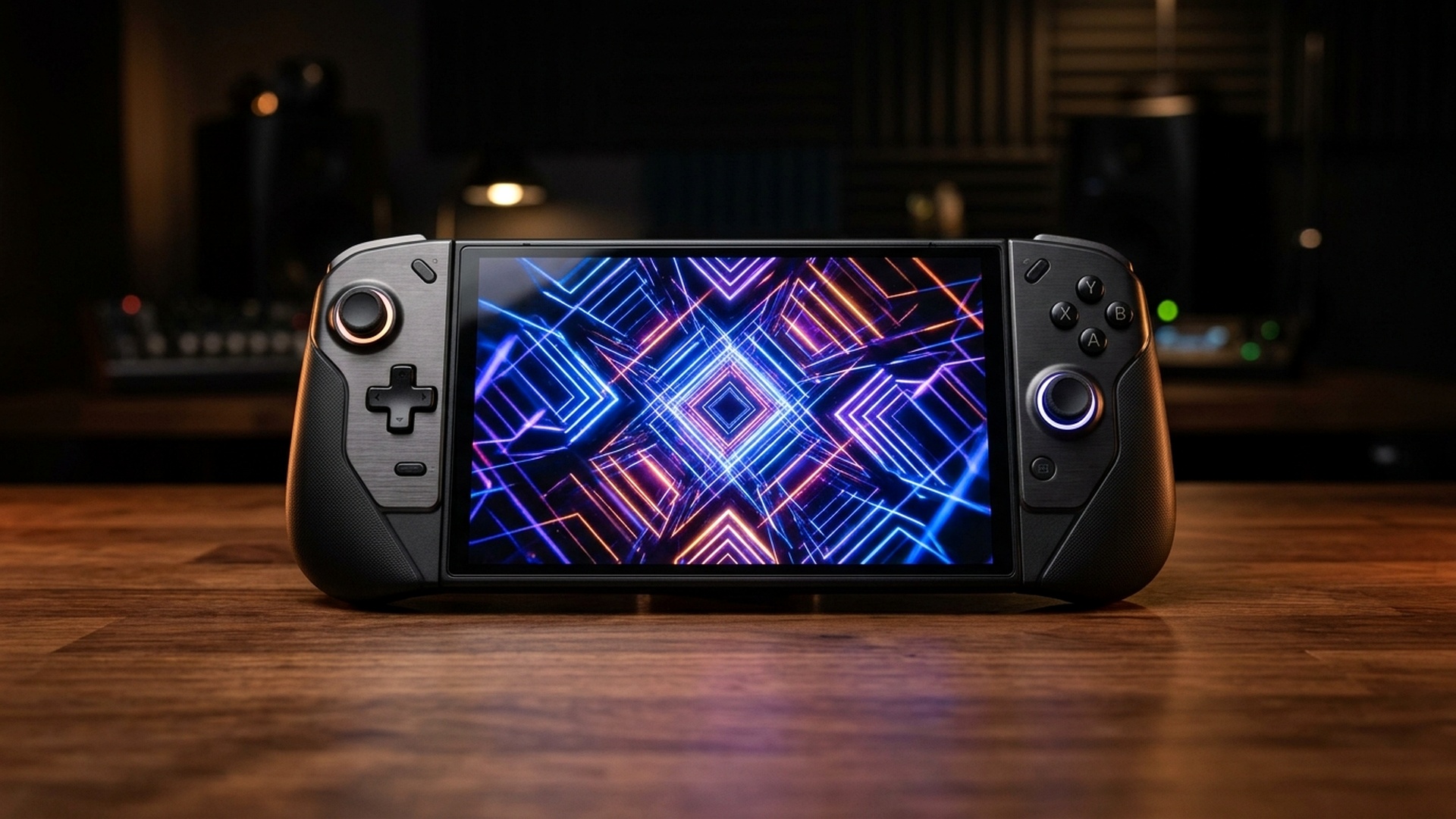
As the legendary Nintendo Switch approaches its eighth anniversary with over 146 million hardware units sold worldwide, the global gaming industry stands on the precipice of Nintendo’s next-generation transition. Internally codenamed ‘Ounce’ and widely referred to across supply chain channels as the Nintendo Switch 2, the hybrid successor represents Nintendo’s most technologically ambitious hardware leap to date. By continuing its close engineering partnership with Nvidia, Nintendo aims to resolve the severe compute bottlenecks of the original Tegra X1 while preserving the handheld-to-docked versatility that revolutionized modern gaming.
Supply chain manifests from component manufacturers in Taiwan and customs shipping declarations have painted an increasingly comprehensive portrait of the device’s internal architecture. Featuring a custom Nvidia Tegra T239 processor, hardware-accelerated machine learning silicon, and substantial memory upgrades, the Switch 2 promises to bring modern visual standards—including ray tracing and deep learning super sampling (DLSS)—into the portable domain.
Silicon Architecture: The Custom Nvidia Tegra T239 (Drake) SoC
At the beating heart of the Switch 2 lies the Nvidia Tegra T239, an application-specific integrated circuit (ASIC) fabricated on Samsung’s refined 8nm or 5nm process node. Departing from the aged Maxwell GPU architecture that powered the 2017 Switch, the T239 is derived from Nvidia’s Ampere architecture (the foundational technology behind the GeForce RTX 30-series), with select architectural features borrowed from Lovelace.
The system-on-chip incorporates an octa-core ARM Cortex-A78C CPU cluster configured in a unified big-cluster arrangement, providing modern multi-threaded performance capable of sustaining complex open-world simulation logic and physics engines. On the graphics front, the GPU houses 1,536 CUDA cores paired with dedicated Tensor Cores and Ray Tracing (RT) cores. This marks the first time a dedicated handheld console will feature hardware-level support for neural reconstruction algorithms.
| Hardware Component | Original Nintendo Switch (2017) | Nintendo Switch 2 (Leaked Specs) | Performance Multiplier |
|---|---|---|---|
| Processor (SoC) | Nvidia Tegra X1 (20nm / 16nm) | Custom Nvidia Tegra T239 (8nm/5nm) | Generational Architecture Leap |
| CPU Architecture | 4x Cortex-A57 @ 1.02 GHz | 8x Cortex-A78C @ up to 2.0 GHz | ~4x to 5x Single/Multi-Threaded |
| GPU CUDA Cores | 256 CUDA Cores (Maxwell) | 1,536 CUDA Cores (Ampere) | 6x Shading Units + Tensor Cores |
| System Memory (RAM) | 4GB LPDDR4 (25.6 GB/s) | 12GB LPDDR5X (102 GB/s) | 3x Capacity / 4x Bandwidth |
| Internal Storage | 32GB / 64GB eMMC 5.1 | 256GB UFS 3.1 High-Speed Flash | 4x to 8x Storage / 10x Load Speeds |
| Handheld Display | 6.2″ LCD / 7.0″ OLED (720p) | 8.0″ 1080p LCD (Initial) / OLED (Future) | Sharper 1080p Native Handheld |
| Docked Target Output | 1080p @ 60Hz Max | 4K via DLSS 3.1 & HDMI 2.1 | Native 4K Reconstruction |
The Game-Changer: Nvidia DLSS & Deep Learning Anti-Aliasing (DLAA)
Raw silicon compute is only half the narrative. Where the Switch 2 truly outpunches its portable thermal envelope is through its integration of Nvidia Deep Learning Super Sampling (DLSS). Because rendering at native 4K resolutions would exceed the docked console’s 15-to-30 watt power budget, games will render internally at 720p or 1080p before Tensor-core neural networks upscale the image to a pristine 4K presentation.
Closed-door technical demonstrations showcased at Gamescom reportedly ran Epic Games’ demanding The Matrix Awakens Unreal Engine 5 demo alongside an enhanced edition of The Legend of Zelda: Tears of the Kingdom running at locked 60FPS in 4K with ray-traced ambient lighting. By leveraging DLSS 3.1 (super resolution and anti-aliasing without frame generation, which introduces latency inappropriate for handhelds), Nintendo guarantees visual parity with PS4 Pro and Xbox Series S fidelity profiles in docked modes.
Industrial Design: Magnetic Joy-Cons & Ergonomic Form Factor
Physical hardware leaks originating from accessory manufacturers reveal that Nintendo is abandoning the mechanical rail slide mechanism of original Joy-Cons in favor of robust electromagnetic docking latches. Joy-Cons will snap securely into place using high-strength neodymium magnets, with physical release buttons situated on the controller rear. This redesign completely resolves the loose wobbling that afflicted well-used original Switch chassis.
Furthermore, the Joy-Cons themselves incorporate subtle ergonomic upgrades:
- Hall Effect Analog Sticks: Utilizing magnetic sensors rather than physical potentiometer contact pads, permanently eradicating the infamous ‘Joy-Con stick drift’ defect.
- Secondary Function Buttons: Additional programmable macro bumpers (tentatively labeled C and D) positioned on inner controller grips.
- Dual USB-C Ports: Incorporating top and bottom USB Type-C ports, enabling convenient charging while using desktop kickstand mode without requiring awkward angled cables.
| Switch Feature | Original Switch Spec | Switch 2 Upgraded Spec | Primary User Benefit |
|---|---|---|---|
| Controller Latch Mechanism | Plastic Mechanical Slide Rails | Electromagnetic Snap Locks | Rock-solid structural rigidity |
| Thumbstick Technology | Potentiometer (Prone to Drift) | Magnetic Hall Effect Sensors | Zero stick drift across lifespan |
| Storage Expansion | UHS-I MicroSD (Up to 100 MB/s) | MicroSD Express (Up to 880 MB/s) | Near-instantaneous asset streaming |
| Cartridge Slot Compatibility | Standard Switch Cartridges | Dual Slot / Backward Compatible | Plays physical Switch 1 game library |
Backward Compatibility & Digital Library Migration
Nintendo leadership, led by President Shuntaro Furukawa, has explicitly affirmed that Nintendo Account integration will serve as the foundational bridge connecting current Switch players to the next hardware platform. The Switch 2 will feature comprehensive physical and digital backward compatibility, allowing players to access their existing catalog of Switch games seamlessly.

More excitingly, insider leaks indicate that select first-party masterpieces—including The Legend of Zelda: Breath of the Wild, Super Mario Odyssey, and Metroid Prime 4: Beyond—will receive enhanced ‘Switch 2 Edition’ performance patches. These updates will unlock 60FPS frame rate targets, HDR color grading, and upgraded texture resolution buffers, breathing new life into timeless classics.
Release Window & Pricing Forecast
Financial analysts tracking Nintendo’s fiscal forward projections anticipate an official hardware reveal in early 2027, followed by a global retail launch in spring or early autumn 2027. Estimated pricing is expected to land in the $399 to $449 range, positioning the device competitively against the Steam Deck and current-gen stationary consoles while delivering unparalleled value to the family gaming market.
For more hardware breakdowns and tech analyses, explore our PS5 Pro Hardware Optimization Guide or read our review of Seasonal PC Game Sales & Discount Guides.
Battery Architecture, Thermal Dissipation & Power Profiles
One of the primary engineering challenges confronting Nintendo and Nvidia was balancing raw silicon compute with acceptable battery longevity in handheld operation. The original Nintendo Switch utilized a 16-watt-hour battery, yielding roughly 3 to 6 hours of gameplay depending on software demands. Supply chain manifests for the Switch 2 confirm a substantially larger 28-watt-hour high-density lithium-ion battery pack.
Operating profiles will dynamically govern clock frequencies across three distinct power stages:
- Handheld Battery Mode (7 – 10 Watts): The GPU clocks down to approximately 500 to 700 MHz, with DLSS Quality or Balanced mode reconstructing a native 1080p handheld presentation at 30 to 60 FPS while preserving 3.5 to 5 hours of continuous battery endurance.
- Handheld Plugged-in Mode (12 – 15 Watts): Unlocks higher memory bandwidth and GPU boost clocks up to 900 MHz, permitting uncapped 60FPS performance in high-fidelity titles while charging.
- Docked Performance Mode (25 – 30 Watts): The custom Tegra T239 unleashes its full 1,536 CUDA cores at 1.2 to 1.4 GHz, utilizing active dual-blower cooling inside the redesigned dock to output 4K 60FPS reconstructed signals via HDMI 2.1 to living room televisions.
| Operating Mode | Power Draw | Internal Render Resolution | DLSS Target Output | Battery Life / Thermals |
|---|---|---|---|---|
| Handheld Battery | 8.5W Average | 540p – 720p Dynamic | 1080p @ 60Hz Handheld Display | 3.5 – 5 Hours (Cool 38°C) |
| Handheld AC Power | 14W Max | 720p – 900p Dynamic | 1080p @ 60Hz Handheld Display | Unlimited (Warm 42°C) |
| Docked TV Mode | 28W Max | 1080p – 1440p Dynamic | 4K (2160p) @ 60Hz via HDMI 2.1 | Active Dock Fan Dissipation |
Third-Party Publisher Re-Engagement: Elden Ring & Cyberpunk Port Speculation
The expanded 12GB memory pool represents the definitive catalyst for Western third-party publishers who bypassed the original Switch due to 4GB RAM limitations. Major studios including FromSoftware, CD Projekt Red, and Capcom are reportedly developing day-one ports of modern blockbusters, with Elden Ring, Cyberpunk 2077, and Resident Evil 4 Remake expected to join Nintendo’s launch year catalog, transforming the Switch 2 into the definitive portable RPG machine.
Launch Window Game Roster & First-Party Day-One Lineup
Industry insiders report that Nintendo has assembled the strongest launch software portfolio in corporate history to ensure rapid hardware adoption. While previous console generations relied on single anchor titles, the Switch 2 launch window is rumored to feature a brand-new 3D Mario platformer developed by the acclaimed Tokyo EPD team, alongside a graphically overhauled cross-generation release of Metroid Prime 4: Beyond and an upgraded definitive edition of Mario Kart 8 Deluxe featuring expanded track tracks and 12-player 4K local wireless splitscreen functionality.
This aggressive software strategy aims to capture both core enthusiasts and casual family demographics simultaneously from day one.
Related posts:
 PS5 Pro Performance Boost Deep Dive: FFVII Rebirth PSSR 60FPS vs Alan Wake 2 Ray Tracing Benchmarks
 Sonic Pico Park, Hands Over & Derelikt Lead Nov 12–13 Steam Co-Op Wave While PC Gamers Wait for GTA 6
 NVIDIA GeForce RTX 5080 & 5090 Blackwell Specs Leak: 32GB GDDR7, 600W TDP & Full Path Tracing Benchmarks
 GTA 6 Wanted System & Police AI Leaks: 6-Star Heat Level, Canine Units & Bodycam Telemetry
