
Nintendo’s ground-up reimagining of Hyrule’s most revered adventure—The Legend of Zelda: Ocarina of Time Remake on Switch 2—is dominating November 2026 critical charts and Game of the Year chatter. Achieving a locked 60 frames per second for the first time in official console history, this release transforms classic 1998 nostalgia into a modern flagship showcase.
Launched in early November 2026 exclusively for Nintendo Switch 2, The Legend of Zelda: Ocarina of Time Remake pairs full orchestral music, voiced cutscenes, and quality-of-life controls with a rock-solid 60 FPS target verified in technical frame-time testing.
- Frame Rate Milestone: Runs at a rock-solid 60 FPS (doubling 3DS 30 FPS and tripling N64’s 20 FPS).
- Audio & Narrative Upgrade: Features newly voice-acted cutscenes and a sweeping live orchestral score.
- Visual Caveat: Technical reviewers note FSR 1 upscaling shimmer instead of Switch 2 DLSS.
- Community Recompilation: PC reverse-engineering interest spiked instantly around extracted launch files.
Frame-Rate Leap: N64 (20 FPS) vs 3DS (30 FPS) vs Switch 2 (60 FPS)
Many younger players rarely realize just how sluggish original 1998 Nintendo 64 cartridges actually ran inside Hyrule Field or demanding boss arenas. Consequently, experiencing Ocarina of Time Remake at modern frame cadence changes combat responsiveness, camera pans, and horse archery immediately.
Compare all three major official releases across twenty-eight years of Zelda hardware history below:
| Release Version | Platform & Year | Target Frame Rate | Key Audio & Visual Hallmark |
|---|---|---|---|
| Original Classic | Nintendo 64 (1998) | 20 FPS (frequent drops) | Synthesized MIDI soundtrack; foundational 3D Z-targeting lock-on. |
| Ocarina of Time 3D | Nintendo 3DS (2011) | 30 FPS Capped | Enhanced character geometry, stereoscopic 3D & Master Quest support. |
| Ocarina of Time Remake | Nintendo Switch 2 (2026) | Locked 60 FPS | Full rebuild, voiced cutscenes, orchestral audio & FSR 1 upscaling. |
Digital Foundry Breakdown: Why Locked 60 FPS Feels Transformative
Across independent performance evaluations led by Digital Foundry and specialist testing outlets, Switch 2 maintains astonishingly consistent 16.6-millisecond frame pacing even inside particle-heavy dungeons. For instance, battles against Volvagia, Twinrova, and Ganondorf run without noticeable slowdown drops across docked play.
Moreover, Z-targeting dodge rolls, Deku Shield parries, and Hookshot quick-aiming gain razor-sharp tactile immediacy at 60 Hz. Veteran speedrunners and first-time explorers alike benefit cleanly from responsive modern stick deadzones instead of fighting stiff retro frame locks.
Nintendo also invested heavily in modernized architectural lighting inside the Temple of Time, Lost Woods, and Shadow Temple. Volumetric fog rays filtering through Kokiri canopies give familiar childhood landmarks genuine atmospheric weight without losing whimsical charm.
The One Technical Catch: FSR 1 Shimmering Over Native DLSS
Despite glowing acclaim surrounding performance stability, eagle-eyed hardware analysts spotlighted one intriguing engineering compromise inside Ocarina of Time Remake. Rather than leveraging Switch 2’s hardware-accelerated DLSS pipeline, Nintendo utilized older spatial FSR 1 upscaling in this build.
As a result, distant fence geometry, water reflections across Lake Hylia, and grass blades occasionally show mild sub-pixel edge shimmer on crisp 4K living-room panels. Nonetheless, prioritizing guaranteed 60 FPS stability ahead of aggressive anti-aliasing keeps gameplay buttery smooth throughout marathon sessions.
Unsurprisingly, PC preservation enthusiasts also inspected extracted launch assets immediately after release, sparking rapid community recompilation interest targeting uncapped desktop refresh rates. That passion underscores just how deeply Link’s timeless quest still commands technical fascination in late 2026.
True locked 60 FPS frame delivery, modern quality-of-life inventory swaps without tedious Iron Boots menu interruptions, and dramatic voiced story cinematics.
Reliance on FSR 1 over sharper DLSS temporal reconstruction causes visible foliage shimmer in wide Hyrule vistas when docked on large OLED displays.
Voice Acting, Orchestral Score & Holiday Switch 2 Context
Equally decisive in driving critical praise is how gracefully the remake pairs nostalgic melodies with modern production values. Live orchestral recordings breathe cinematic scale into Gerudo Valley and Song of Storms while preserving faithful pacing throughout every dungeon.
Meanwhile, newly voice-acted cutscenes finally grant Princess Zelda, Ganondorf, Sheik, and Navi emotional weight worthy of 2026 blockbuster standards—without altering iconic silent hero restraint for Link.
If you recently picked up Nintendo’s new system or plan to unwrap the $499.99 Mario Kart World Switch 2 bundle later this month, read our Nintendo Switch 2 firmware 23.5.0 eShop gifting guide. You can also explore fellow RPG launches inside our Switch 2 & Romancing SaGa 3 release roundup and our Elements Destiny Switch RPG launch report.
Additionally, fans tracking overall late-2026 console news can inspect our Weekend Gaming Radar (Nov 13–15) or consult Nintendo’s official portal for regional store availability. Nearly three decades later, Ocarina of Time Remake proves why classic Hyrule architecture remains gaming’s gold standard when rebuilt with modern speed and care.
Longtime fans haunted by painful memories of pausing every thirty seconds inside the original Water Temple will rejoice at Nintendo’s modernized quick-slot HUD ergonomics. Assigning Iron Boots, Ocarina melodies, and context-sensitive visor tools directly onto streamlined radial toggles removes legacy friction while preserving brilliant spatial puzzle satisfaction.
Handheld Switch 2 performance deserves equal praise alongside living-room docked play during holiday travel. Even on battery power across expansive Hyrule Field gallops or crowded Kakariko Village sequences, responsive frame delivery holds steady without harsh thermal throttling or muddy texture pop-in hurting combat readability.
Ultimately, Nintendo’s Switch 2 flagship sets a thoughtful benchmark for how generational classics should return without diluting their original soul. Whether stepping through Kokiri Forest for the very first time or returning nearly thirty years after 1998, every player discovers timeless magic running smoothly at 60 FPS.
From a collector value perspective, owning a modernized physical or digital Switch 2 edition also preserves enduring replay value well into 2027’s crowded RPG and action calendar. Audio purists wearing open-back headphones immediately notice how cleanly spatial directional cues highlight skulltula footsteps, secret grottos, and dungeon boss openings without sounding artificial.
Pair that refined soundscape with silky-smooth 60 Hz sword slashes and swift camera transitions, and any minor FSR distance aliasing fades quickly into the background of an all-time interactive adventure reborn for a new console generation. Whether tackling nostalgic temple riddles solo or guiding younger players through Kokiri Forest, this Switch 2 milestone earns an instant holiday recommendation for lifelong Nintendo fans everywhere.
Frequently Asked Questions
Does Ocarina of Time Remake run at 60 FPS on Nintendo Switch 2?
Yes. Technical frame-rate testing confirms the Nintendo Switch 2 remake targets and maintains a rock-solid 60 FPS across gameplay, doubling the 3DS version’s 30 FPS.
Does the Switch 2 Ocarina of Time Remake support DLSS?
Digital Foundry notes this release relies on FSR 1 spatial upscaling rather than Switch 2 DLSS, resulting in slight distant shimmering on 4K TVs despite locked frame rates.
Are cutscenes voice-acted in Ocarina of Time Remake?
Yes. Nintendo updated key narrative scenes with voice acting alongside a newly orchestrated soundtrack and modernized quality-of-life improvements.
Is Ocarina of Time Remake available on PS5, Xbox, or PC?
No, the official remake is a Nintendo Switch 2 release, though fan recompilation communities have quickly explored desktop modding around game files.
Related posts:
 Nintendo Switch 2 Hardware Leak & Backward Compatibility Report: NVIDIA DLSS 3.5, Magnetic Joy-Cons & Launch Lineup
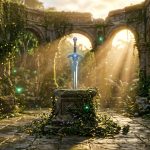 Ocarina of Time Switch 2 Guide: 60 FPS Benchmarks, FSR 1 Tech & QoL Improvements
 Nintendo Switch 2 & Switch Update 23.5.0 Adds eShop Digital Game Gifting Nov 16 as Tomb Raider: Legacy of Atlantis Locks Feb 12
 Nintendo Switch 2 Black Friday 2026 Deals: $469 Console Drops, Bundles & Best Game Cuts
