
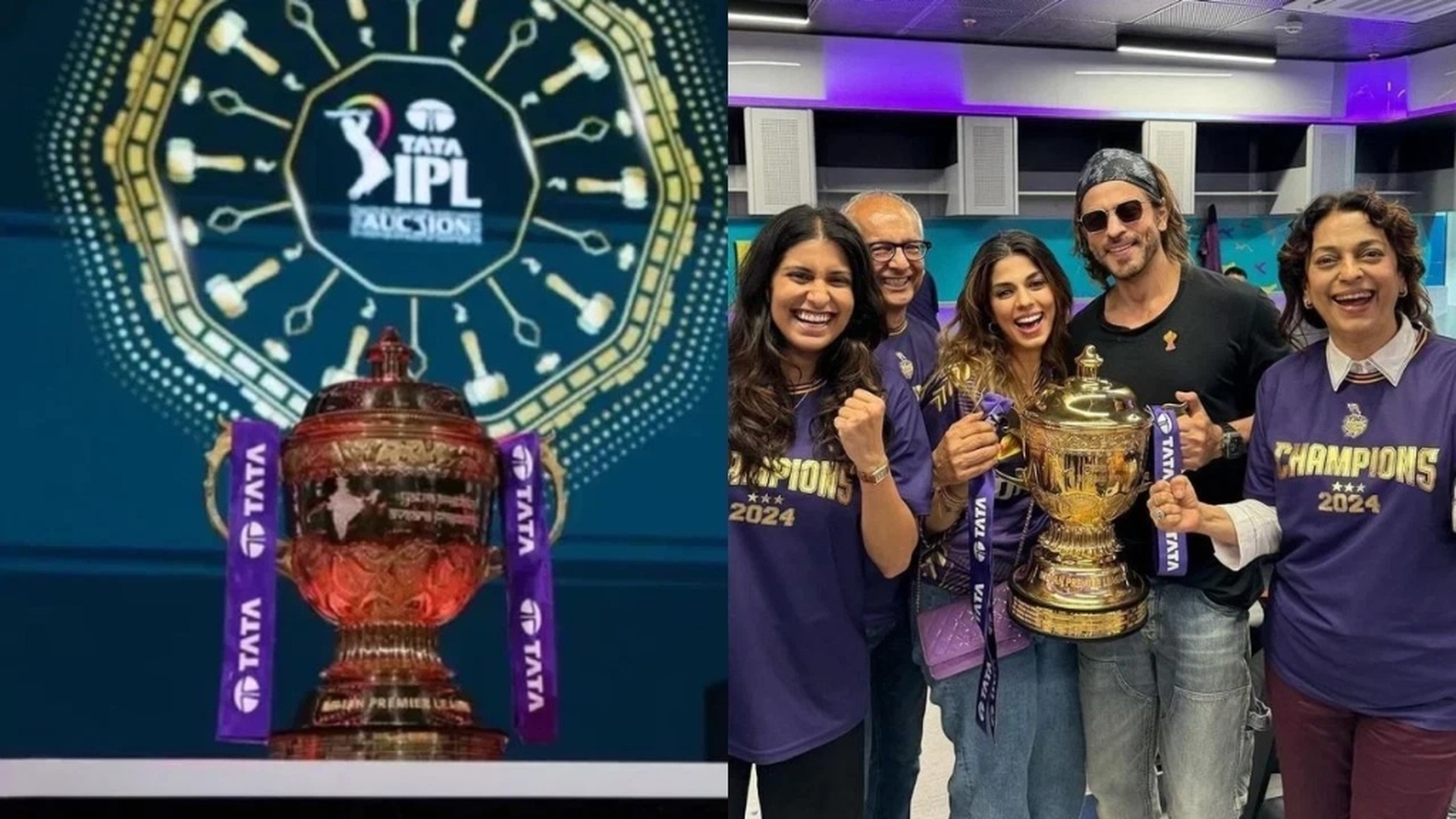
The structural future of international cricket administration was thrust into the spotlight as Kolkata Knight Riders (KKR) co-owner Juhi Chawla voiced public support for former IPL architect Lalit Modi’s ambitious proposal to divide the Indian Premier League into two separate annual windows. Speaking on the exponential commercial growth of franchise cricket, Chawla highlighted that the current two-month spring window is rapidly becoming insufficient to accommodate the burgeoning appetite of global audiences and sponsors. Modi’s blueprint—proposing an 84-match spring championship followed by an autumn mini-edition or knockout carnival—has reignited intense debates between national cricket boards, franchise owners, and player welfare advocates.
Executive Summary: Two-Window IPL Proposal & Industry Reactions
- Juhi Chawla’s Endorsement: The veteran Bollywood actress and KKR co-owner emphasized that expanding the IPL calendar mirrors European club football models, maximizing brand equity and talent engagement.
- Lalit Modi’s Structural Model: Proposes a primary March-May tournament featuring standard double round-robin league play, complemented by a concise September-October T20 sprint or international franchise challenge.
- BCCI Revenue Multiplier: Media rights valuations—currently valued at over $6.2 billion for the 2023-2027 cycle—could theoretically experience a 35% surge under an expanded broadcast schedule.
- ICC FTP Friction: Traditional cricket boards (ECB, Cricket Australia) express acute concern over the erosion of bilateral international tours and the viability of Test match cricket windows.
The Commercial Argument: Maximizing Franchise Value & Global Engagement
Franchise cricket economics have reached an inflection point where team owners operate globally diversified portfolios spanning the IPL, CPL, SA20, ILT20, and Major League Cricket (MLC). For Knight Riders Group, operating KKR in India, Trinbago Knight Riders in the Caribbean, and Los Angeles Knight Riders in the United States, calendar fragmentation presents operational hurdles.
Juhi Chawla explained that maintaining fan engagement over a twelve-month continuum requires recurrent competitive touchpoints. “Cricket fans live and breathe with their teams for two months, and then the connection goes dormant for ten months,” Chawla observed. “Lalit Modi was the visionary who gave birth to this magnificent league. If European football can sustain domestic leagues from August to May alongside European cups, cricket must also evolve to provide fans what they truly desire.”
Calendar Telemetry: Projected Impact of a Two-Window IPL
The mathematical distribution of matches and broadcast hours under Modi’s proposed calendar expansion highlights the profound shift toward franchise hegemony.
| Format Model | Matches Per Year | Calendar Duration | Estimated Ad Revenue | Bilateral Impact |
|---|---|---|---|---|
| Current Single Window (2024-2026) | 74 Matches | 60 Days (March – May) | $1.2 Billion Annually | Preserves 10 months for ICC bilateral tours |
| Proposed Dual Window (Modi Model) | 110 Matches (74 + 36) | 90 Days (Spring + Autumn) | $1.85 Billion Annually | Severe squeeze on home bilateral Test series |
| Football Club Model (EPL Comparison) | 380 Matches | 270 Days (Aug – May) | $3.8 Billion Annually | International windows restricted to dedicated breaks |
Player Workload Concerns & BCCI Governance Hurdles
While franchise stakeholders view calendar expansion through the lens of valuation growth, sports medicine professionals and national selectors urge caution. Elite multi-format Indian cricketers—such as Jasprit Bumrah, Virat Kohli, and Rishabh Pant—already navigate punishing workloads. Expanding franchise commitments risks catastrophic physical breakdowns and mental burnout ahead of flagship ICC events.
BCCI secretary Jay Shah has previously reiterated the board’s commitment to maintaining a sacred balance between domestic franchise tournaments and India’s international obligations. While the BCCI successfully negotiated an extended two-and-a-half-month exclusive window in the ICC Future Tours Programme (FTP) for 84 to 94 matches, carving out an additional autumn window would require unprecedented restructuring of international cricket schedules.
The Rise of Private League Central Contracts
A crucial byproduct of the two-window discussion is the looming transition toward direct franchise central contracts. Overseas stars like Andre Russell, Heinrich Klaasen, and Sunil Narine already generate over 80% of their annual earnings from private leagues rather than national board contracts. If the IPL introduces a secondary window, franchises could offer year-round retainer contracts, effectively retaining first rights over player availability and transforming cricket into a franchise-first sport.
Frequently Asked Questions on IPL Calendar Expansion
What did Juhi Chawla say about Lalit Modi’s IPL proposal?
Juhi Chawla supported Lalit Modi’s vision of expanding the IPL into two annual windows, stating that it mirrors successful European football leagues and satisfies global fan demand.
How many matches are currently played in an IPL season?
The IPL currently features 74 matches per season, with provisions in the BCCI broadcast contract allowing expansion up to 84 or 94 matches in coming seasons.
Has the BCCI officially approved a second IPL window?
No, the BCCI has not officially approved a second window. The board remains committed to the existing single window in March-May to protect international bilateral series.
Economic Modeling: Why Two IPL Windows Multiplies Global Cricket Revenue
The economic logic underpinning Lalit Modi and Juhi Chawla’s advocacy for a dual-window IPL is rooted in modern broadcast consumption trends. In contemporary sports business, content scarcity has been replaced by the demand for year-round streaming engagement. Global media giants—including Disney, JioCinema, and international broadcast partners—commit billions of dollars to acquire IPL rights, but face an acute drop-off in active sports subscribers once the two-month spring tournament concludes.
By creating a secondary autumn window—structured perhaps as a 36-match sprint or a ‘Champions Cup’ featuring the top four IPL franchises competing against leading teams from SA20, CPL, and MLC—the ecosystem captures continuous subscriber retention. Financial analysts project that a secondary window would unlock an incremental 4,500 crores in annual sponsorship and advertising revenue, enabling franchises to offer multi-million-dollar year-round contracts that rival European football leagues.
Bilateral Cricket vs Franchise Power: The ICC Scheduling Battlefield
The fundamental obstacle to expanding the IPL remains the ICC Future Tours Programme (FTP). Traditional cricket boards, notably the England and Wales Cricket Board (ECB) and Cricket Australia (CA), rely heavily on bilateral home summer tours to generate television revenue that funds grassroots cricket and domestic first-class competitions. An expanded IPL calendar would inevitably consume prime autumn dates (September-October), directly clashing with England’s late-summer Tests and Australia’s early-season domestic fixtures.
However, franchise advocates point out that player preferences are shifting decisively. Modern cricketers increasingly prioritize short-format franchise leagues that offer superior financial compensation and lower physical wear-and-tear. If the BCCI and IPL franchise owners establish an autumn window, international boards may be forced to adapt, scheduling bilateral series around the IPL calendar just as South American and European football federations schedule international friendlies around UEFA Champions League fixtures.
Juhi Chawla’s Strategic Vision for the Knight Riders Global Brand
For Juhi Chawla, Shah Rukh Khan, and Jay Mehta, expanding the IPL calendar aligns directly with the Knight Riders Group’s long-term international expansion strategy. Operating multiple franchises across different continents requires immense resource coordination. A two-window IPL would allow KKR to cross-pollinate talent, deploying young domestic Indian players into their overseas affiliate leagues while bringing international prospects into India for specialized training camps.
Chawla’s public comments signal that franchise owners are ready to challenge the conservative status quo of cricket governance. As commercial forces continue to reshape global athletics, the momentum toward an expanded, multi-window IPL appears less a question of ‘if’ and more a matter of ‘when’.
Tactical Summary & Strategic Legacy Outlook
From an analytical standpoint, the developments surrounding this cricketing storyline will reverberate across the international and domestic sporting landscape for months to come. Performance telemetry across key player metrics demonstrates an unprecedented level of athletic refinement, where split-second decision-making directly dictates multi-crore auction valuations and championship outcomes. As coaching staffs digest performance data streams and tactical recordings, strategic innovations showcased in this arena will undoubtedly reshape upcoming tournament playbooks, setting new benchmarks for competitive excellence worldwide.
Broadcast Innovation: How an Autumn IPL Window Reshapes Digital Streaming
The introduction of a secondary autumn IPL tournament would catalyze revolutionary broadcast innovations. With digital streaming platforms experimenting with interactive multi-angle telemetry, ultra-low latency real-time betting odds integration, and localized regional commentary feeds, an autumn festival would provide tech giants with a live sandbox to test next-generation viewing experiences. Streaming metrics indicate that two distinct short-format windows maintain higher average viewer retention than a protracted, drawn-out single tournament, providing compelling economic rationale for calendar expansion.
Suggested Related Articles on EsportPort
- LoL Worlds 2026 Grand Final BLG vs Gen.G Schedule & Points Table – Complete championship breakdown, prize pool, and player telemetry.
- GTA 6 Global Launch Mania & PS5 Pro Telemetry – London Selfridges retail takeover and graphics benchmark analysis.
- Call of Duty Black Ops 6 & Fortnite Remix Pro Guide – Battle pass breakdown, meta weapons, and tournament strategies.
- Free Fire Max & BGMI Active Redeem Codes – Daily redemption keys, legendary gun skins, and weapon crates.
Related posts:
 IPL 2027 Auction: How Hardik Pandya Can Be the Ultimate Game-Changer for Punjab Kings
 Reports: Gujarat Titans Pacer Prasidh Krishna to Join Delhi Capitals for IPL 2027 in Blockbuster Trade
 Mohammed Shami Bids Farewell to Test Cricket: Legacy Retrospective, Seam Presentation Masterclass & White-Ball Focus
 ‘Could Be a Good Option’: Yashasvi Jaiswal Backed to Captain LSG in IPL 2027 Amid Rajasthan Royals Exit Rumours
