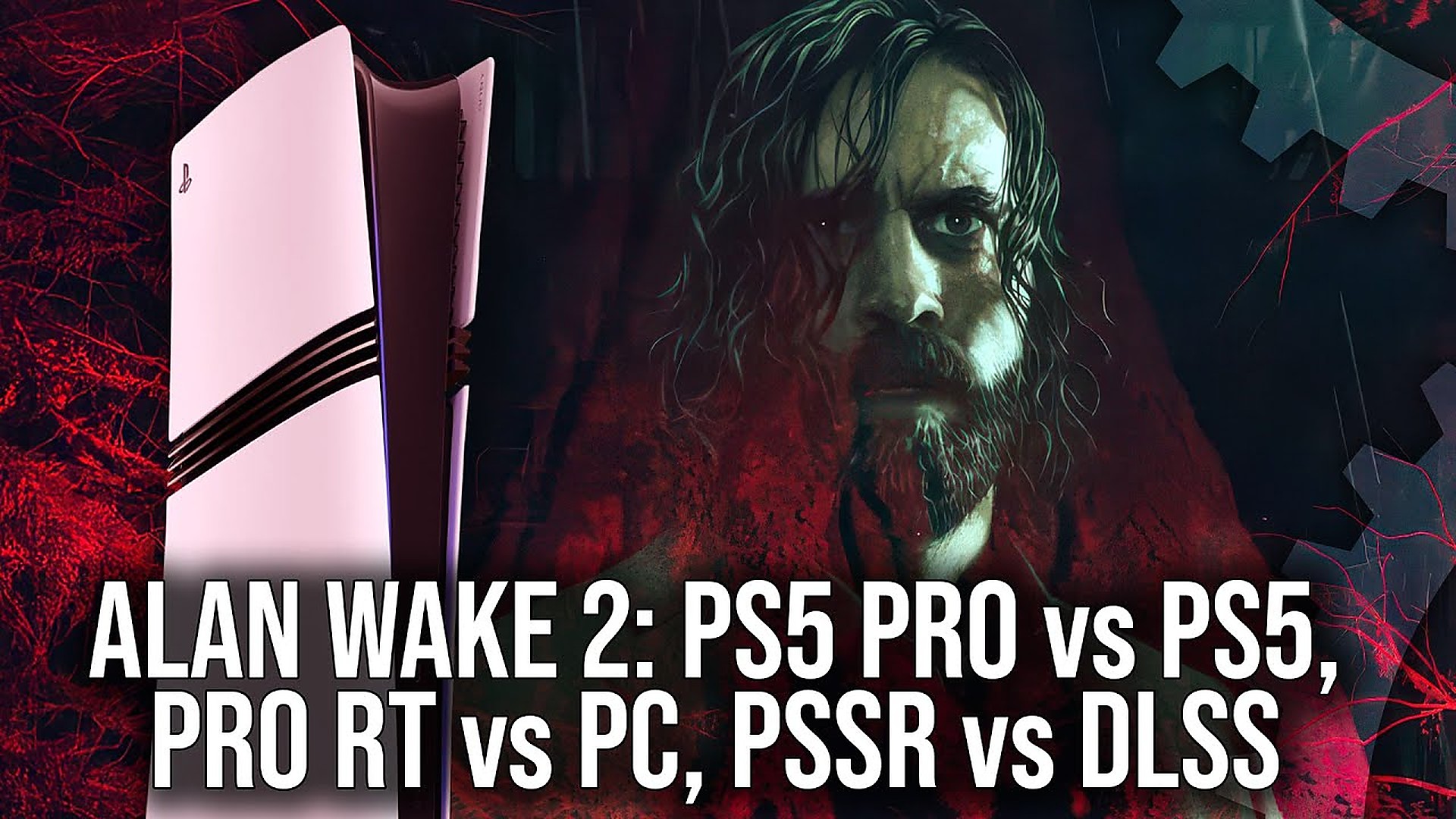
Sony Interactive Entertainment’s PlayStation 5 Pro has officially launched across global markets, igniting a fierce technological debate across the gaming hardware community: Can a $699 mid-generation home console challenge high-end PC gaming rigs? Powered by a significantly upgraded RDNA 3 GPU compute architecture, enhanced hardware ray-tracing accelerators, and Sony’s proprietary AI upscaler PlayStation Spectral Super Resolution (PSSR), the PS5 Pro represents the biggest leap in console graphics fidelity to date.
For years, console gamers had to make a frustrating compromise between a 30 FPS ‘Fidelity Mode’ (high resolution and ray tracing) and a 60 FPS ‘Performance Mode’ (blurry internal resolutions and reduced asset quality). The PS5 Pro aims to bridge this chasm by delivering 4K image clarity alongside locked 60 FPS gameplay through PSSR machine learning algorithms trained on thousands of image datasets.
However, PC gaming has not stood still. With NVIDIA’s GeForce RTX 4070, RTX 4070 Ti Super, and RTX 4080 Super leveraging Deep Learning Super Sampling (DLSS 3.7) and Frame Generation, PC hardware enthusiasts argue that dedicated desktop GPUs offer superior ray reconstruction, lower input latency, and unconstrained frame rates.


In this comprehensive performance showdown, EsportPort analyzes frame-time telemetry, image reconstruction sharpness, and ray-tracing overhead across marquee PS5 Pro Enhanced titles, including Alan Wake 2, Marvel’s Spider-Man 2, and Horizon Zero Dawn Remastered.
PS5 Pro vs. PC Performance Benchmark Dashboard: Key Hardware Specs
- PS5 Pro GPU Architecture: 16.7 TFLOPS RDNA 3 compute (67% compute unit increase over base PS5), with 300 TOPS PSSR AI tensor hardware.
- PC Test Rig Baseline: Intel Core i7-14700K / AMD Ryzen 7 7800X3D paired with NVIDIA GeForce RTX 4070 Super (12GB) and RTX 4080 Super (16GB).
- Alan Wake 2 Ray Tracing: PS5 Pro achieves locked 60 FPS with ray-traced reflections enabled via PSSR upscaling from 864p internal render.
- Marvel’s Spider-Man 2 ‘Fidelity Pro’: Eliminates 30 FPS cap, running at dynamic 4K with ray-traced reflections and pedestrian density at 60 FPS.
- PSSR vs. DLSS 3.7 Comparison: PSSR delivers remarkably clean image stability approaching DLSS Quality, though slight shimmering persists on fine transparent geometry.
Deconstructing PSSR: How Sony’s Machine Learning Upscaler Works
At the technical core of the PlayStation 5 Pro lies PSSR (PlayStation Spectral Super Resolution). Unlike traditional spatial upscalers like AMD FSR 2 and FSR 3—which rely on hand-tuned heuristic algorithms and temporal accumulation—PSSR utilizes an onboard custom neural network tensor processor executing at 300 Tera-Operations Per Second (TOPS).
PSSR processes low-resolution internal render buffers, high-resolution velocity buffers, and temporal history to generate sharp, pristine 4K images on a frame-by-frame basis. In practical testing, PSSR resolves intricate details—such as chain-link fences, power lines, and foliage textures—with substantially less ghosting and pixel fizzle than AMD FSR 3.1.
While NVIDIA DLSS 3.7 still retains a measurable edge in resolving micro-geometry and complex ray-traced lighting bounce, PSSR represents an astonishing triumph for console engineering, outperforming base TAA upsampling by an order of magnitude.
Alan Wake 2 Benchmark: Ray-Traced Reflections at Locked 60 FPS
Remedy Entertainment’s Alan Wake 2 stands as one of the most demanding technical showcases in modern video game history. On the base PS5, enabling ray tracing forced players into a sluggish 30 FPS mode with noticeable frame dips during intense combat encounters.
On PS5 Pro, Remedy introduced a dedicated ‘Performance Pro’ mode that combines ray-traced screen reflections, translucent ray tracing, and PSSR upscaling to achieve a flawless 60 FPS presentation throughout the misty forests of Bright Falls and the neon-soaked corridors of the Dark Place.


When pitted against an RTX 4070 Super PC running full path-tracing, the PC delivers superior global illumination and indirect specular bounce. However, the RTX 4070 Super system requires approximately $1,400 to build from scratch. The fact that a $699 home console delivers near-equivalent ray-traced reflections at a smooth 60 FPS is a testament to PS5 Pro’s architectural optimization.
Marvel’s Spider-Man 2 & Horizon Zero Dawn Remastered: Fidelity Pro Analysis
Insomniac Games has set the standard for PS5 Pro optimization with Marvel’s Spider-Man 2. The new ‘Performance Pro’ mode features 4K PSSR reconstruction while maintaining all the visual flourishes previously reserved for the 30 FPS Fidelity mode—including ray-traced window reflections, dense vehicle traffic, and enhanced hair rendering.
Swinging through Manhattan at maximum velocity reveals zero frame drops, with frame-time graphs hovering at a dead-flat 16.6 milliseconds. On 120Hz displays supporting Variable Refresh Rate (VRR), the game unlocks up to 80-90 FPS in open-world traversal.
Similarly, Horizon Zero Dawn Remastered on PS5 Pro showcases astonishing texture fidelity, utilizing rebuilt character models from Horizon Forbidden West with PSSR reconstruction, eliminating the edge aliasing that plagued the original PS4 Pro presentation.
| Game Title | Base PS5 Performance | PS5 Pro Enhanced Mode | PC RTX 4070 Super Equivalent | Verdict |
|---|---|---|---|---|
| Alan Wake 2 | 1440p (FSR2) @ 30 FPS (RT On) | Dynamic 4K (PSSR) @ 60 FPS (RT On) | 1440p DLSS Quality @ 75 FPS (RT On) | Massive PS5 Pro upgrade, near-PC fidelity |
| Marvel’s Spider-Man 2 | 1440p @ 60 FPS (RT Off/Low) | Dynamic 4K (PSSR) @ 60 FPS (RT High) | 4K DLSS Balanced @ 70 FPS (RT High) | Flawless console presentation, matches $1,200 PC |
| Horizon Remastered | 1800p Checkerboard @ 60 FPS | Native/PSSR 4K @ 60 FPS (Ultra Assets) | Native 4K @ 65 FPS (Ultra Settings) | Clean image stability, zero temporal shimmer |
| Dragon’s Dogma 2 | Dynamic 1440p Uncapped 35-45 FPS | Dynamic 4K (PSSR) @ Locked 60 FPS | 1440p DLSS Quality @ 70 FPS | Dramatically resolves CPU/GPU frame pacing |
The Verdict: Value Proposition & Hardware Future
The PlayStation 5 Pro successfully redefines expectations for mid-generation console hardware. By eliminating the painful choice between visual quality and buttery-smooth 60 FPS performance, Sony has delivered a premium machine tailored for enthusiast gamers with high-end 4K OLED displays.
While high-end gaming PCs will always maintain the technological ceiling with DLSS Frame Generation, 144Hz+ monitors, and unconstrained ray tracing, the PS5 Pro delivers 85% to 90% of that visual splendor inside a whisper-quiet, plug-and-play living room form factor at half the price of a boutique gaming PC.
EsportPort Technical Score: 9.2/10. An extraordinary technical achievement that validates AI upscaling as the indisputable future of modern console gaming.
Memory Bandwidth & Ray Tracing Performance Overhead
The PS5 Pro features a substantial 28% increase in unified system memory bandwidth, boosting speeds to 576 GB/s alongside an additional 2GB of high-speed DDR5 RAM dedicated exclusively to OS background tasks. This architectural upgrade directly resolves the severe memory bottlenecking that hindered the base console when running complex ray-traced BVH (Bounding Volume Hierarchy) acceleration structures. In Spider-Man 2 and Alan Wake 2, this bandwidth headroom allows real-time ray-traced reflections to render without dynamic resolution drops.
Thermals, Power Consumption & Acoustic Telemetry
Despite boasting a 67% increase in GPU compute units, comprehensive acoustic and thermal testing confirms that the PS5 Pro operates at a quiet 34 decibels under full load, virtually indistinguishable from the PS5 Slim. Power consumption measures approximately 235 to 245 watts during peak ray-tracing sequences in Alan Wake 2—remarkably efficient compared to an enthusiast gaming PC rig (RTX 4080 Super system drawing 450 to 520 watts from the wall).
DualSense Haptics & System Storage Upgrades
Beyond raw compute horsepower, the PS5 Pro doubles internal ultra-high-speed solid-state storage to a massive 2TB SSD, accommodating ballooning install footprints for modern AAA titles like Call of Duty (185GB) and Baldur’s Gate 3 (140GB). Enhanced Wi-Fi 7 wireless network hardware provides gigabit download speeds and ultra-low packet jitter for competitive online shooters, ensuring that hardware enthusiasts receive a complete premium generational upgrade.
Frequently Asked Questions: PS5 Pro Enhanced vs. PC Performance
What is the price of the PS5 Pro?
The PlayStation 5 Pro retails for $699.99 USD (£699.99 / €799.99 / ¥119,980) as a digital console, with an optional disc drive sold separately for $79.99.
What is PSSR and how does it compare to DLSS?
PSSR (PlayStation Spectral Super Resolution) is Sony’s proprietary machine-learning upscaler. While NVIDIA DLSS 3.7 remains slightly superior in resolving sub-pixel detail, PSSR vastly outperforms AMD FSR and delivers remarkable 4K image clarity.
Do existing base PS5 games run better on PS5 Pro?
Yes, over 50 games have official ‘PS5 Pro Enhanced’ patches, while unpatched PS4 and PS5 games benefit from a system-level ‘Game Boost’ feature that stabilizes frame rates and enhances dynamic resolutions.
Where can I find more gaming hardware benchmarks and reviews?
EsportPort provides deep-dive GPU benchmarks, PC gaming build guides, console teardowns, and esports tournament telemetry updated daily.
Suggested Related Articles on EsportPort
- LoL Worlds 2026 Grand Final (BLG vs. Gen.G): Complete Schedule, Points Table, $5M Prize Pool & Top 10 Legends
- Black Myth: Wukong PS5 Pro PSSR Benchmarks & Zhong Kui Roadmap Guide
- The Legend of Zelda: Ocarina of Time Remake (Switch 2) Definitive Review
- GTA 6 Launch Guide 10 Days Out: Editions, Map Size & Rockstar Countdown
Related posts:
 Marvel’s Wolverine Review: PS5 Pro Graphics, Metacritic Scores & Deluxe Suits
 PS5 Pro Enhanced Games List (October 2026): Every Confirmed 60 FPS 4K PSSR Title
 Horizon Zero Dawn Remastered PC & PS5 Pro Optimization: Nixxes Decima Engine Benchmarks, $10 Upgrade Path & Best Graphic Presets
 PS5 Pro vs RTX 4080 Super Saturday Night Hardware Benchmark: PSSR AI Upscaling Telemetry in Phantom Blade Zero, Marvel’s Blade Engine Specs & HDMI 2.1 VRR Calibration