
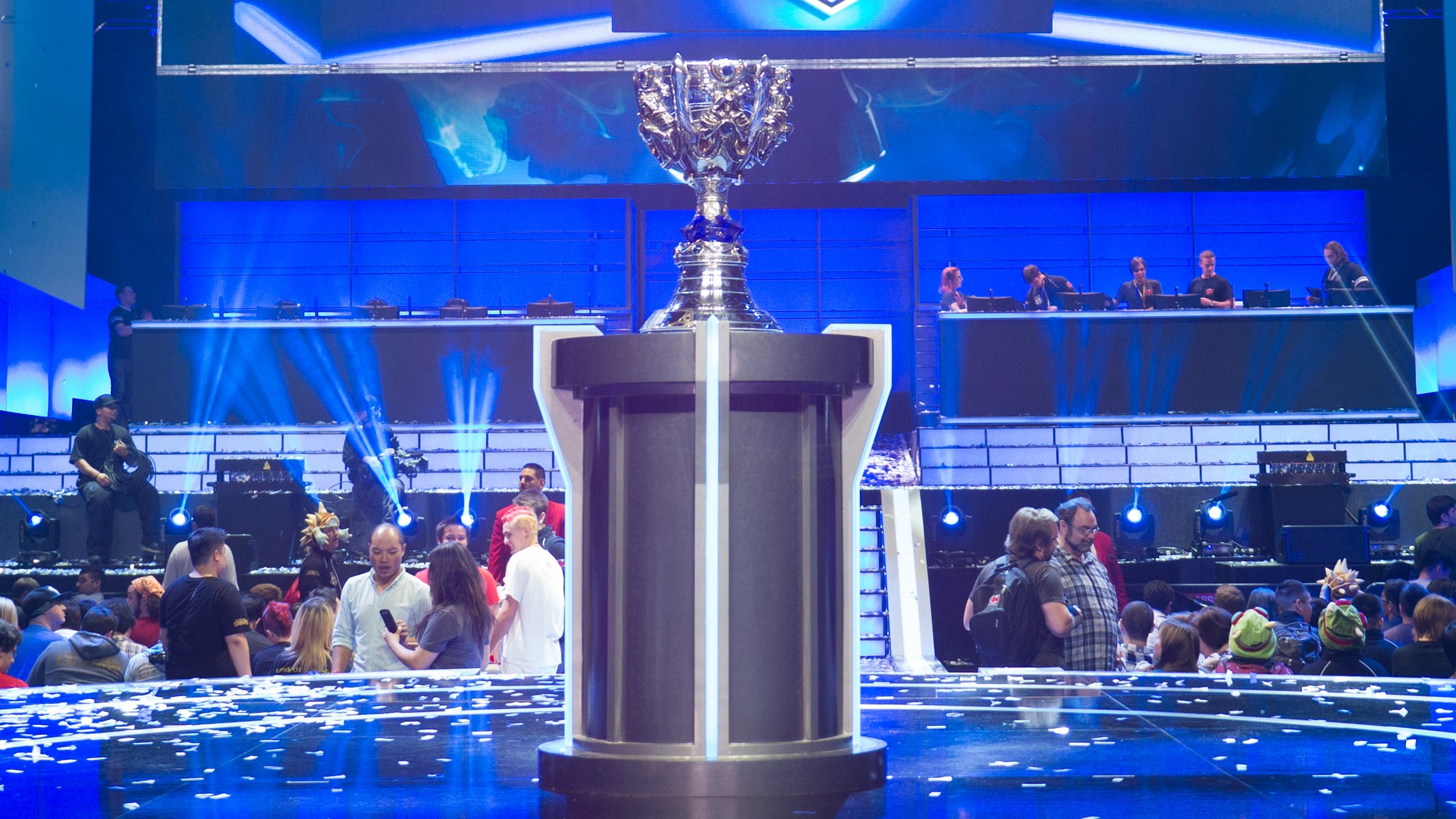
The global competitive esports ecosystem reached historic heights during the League of Legends Worlds Grand Finals Rematch, where South Korean juggernaut T1 faced off against Chinese LPL champions Bilibili Gaming (BLG) in an unforgettable five-game epic at London’s O2 Arena. With iconic mid-laner Lee “Faker” Sang-hyeok lifting his unprecedented fifth Summoner’s Cup trophy, the clash shattered all-time esports viewership records, peaking at over 6.94 million concurrent viewers worldwide (excluding Chinese domestic platforms).
As the international competitive calendar transitions into the high-stakes 2025 global roster shuffle window, analysts and competitive tacticians continue dissecting the macro-telemetry, draft priority adaptations, and micro-mechanical execution that decided the world championship. In this comprehensive post-championship dossier, we break down Game 4 and Game 5 pick-ban topologies, evaluate Faker’s decisive Sylas and Galio team fight engagements, unpack LPL versus LCK regional playstyles, and analyze impending roster movements across premier regional leagues.
Championship Series Overview & Viewership Benchmark Telemetry
The grand final showdown between LCK fourth seed T1 and LPL first seed BLG represented a clash of contrasting competitive philosophies. BLG entered the series riding the aggressive lane dominance of top-laner Chen “Bin” Ze-Bin and mid-laner Zhuo “knight” Ding, aiming to capture China’s first international title on European soil since 2019. Conversely, T1 relied on resilient late-game objective setups, unmatched wave-management discipline, and the peerless tactical leadership of Faker.
The table below summarizes series progression, game durations, gold differentials at 15 minutes, and key turning-point objectives across the five-game thriller:
| Game & Blue/Red Side | Match Duration | 15-Minute Gold Lead | Decisive Objective / Turn | Series MVP & Game Winner |
|---|---|---|---|---|
| Game 1 (BLG Blue Side) | 27 Minutes, 12 Seconds | BLG +4,200 Gold | Baron Nashor Sneak at 21:40 | BLG Win (Elk Ashe Arrow Setup) |
| Game 2 (T1 Blue Side) | 27 Minutes, 24 Seconds | T1 +3,800 Gold | Dragon Soul Fight Ace at 24:10 | T1 Win (Oner Nocturne Paranoia) |
| Game 3 (BLG Blue Side) | 27 Minutes, 35 Seconds | BLG +5,100 Gold | Mid Inner Turret Dive 4k Wipe | BLG Win (Knight Blitzcrank Synergy) |
| Game 4 (T1 Blue Side) | 31 Minutes, 41 Seconds | T1 +1,400 Gold | Faker Sylas Flank at River Brush | T1 Win (Faker Sylas Hijack Ultimates) |
| Game 5 (BLG Blue Side) | 32 Minutes, 16 Seconds | T1 +2,900 Gold | Faker Galio Hero’s Entrance at Blue Buff | T1 Win (T1 Crowned 2024 World Champions) |
The peak concurrent viewership metric established a new watermark in digital competitive entertainment, surpassing the previous record set during the 2023 World Finals in Seoul. The sustained intensity across all five maps demonstrated that despite entering as a lower seed through the grueling LCK regional gauntlet, T1’s institutional composure under high-pressure international formats remains unmatched in esports history.
Draft Priority Telemetry: Game 4 & Game 5 Tactical Breakdown
Draft adaptation proved the decisive differentiator in the latter stages of the series. Facing tournament point in Game 4, T1 head coach Kim “kkOma” Jeong-gyun and tactical coach Im “Tom” Jae-hyeon pivoted toward high-agency initiation compositions capable of neutralizing BLG’s aggressive front-to-back team fighting.
Key draft adaptations included:
- Faker’s Sylas Adaptation: Recognizing BLG’s reliance on crowd-control-heavy ultimates (including Ashe’s Enchanted Crystal Arrow and Rakan’s The Quickness), T1 locked Sylas as a flexible blind pick. In the climactic 20-minute dragon river engagement, Faker hijacked Rakan’s ultimate, executed a frame-perfect Flash charm into BLG’s backline, and eliminated AD carry Elk before defensive cooldowns could be triggered.
- Gumayusi’s Varus & Kalista Flexibility: T1 bottom-laner Lee “Gumayusi” Min-hyeong maintained pristine positioning against relentless dive threats. His lethality Varus build in Game 4 provided long-range arrow poke that softened BLG’s frontline before neutral objectives spawned, forcing BLG into disadvantageous river pathing.
- Zeus Gragas vs Bin Rumble Disruption: In Game 5, T1 top-laner Choi “Zeus” Woo-je utilized Gragas to neutralize Bin’s signature early-game lane aggression. By executing precision Explosive Casks to disengage BLG’s dive compositions, Zeus preserved turret plates and enabled Oner’s Xin Zhao to prioritize mid-lane vision control.
Lane Swap Telemetry & Voidgrub Objective Contestation
One of the defining strategic developments of the 2024 World Championship was the institutional mastery of early lane swaps. Teams deployed bottom-lane duos to the top lane to avoid unfavorable 2v2 isolated matchups, fast-pushing initial waves to collapse on the newly introduced Voidgrubs spawning at the 5-minute mark.
Statistical telemetry highlights how Voidgrub acquisition correlated directly with mid-game turret demolition:
- The 5-Grub Threshold: Securing at least five of the six total Voidgrubs summons Voidmites on every subsequent allied siege wave. In T1’s Game 2 and Game 4 victories, five-grub stacks allowed their split-pushing side lanes to melt outer tier-one turrets without requiring Baron Nashor buffs, generating an uncontested 2,500 gold swing across the map.
- Keria’s Innovative Roaming Paths: T1 support Ryu “Keria” Min-seok established unmatched early-game presence by abandoning bottom lane at level 3. His synchronized ganks with Oner into BLG’s top jungle denied knight’s roam timers and protected Zeus from coordinated three-man dives.
- Renata Glasc & Bard Counter-Engage Tech: Keria’s signature Renata Glasc in Game 4 neutralized BLG’s dive-heavy engage compositions. Timing Bailout on Gumayusi while channeling Hostile Takeover across the narrow dragon river choke point turned BLG’s own aggressive attack speed against their frontline.
Faker’s 5th Summoner’s Cup: The Greatest Legacy in Esports
With this historic victory, Faker captured his fifth League of Legends World Championship (2013, 2015, 2016, 2023, and 2024), extending an unparalleled 11-year reign at the apex of competitive gaming. While traditional sports icons like Michael Jordan and Tom Brady established dynastic excellence over decades, Faker’s longevity across a dozen distinct game engines, meta reworks, and hundreds of balance patches stands as an unprecedented feat in digital sports.
Statistical telemetry highlights his monumental impact during the London finals:
- Game 5 Galio Heroics: Trailing in initial skirmish kills during the decisive fifth map, Faker orchestrated a game-saving defensive collapse at T1’s blue buff jungle quadrant. Utilizing Galio’s Hero’s Entrance, he absorbed three enemy ultimates, survived with under 10% health, and allowed Gumayusi’s Xayah to execute clean-up damage across all five BLG members.
- Tournament MVP Accolades: Faker was officially awarded the 2024 Finals MVP trophy, finishing the series with a staggering 76.4% kill participation rate, highest damage per minute (DPM) among mid-laners, and zero unassisted deaths during decisive fourth-quarter team fights.
- ZOFGK Dynastic Continuity: The roster of Zeus, Oner, Faker, Gumayusi, and Keria (ZOFGK) became the first starting five in League of Legends history to reach three consecutive World Championship grand finals together, winning back-to-back world titles in 2023 and 2024.
2025 Global Off-Season Roster Shuffles & Regional Transitions
The conclusion of the World Championship triggers the most volatile free agency and contract renegotiation period in professional esports. With Riot Games implementing consolidated regional formats for the 2025 season—including the unified Americas League (LTA) and Asia-Pacific League (LCP)—organizations worldwide are restructuring payroll budgets and pursuing marquee talent.
Key off-season storylines and roster telemetry to monitor include:
- T1 Contract Renewals: While Faker remains signed through 2025 under a long-term franchise agreement, contracts for Zeus, Gumayusi, and Keria enter standard expiration windows. Retaining the complete championship five requires navigating competitive luxury tax thresholds established by the LCK Financial Fair Play regulations.
- LPL Rebuilding & Super-Team Restructuring: BLG’s heartbreaking 2-3 defeat is expected to catalyze aggressive roster maneuvers across China’s top tier. Rivals JD Gaming (JDG) and Top Esports (TES) are actively exploring multi-million dollar bidding wars for premier domestic mid-laners and elite Korean imports.
- Western Region Overhauls (LCS & LEC): Following another international campaign where North American and European representatives failed to breach the semi-final bracket, Western organizations are pivoting toward cost-controlled youth development rosters while trimming expensive veteran contracts.
Macro Strategic Takeaways for Ranked & Competitive Play
For aspiring competitive players in solo queue and amateur tournament leagues, T1’s world championship run delivers invaluable tactical lessons. T1 demonstrated that early-game gold deficits of 2,000 to 4,000 gold can be completely overcome through patient vision denial around the Baron Nashor pit, coordinated double-teleport flank setups, and uncompromising target focus on opposing carries.
Mastering mid-game wave manipulation, timing neutral objective resets around primary ultimate cooldowns, and maintaining absolute emotional composure during high-stress matches remain the true hallmarks of world-class League of Legends play.
Related Reading & Trending Intelligence
Deepen your esports and gaming intelligence with our related competitive coverage:
- League of Legends Core Gameplay Guide: Summoner’s Rift Roles, 160+ Champions & Objective Strategy
- League of Legends Arcane Lore & Runeterra Guide: Official Prequel Canon, Piltover, Zaun & Noxus Dynamics
- Pakistan vs Australia ODI Series Decider: Perth Stadium Fast-Bowling Telemetry & Pitch Pace Radar
- NFL Sunday Week 10 Sportsbook Betting Lines & Sharp Money Radar: DraftKings & FanDuel Promo Codes
Related posts:
 Top 10 Worlds 2026 Champions & Swiss Stage Tier List: Highest Priority Picks, Bans & Counter Matchups
 LoL Worlds Quarterfinals Bracket & Match Schedule: T1 vs TES, Gen.G vs FlyQuest & Pick’em Predictions
 Dota 2 BetBoom Dacha Belgrade Standings & Meta Report: Team Falcons, Tundra Esports & Patch 7.37d Heroes
 LoL Worlds 2026 Knockout Stage Schedule & Swiss Final Scorecard: Dplus KIA vs BLG, Karmine Corp vs T1, Gen.G vs LYON & Bo5 Fearless Draft Guide
