
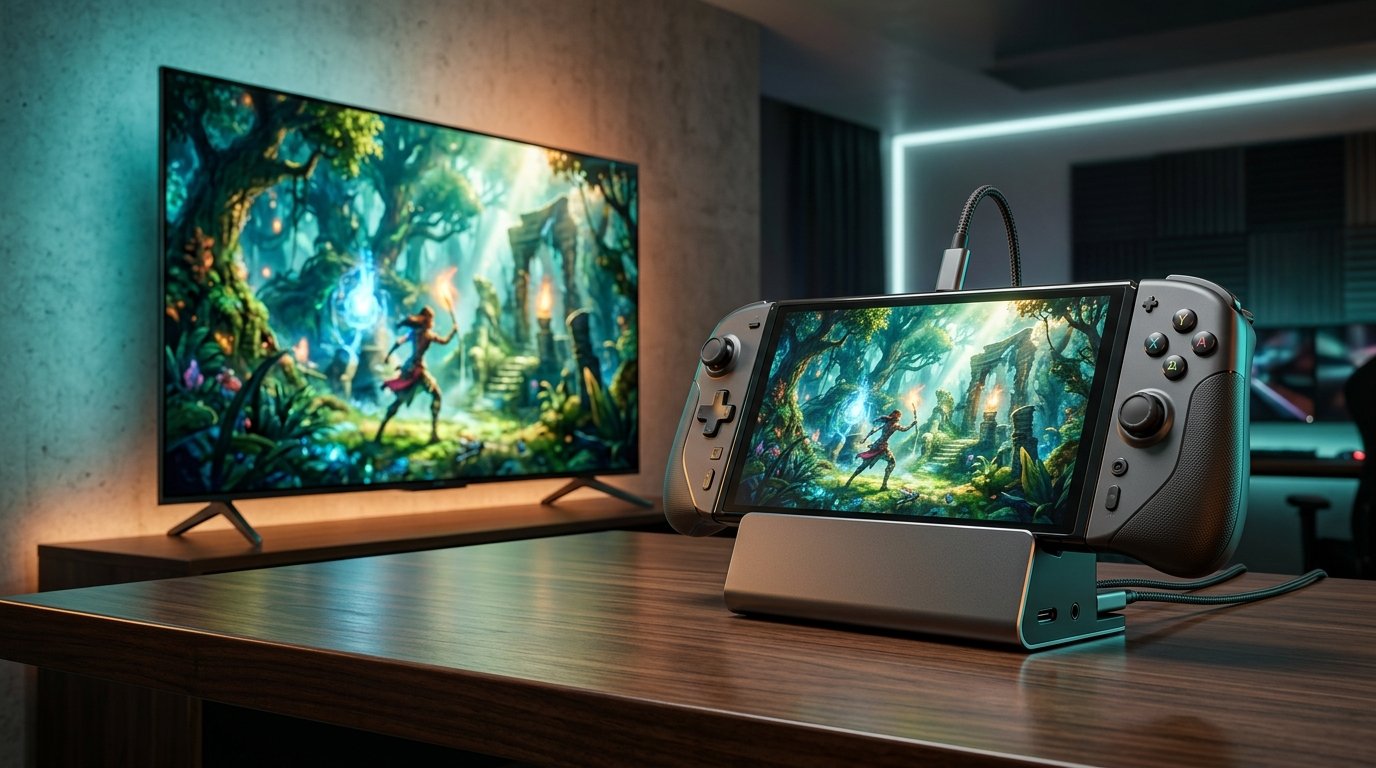
Supply chain confirmation from manufacturing assembly lines in Vietnam and Taiwan has confirmed that production of Nintendo’s highly anticipated hybrid successor—widely recognized as the Nintendo Switch 2—has officially entered full commercial mass production. Led by primary contract manufacturer Foxconn and electronic component suppliers Hosiden and Macronix, factory shipments are accelerating to amass substantial launch inventory, aiming to eliminate the scalping shortages that plagued previous console generations.
Custom NVIDIA Tegra T239 Silicon: The Ray Tracing Hybrid Leap
Unlike the dated 2015-era Maxwell architecture powering the original Nintendo Switch, the Switch 2 is built upon a custom NVIDIA Tegra T239 SoC codenamed “Drake,” manufactured on a specialized Samsung 8nm/TSMC process node. This architectural upgrade transforms the portable gaming paradigm:
- 12GB LPDDR5X Unified RAM (102 GB/s Bandwidth): Surpassing the 10GB memory pool of Microsoft’s Xbox Series S, this massive memory buffer ensures developers can port modern Unreal Engine 5 titles directly to Switch 2 without severe texture degradation.
- Hardware Accelerated DLSS 3.5 & Ray Reconstruction: Leveraging dedicated Tensor Cores, the Switch 2 can take a 720p internal handheld rendering resolution and upscale it to pristine 4K at 60 FPS in docked mode while supporting real-time ray-traced reflections.
- Magnetic Joy-Con Latches: Replacing the fragile slide-rail mechanism with high-strength electromagnetic locking brackets that double as optical analog triggers.
Compare the Switch 2’s mobile architecture with our analysis in Top 5 Handheld Gaming PCs: Steam Deck OLED vs ROG Ally X and check our earlier report on Nintendo Switch 2 Hardware Leaks: DLSS & Pricing.
Nintendo Switch 2 vs Original Switch OLED Specifications
| Hardware Component | Nintendo Switch OLED (Current) | Nintendo Switch 2 (Projected 2026) | Performance Factor |
|---|---|---|---|
| Custom Processor | NVIDIA Tegra X1 (4 Cores @ 1.0 GHz) | Custom NVIDIA T239 (8 Cores Cortex-A78C) | +600% Multi-Core CPU Compute |
| GPU Architecture | 256 CUDA Cores (Maxwell / 2014) | 1,536 CUDA Cores (Ampere / Ada Hybrid) | Over 10x Floating-Point TFLOPs |
| System Memory | 4GB LPDDR4 (25.6 GB/s) | 12GB LPDDR5X (102.4 GB/s) | Triple Memory Pool for Modern Engines |
| Internal Storage | 64GB eMMC Flash | 256GB / 512GB UFS 3.1 High-Speed Flash | Instant Asset Loading Times |
| Docked Video Output | 1080p @ 60 FPS (HDMI 2.0) | 4K @ 60 FPS (HDMI 2.1 via DLSS) | Full HDR10 & VRR Display Support |
Launch Window, Backward Compatibility & Pricing
Nintendo President Shuntaro Furukawa has already confirmed that the console will be announced before the end of the current fiscal year (March 2026). Factory run schedules point to a worldwide retail launch in late Spring 2026, with complete physical and digital backward compatibility for existing Nintendo Switch libraries. Analysts forecast an entry MSRP of $399 to $449 USD.
Related posts:
 MLBB M6 World Championship Wild Card Summary: Team Liquid ID & Fnatic ONIC Secure Swiss Stage Seeds
 Cyberpunk: Edgerunners Season 2 Officially Confirmed by Studio Trigger & Netflix: Release Window, Night City Setting & CDPR Roadmap
 Viral Wall-Punching Game ‘Escape the Walls’ Sparks Massive Roblox Clones Ahead of Official Steam Release
 GTA 6 Second Trailer Release Window Leaks: Take-Two Earnings Call Hints, Vice City Map Scale & Lucia-Jason Dynamic